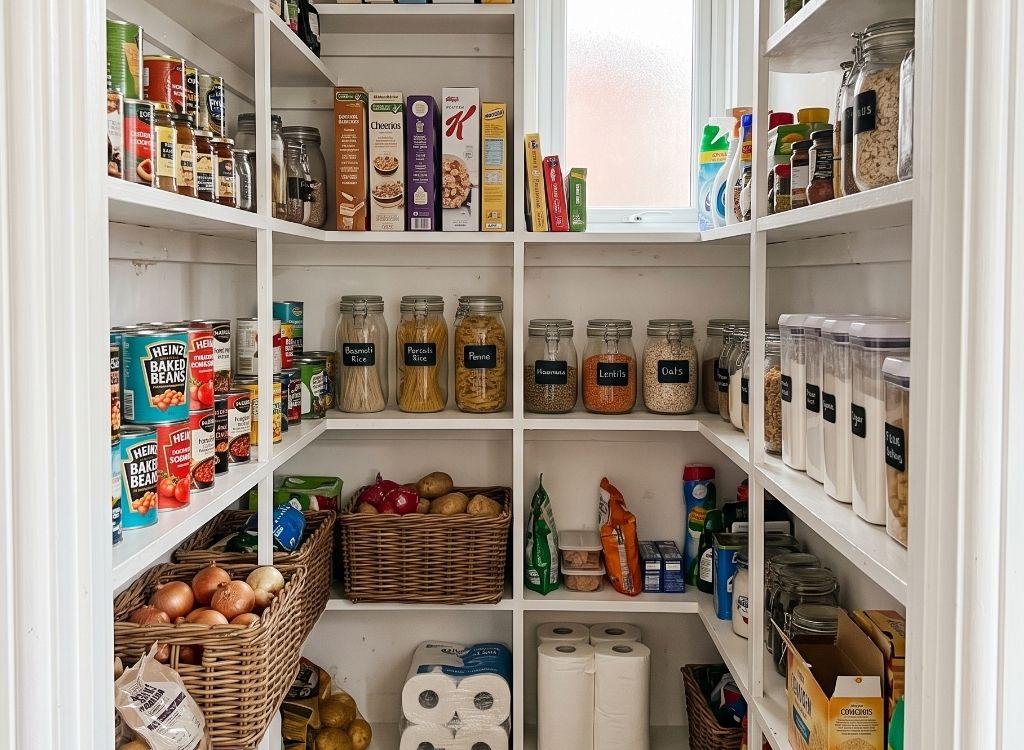
Ever bought another bag of rice, only to find two unopened ones hiding at the back of the pantry?
The best walk-in pantry ideas make food easier to see, give bulky appliances a proper home, and reduce clutter in the main kitchen. A useful pantry does not need to look like a showroom, but it should fit the way your household shops, cooks, and stores food.
Here are 20 practical designs for different room sizes, styles, and budgets.
For a simple starting point, follow our step-by-step pantry reset guide to sort your food, choose useful bins, create clear labels, and map out practical storage zones.
20 Walk-In Pantry Ideas for Better Storage
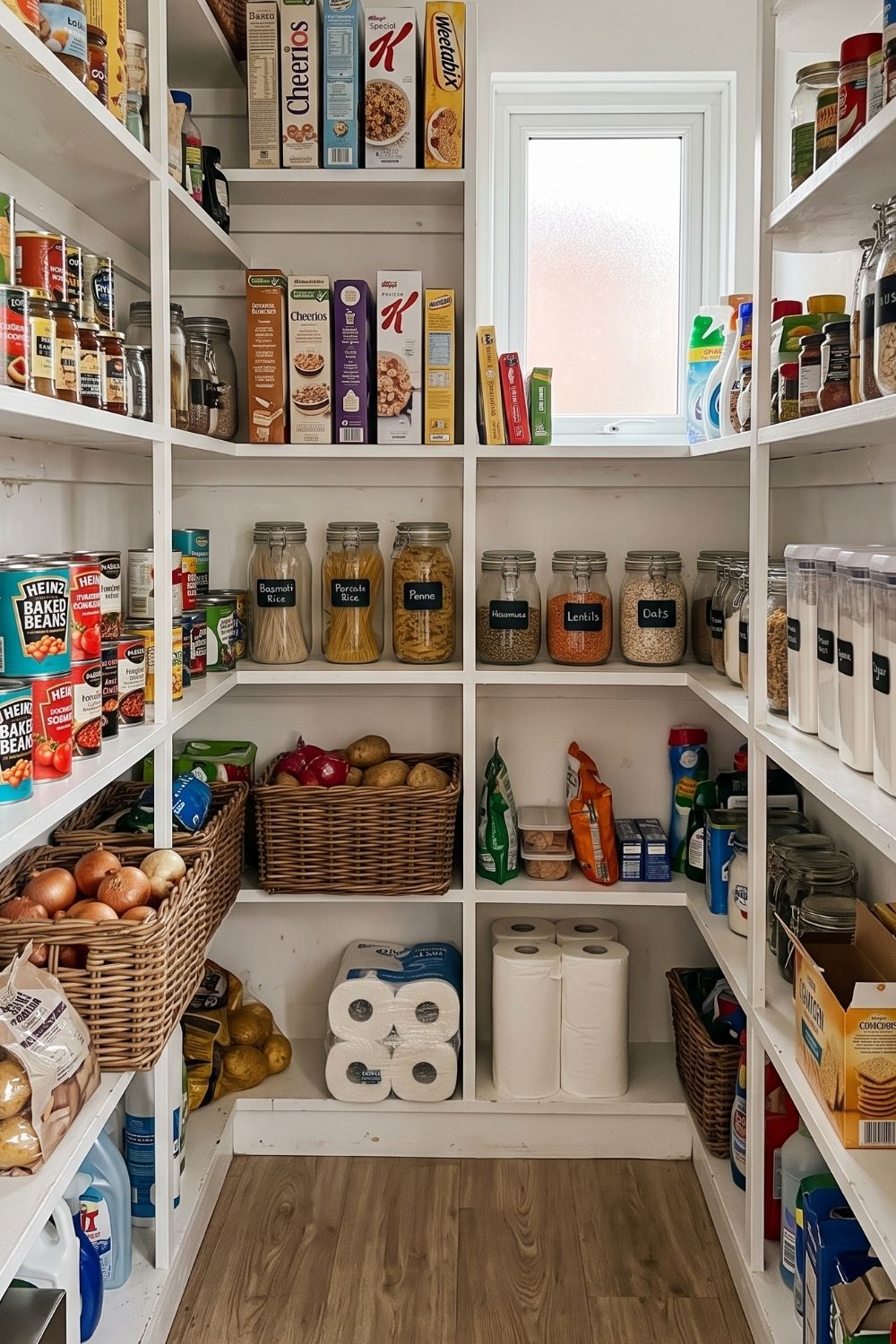
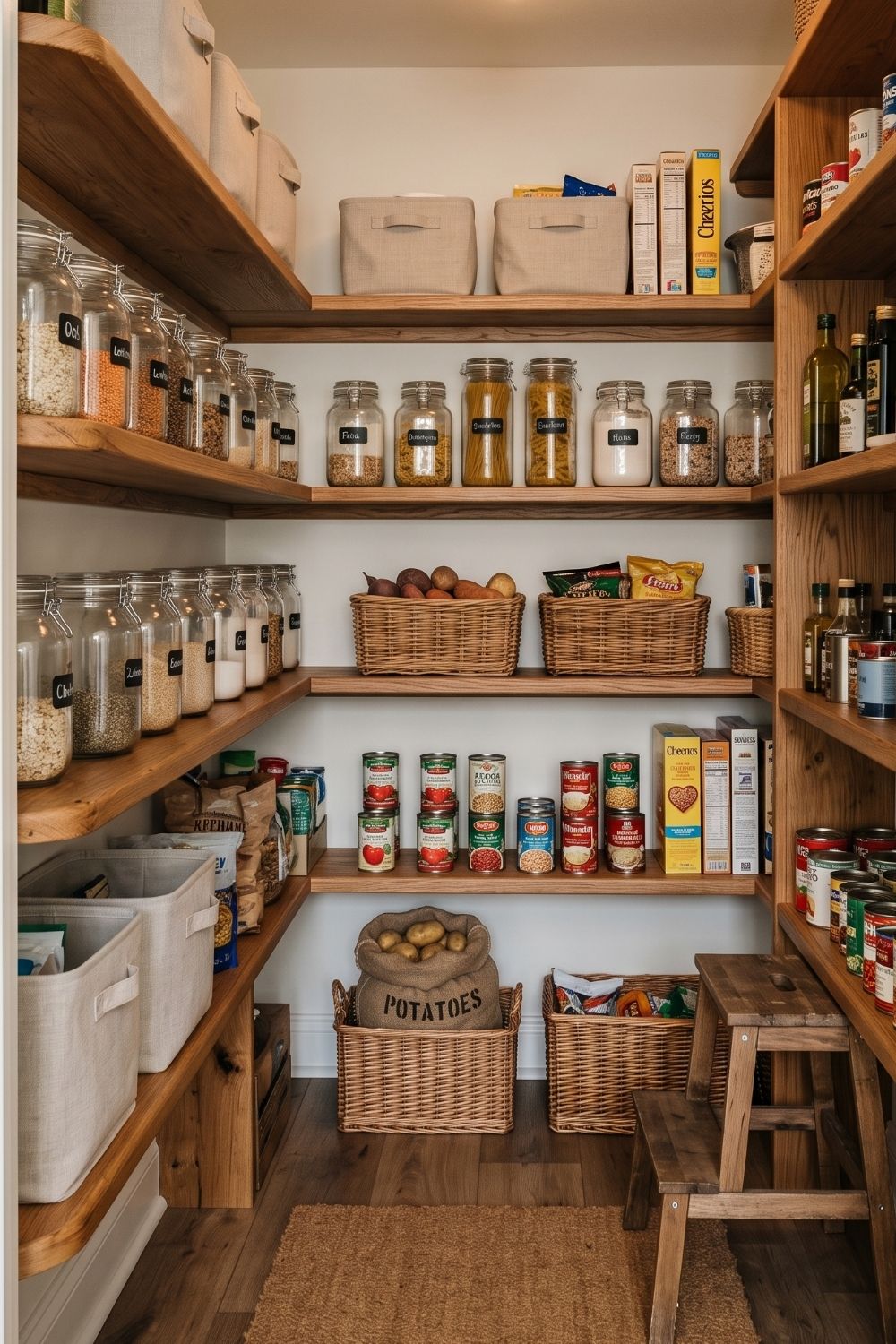
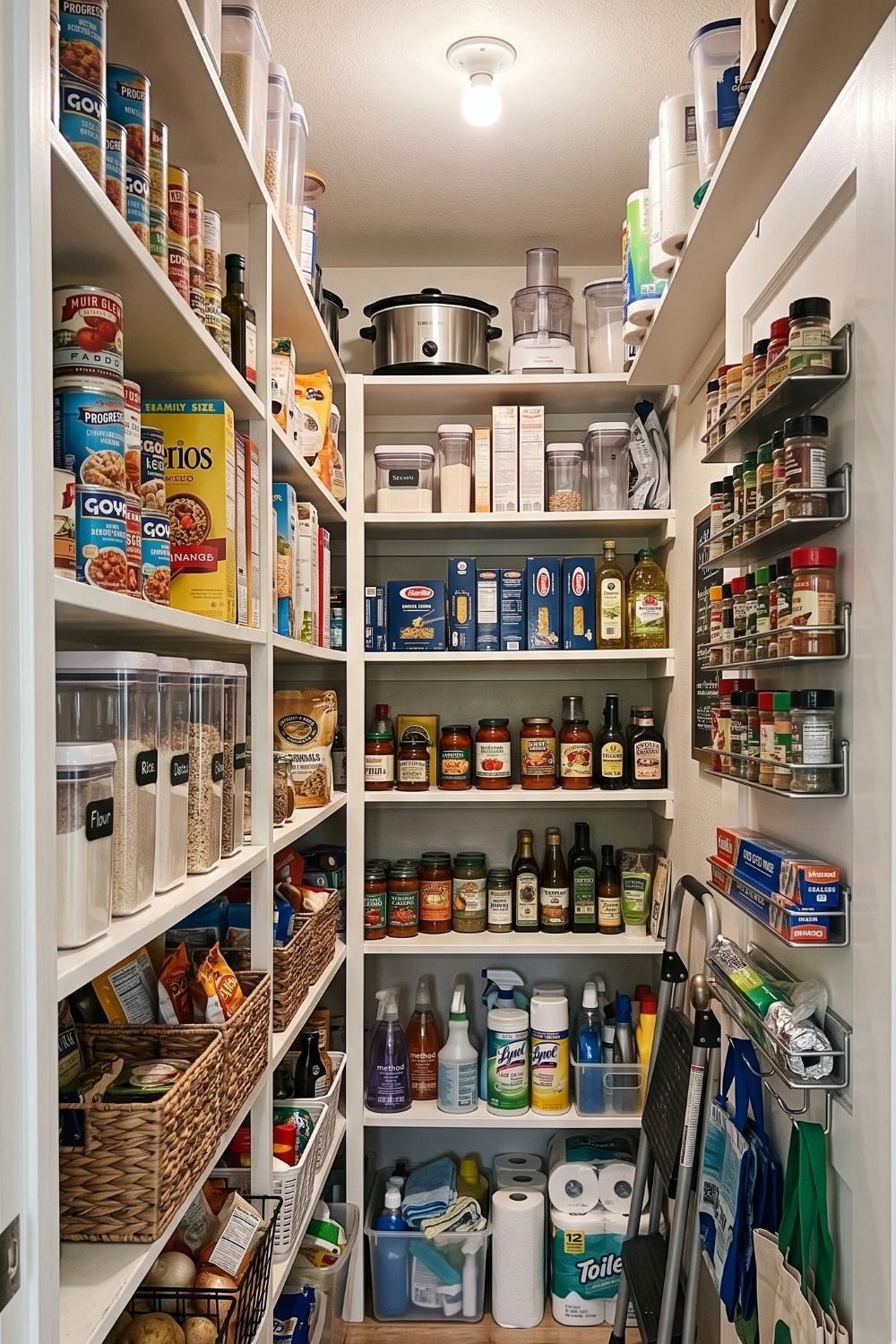
The most useful small walk-in pantry ideas take advantage of wall height. Install shelves toward the ceiling, store occasional items at the top, and keep a sturdy step stool nearby.
Shallow shelves and door organizers prevent food from disappearing at the back. You can find more compact solutions in these small-kitchen storage ideas.
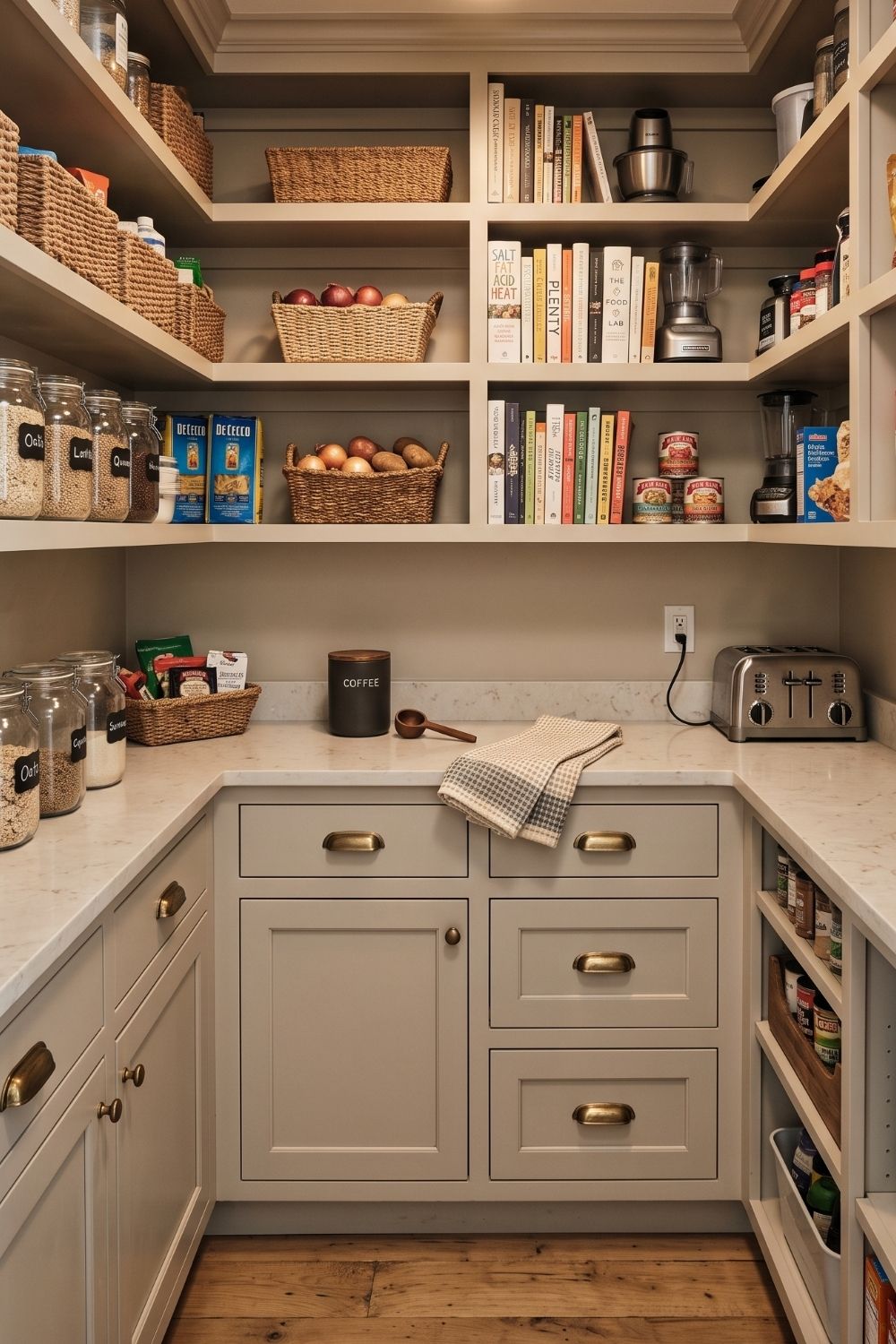
Closed base cabinets can hide bulk packages, paper goods, pet food, and cleaning supplies. Open shelves above keep everyday ingredients visible.
A stone counter, decorative backsplash, and coordinated hardware make the pantry feel connected to the kitchen.
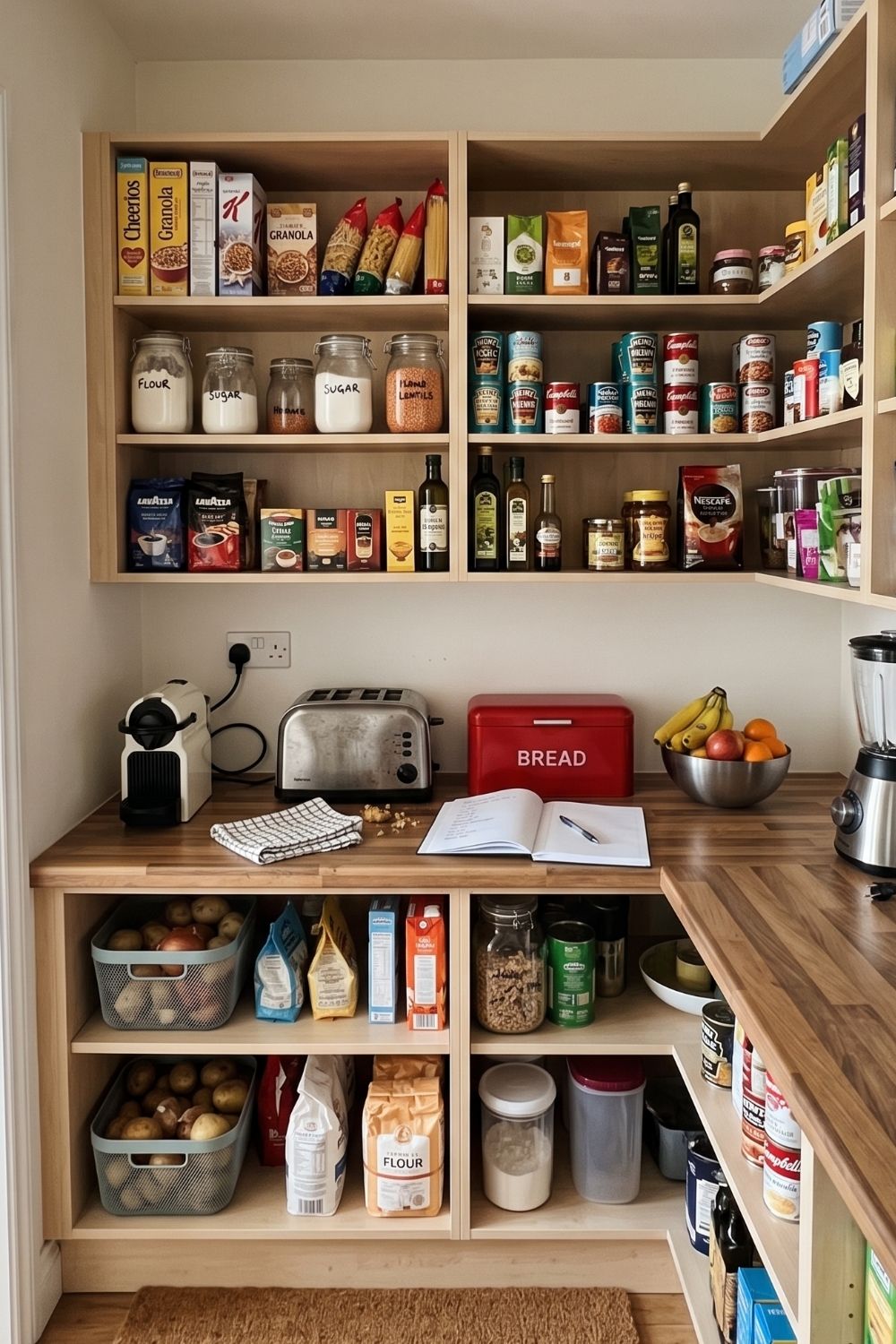
A short counter provides space to unpack groceries, prepare lunches, refill containers, or use small appliances. Keep everyday foods above it and heavier equipment below.
Leave part of the surface clear so it remains useful. Moving appliances into the pantry can also improve kitchen counter organization.
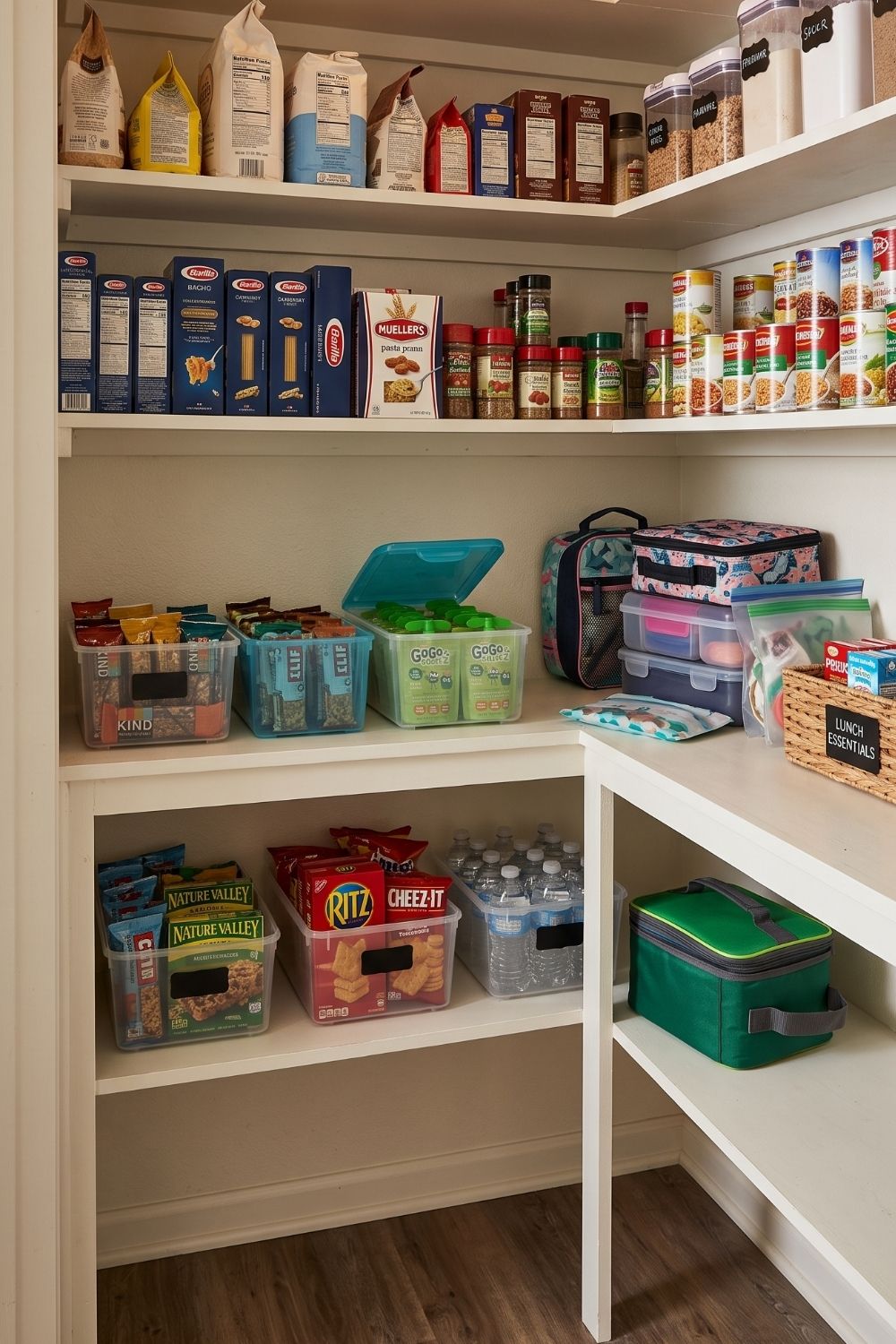
Place snacks, breakfast foods, bottles, and lunch supplies on lower shelves. Children can reach what they need without climbing or moving other items.
Use simple labels such as “Breakfast,” “School Snacks,” and “Lunch Supplies.”
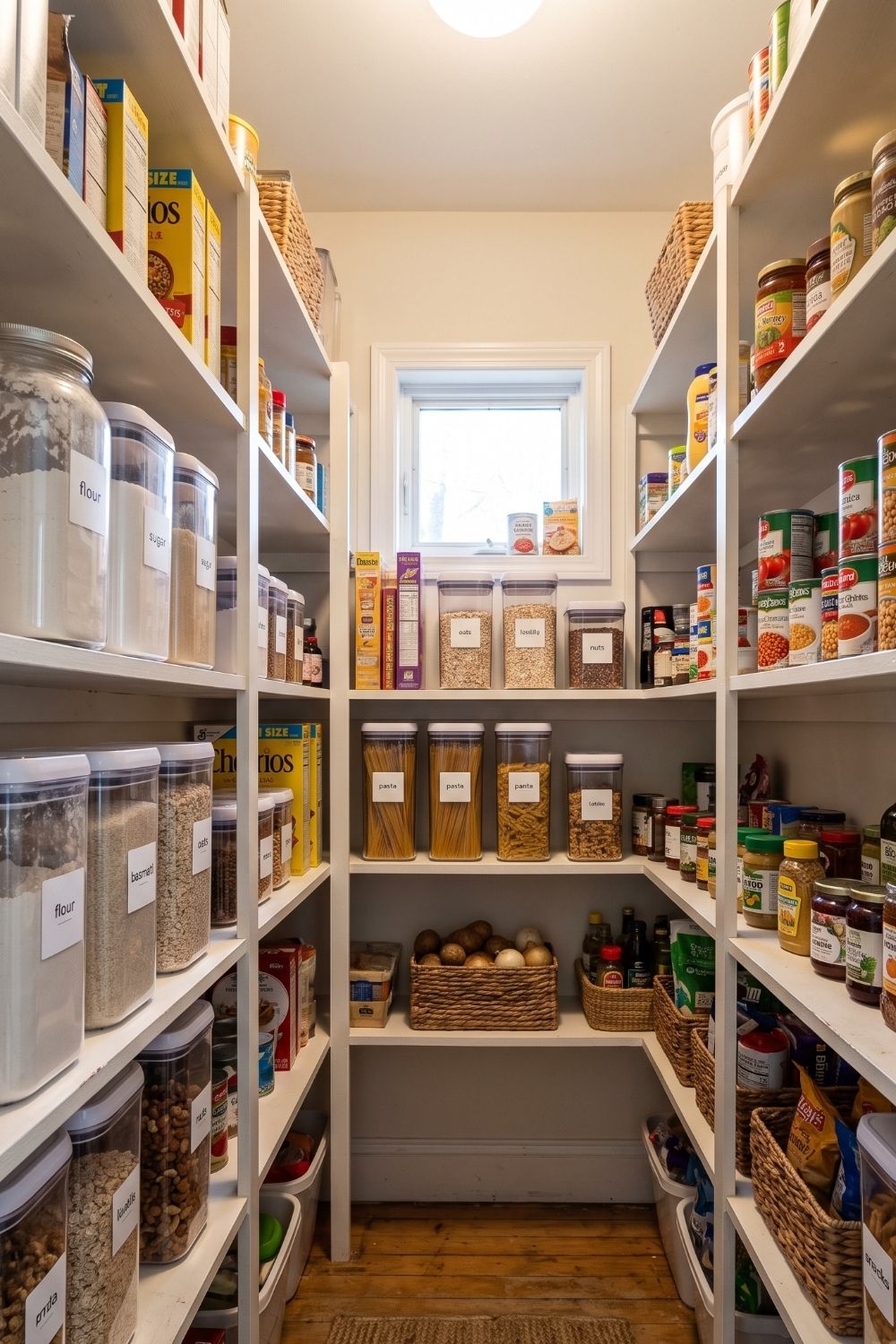
Matching containers are among the most popular walk-in pantry organization ideas because repeated shapes reduce visual clutter. Use them for frequently purchased staples such as flour, sugar, rice, pasta, oats, and cereal.
Choose containers large enough to hold a full package.
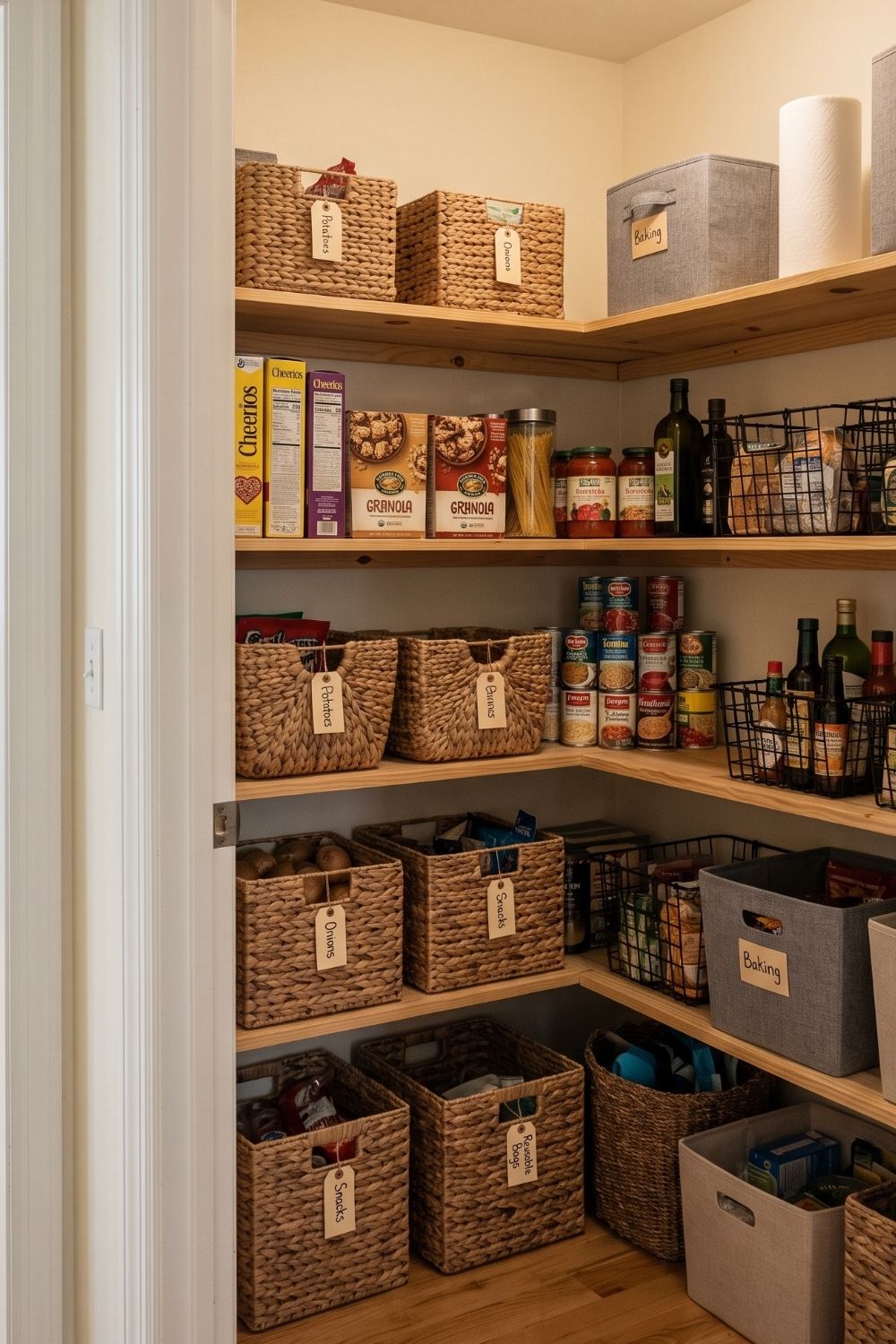
Woven baskets hide snack bags, bread, potatoes, onions, and pantry backstock while adding texture. Rectangular baskets usually use shelf space better than heavily tapered designs.
Add labels so each basket remains easy to identify.
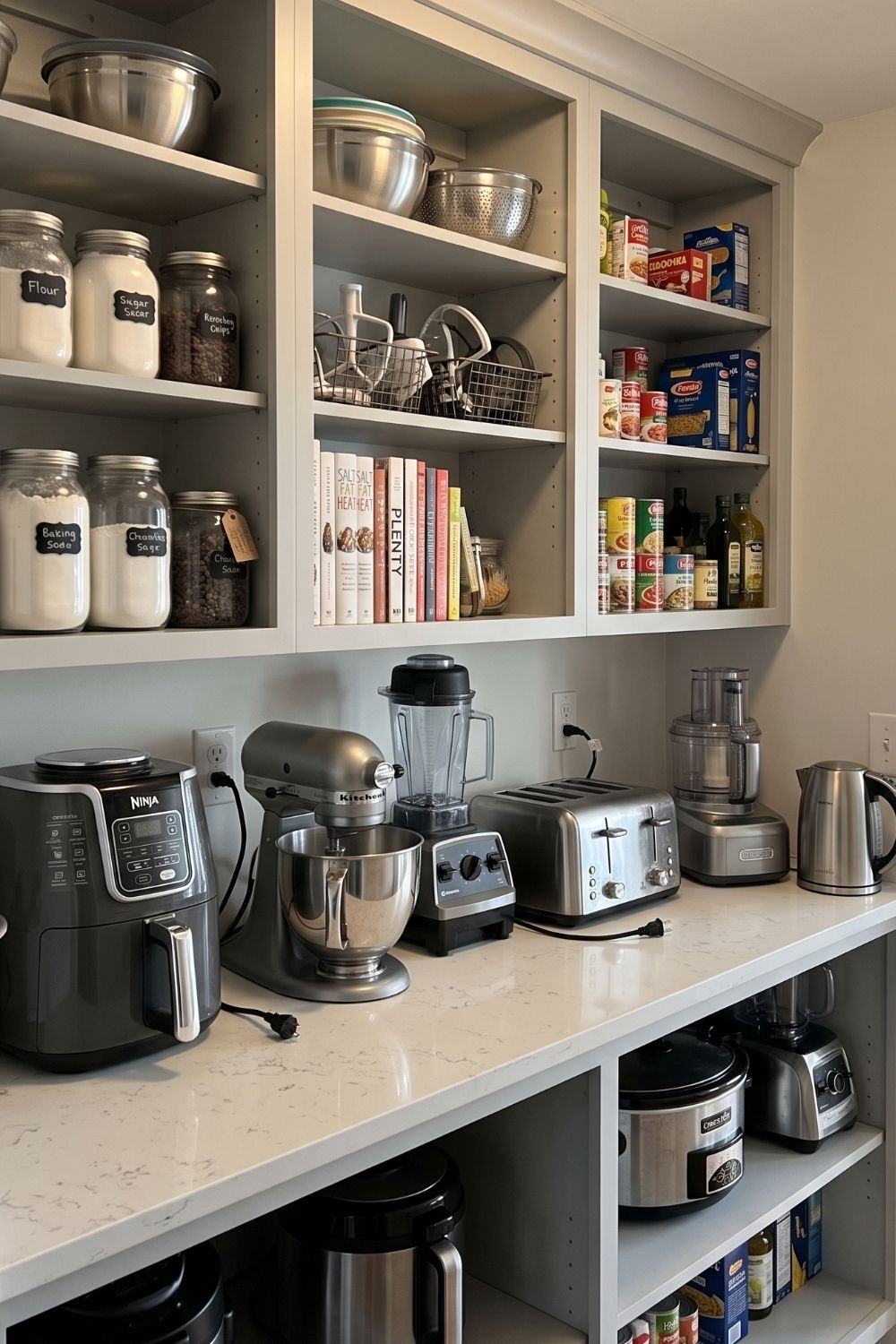
Use reinforced shelves or a sturdy counter for mixers, blenders, slow cookers, air fryers, and toasters. Keep frequently used appliances at a comfortable height and store seasonal items higher up.
Check weight limits, ventilation, clearance, and electrical requirements before using appliances inside the pantry.
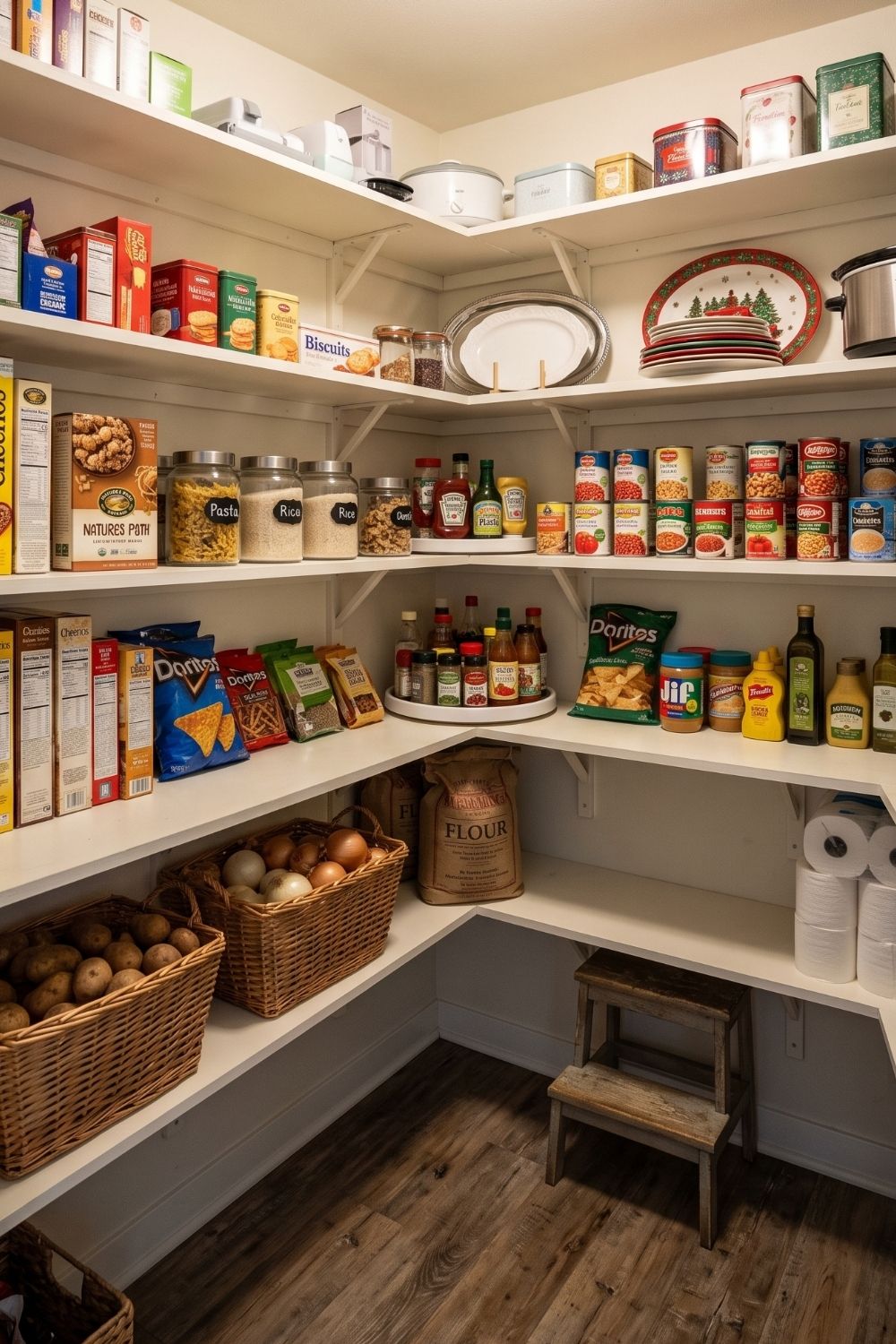
L-shaped or U-shaped shelving uses several walls while preserving the central walkway. Use shallower shelves on the sides and a deeper section across the back.
Lazy Susans, risers, and corner bins make these pantry shelving ideas easier to use.
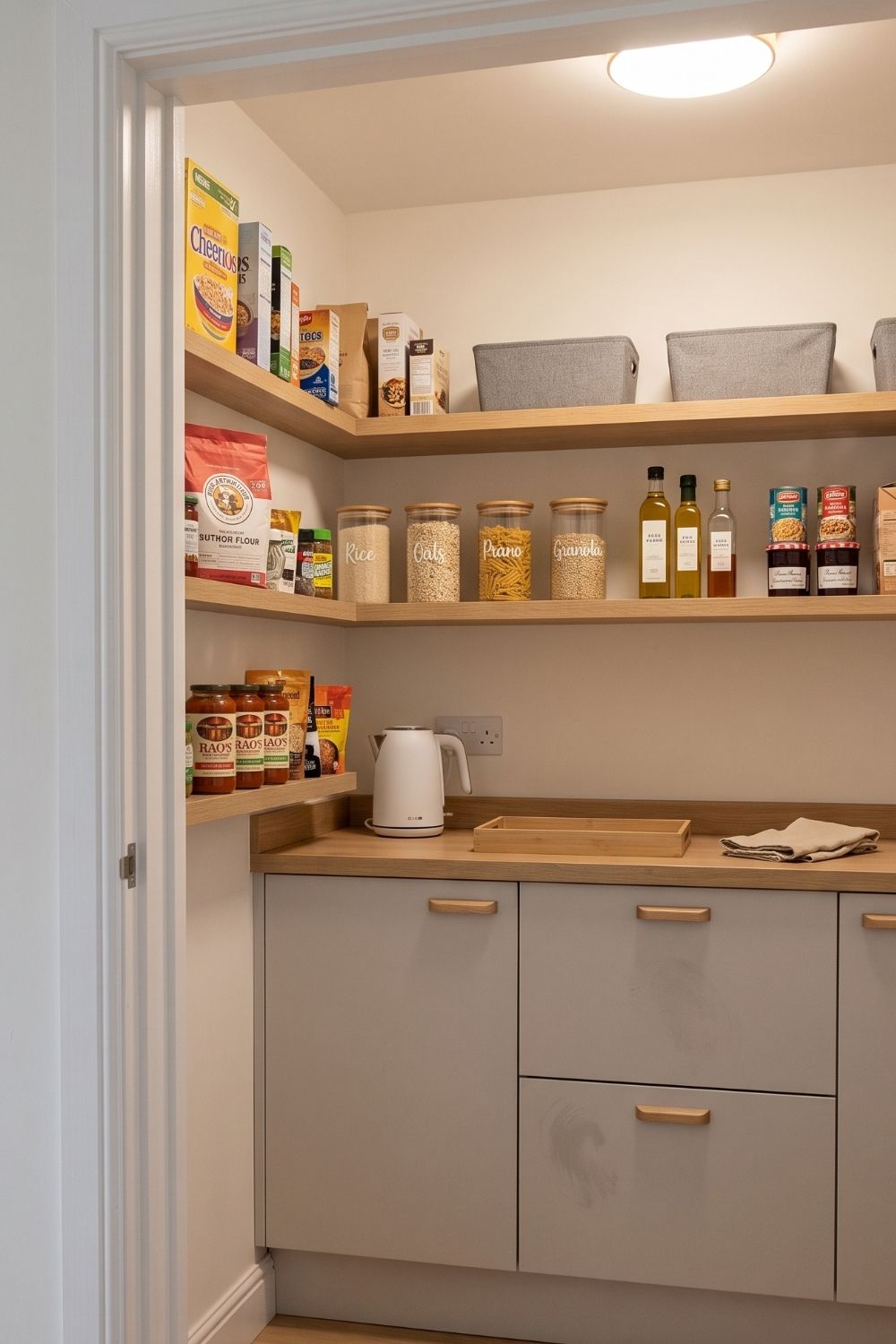
Limit the pantry to one or two finishes, such as pale wood, white cabinets, and clear acrylic bins. Closed storage can hide bulk purchases, while open shelves hold everyday items.
Repeat hardware or cabinetry details from the kitchen for a cohesive look.
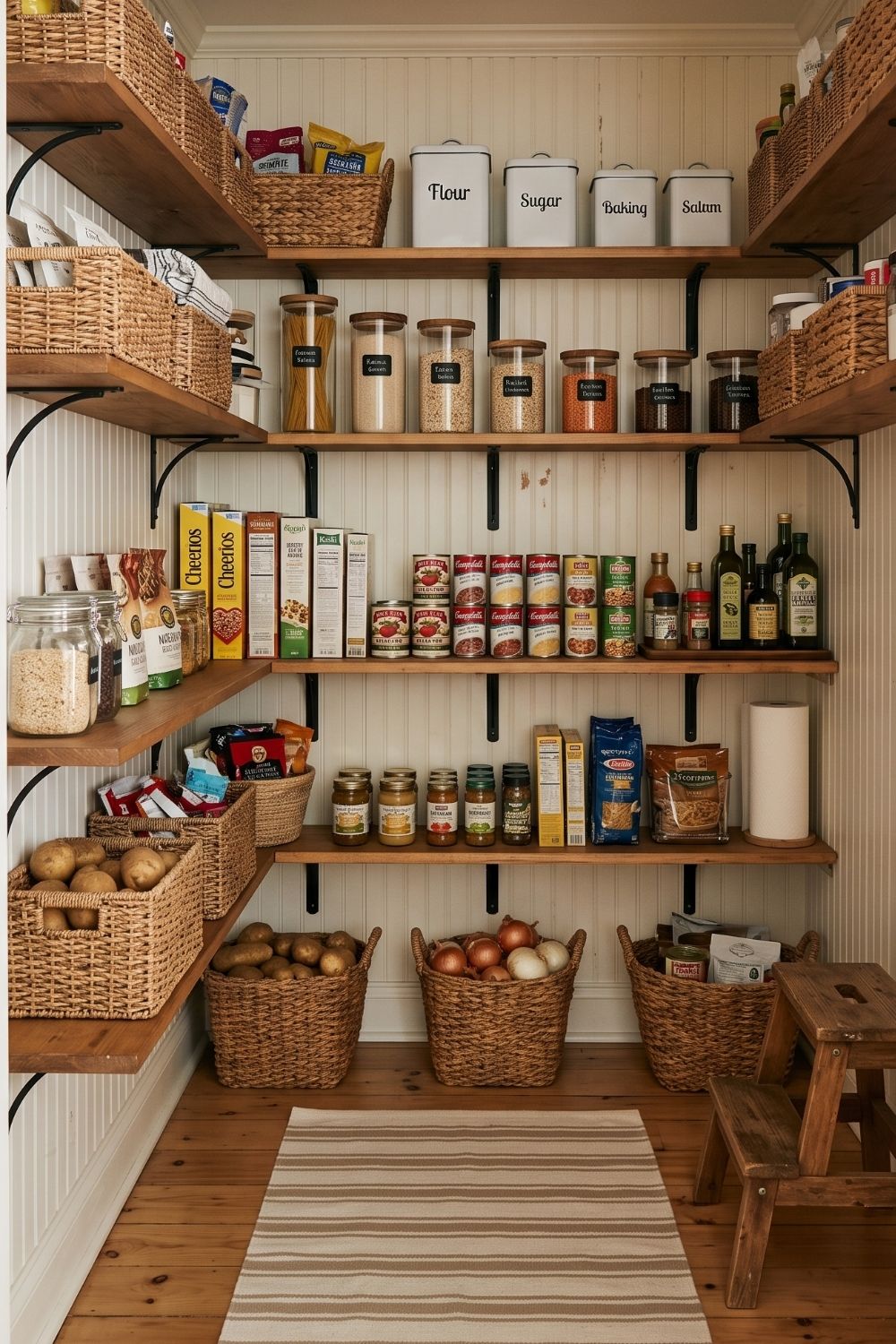
Beadboard, painted shelves, glass canisters, wire baskets, and natural wood create a relaxed farmhouse style. Vintage-inspired lighting or hardware can add character without taking up storage space.
Keep decorative accessories limited so the room remains practical.
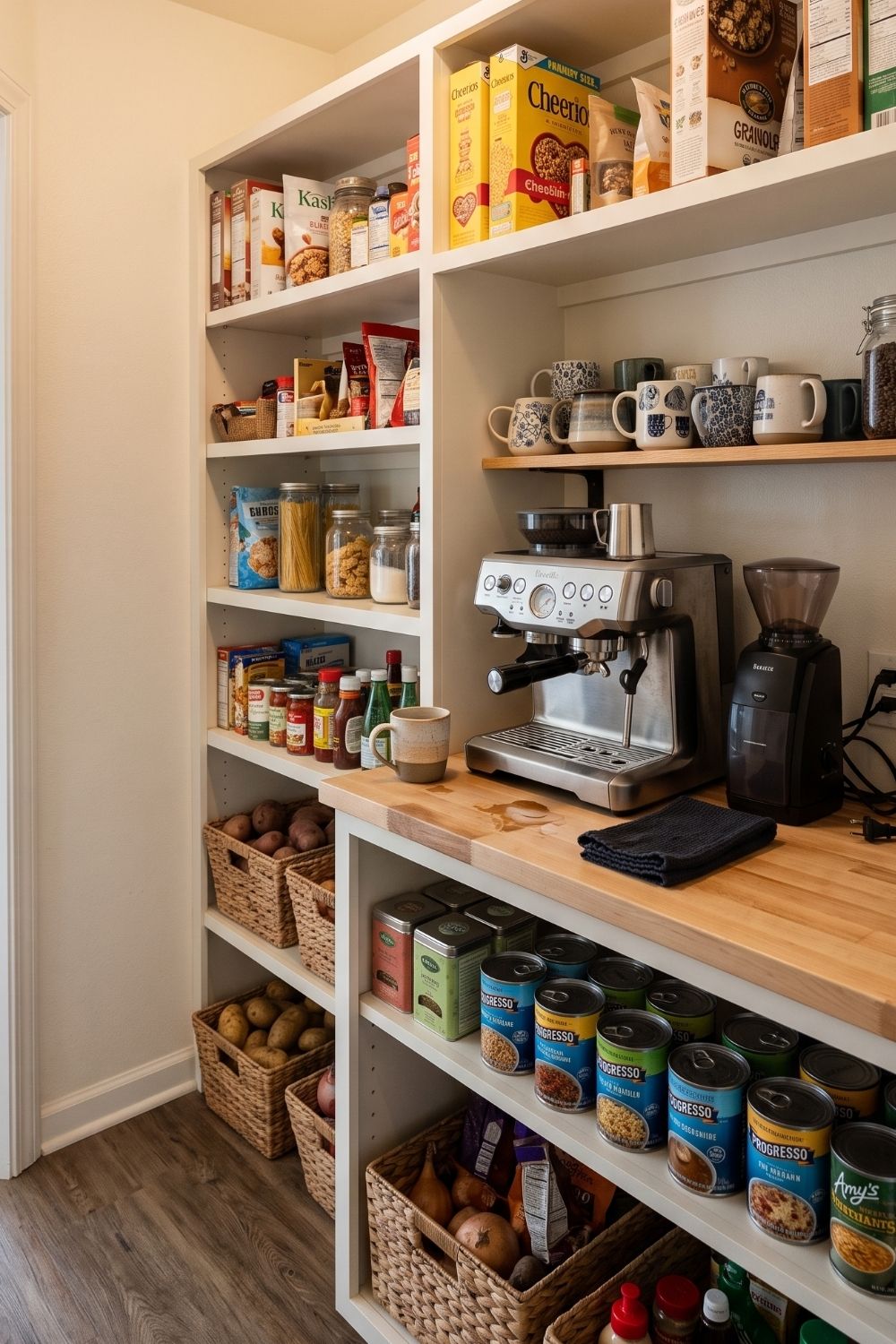
Group the coffee machine, mugs, beans, tea, filters, syrups, and sweeteners in one area. Add a wipeable backsplash and a tray to catch spills.
Leave enough counter space to fill the machine and prepare a drink comfortably.
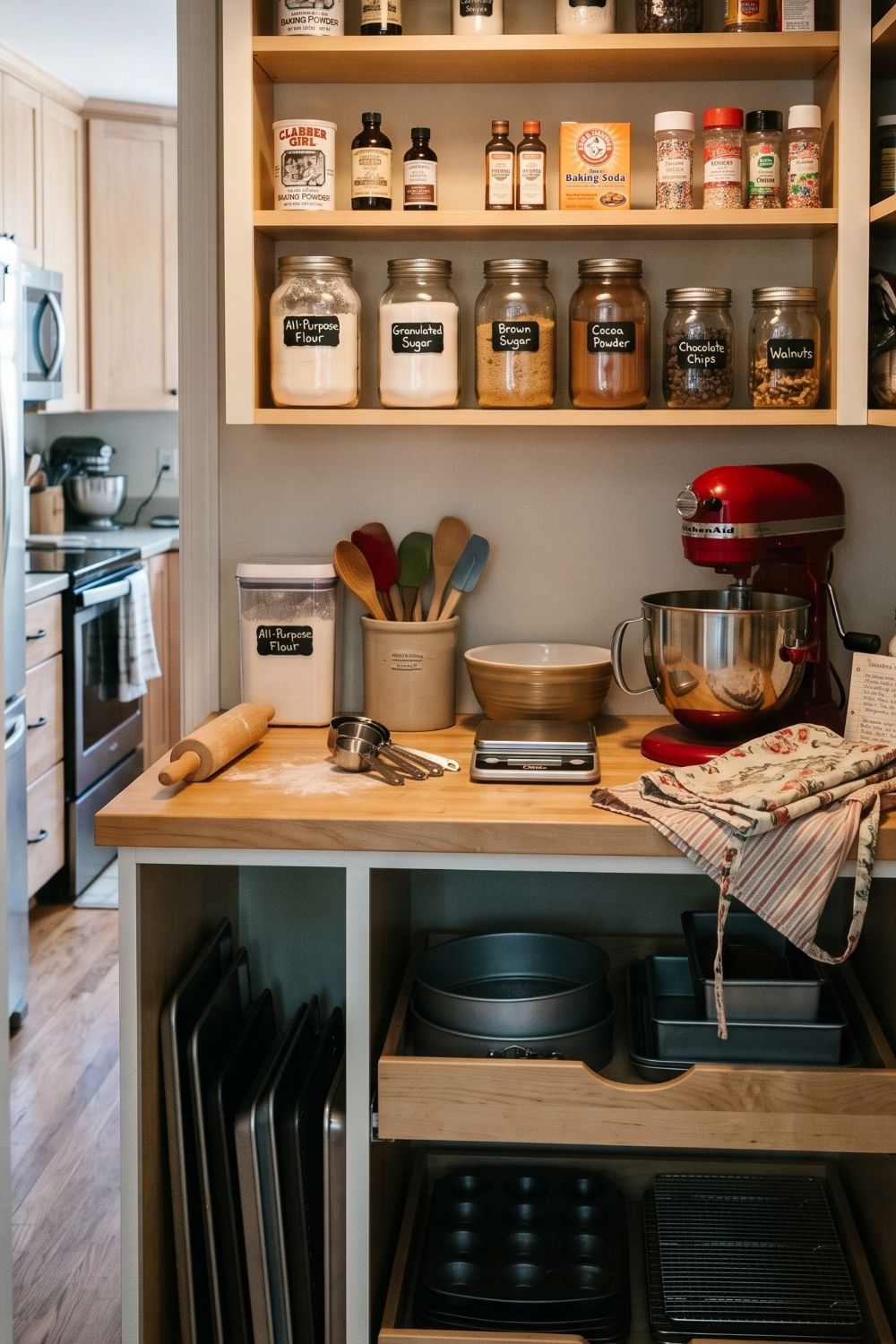
Store flour, sugar, baking powder, chocolate, extracts, and measuring tools near a work surface. Keep bowls, baking tins, and decorating supplies in drawers or baskets below.
A pull-out shelf can make a heavy stand mixer easier to use.
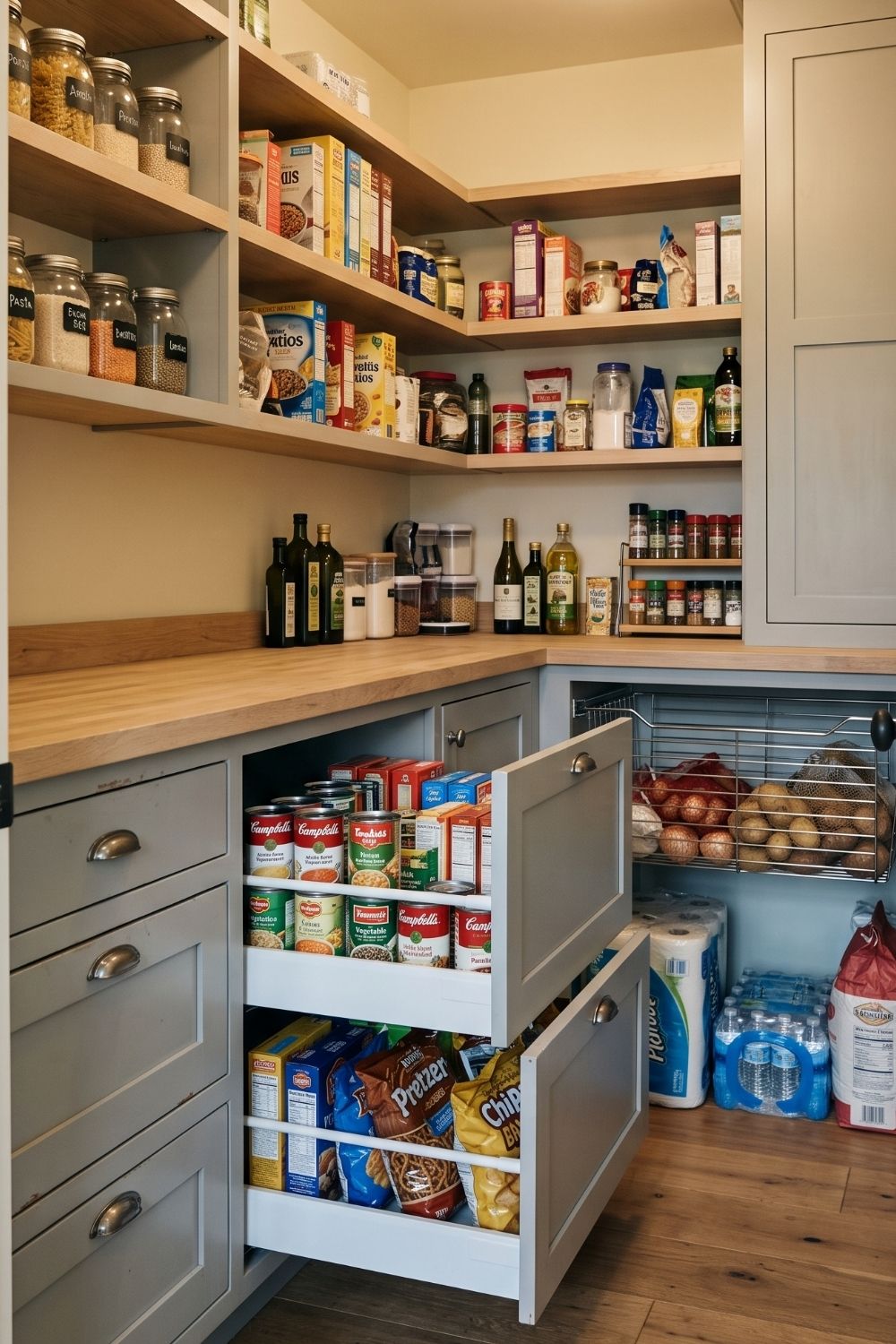
Pull-out drawers bring canned goods, drinks, vegetables, appliances, and heavy packages into view. They are especially helpful in deep lower cabinets.
Sliding baskets offer a more affordable alternative to custom drawers, but always check their weight limits.
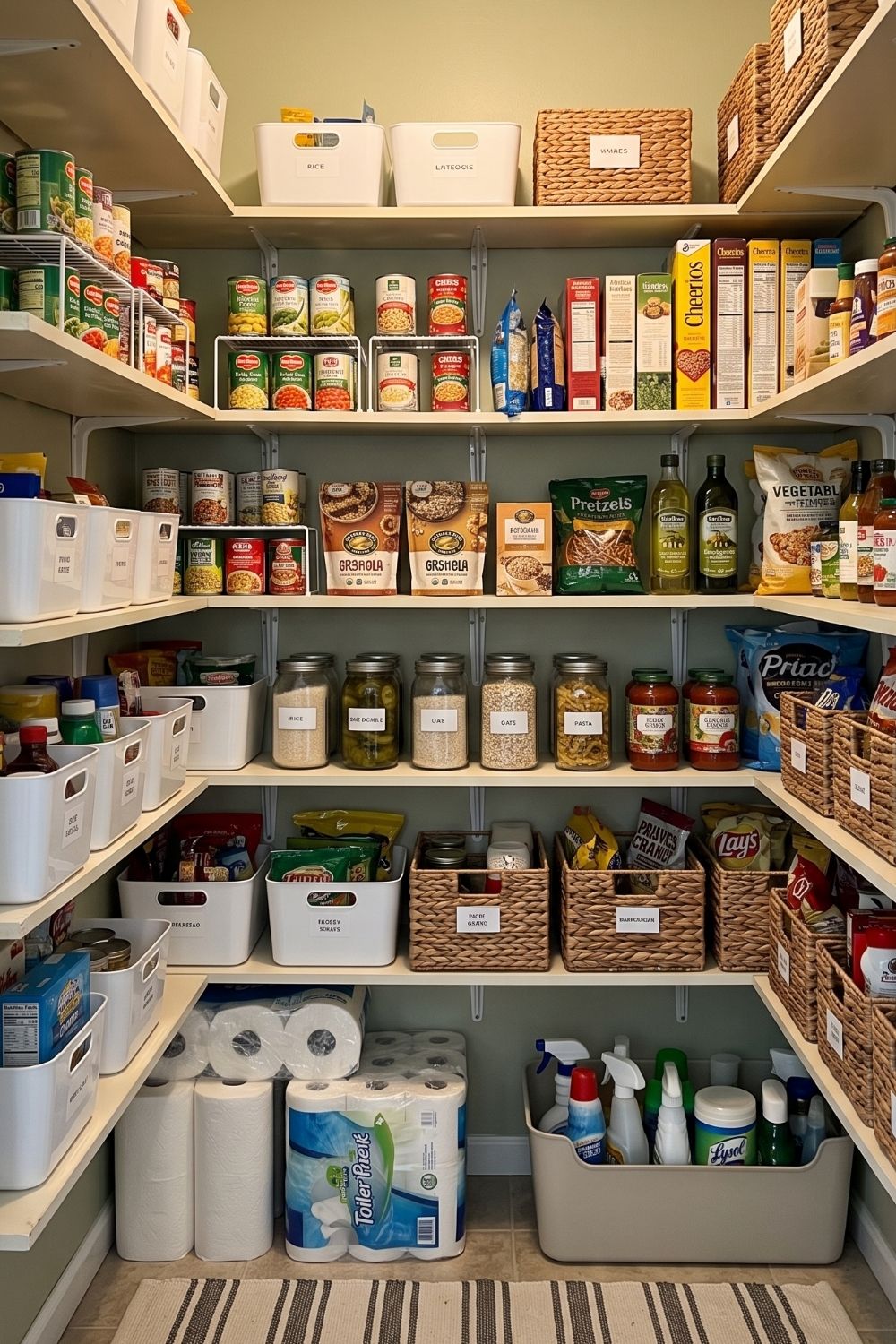
Begin by removing expired food, grouping similar items, and measuring every shelf. A few correctly sized bins will work better than a large collection that does not fit.
Paint existing shelves, use affordable plastic containers, and make labels from removable tape or cardstock.
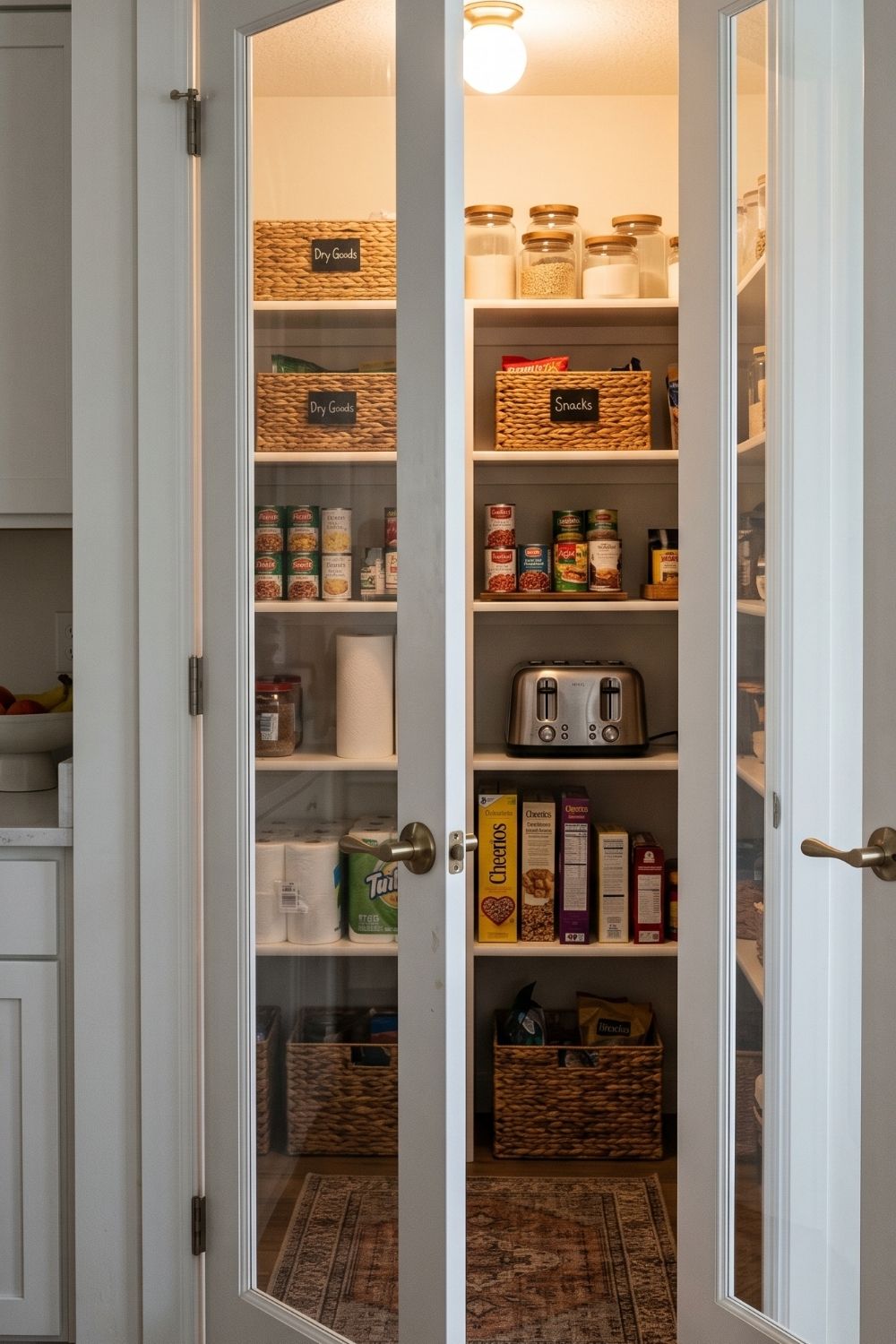
French doors, fluted glass, frosted glass, and arched openings can turn the pantry entrance into a design feature. Pocket or sliding doors work well when there is limited floor space.
Measure the full door path so it does not block shelves, drawers, or kitchen traffic.
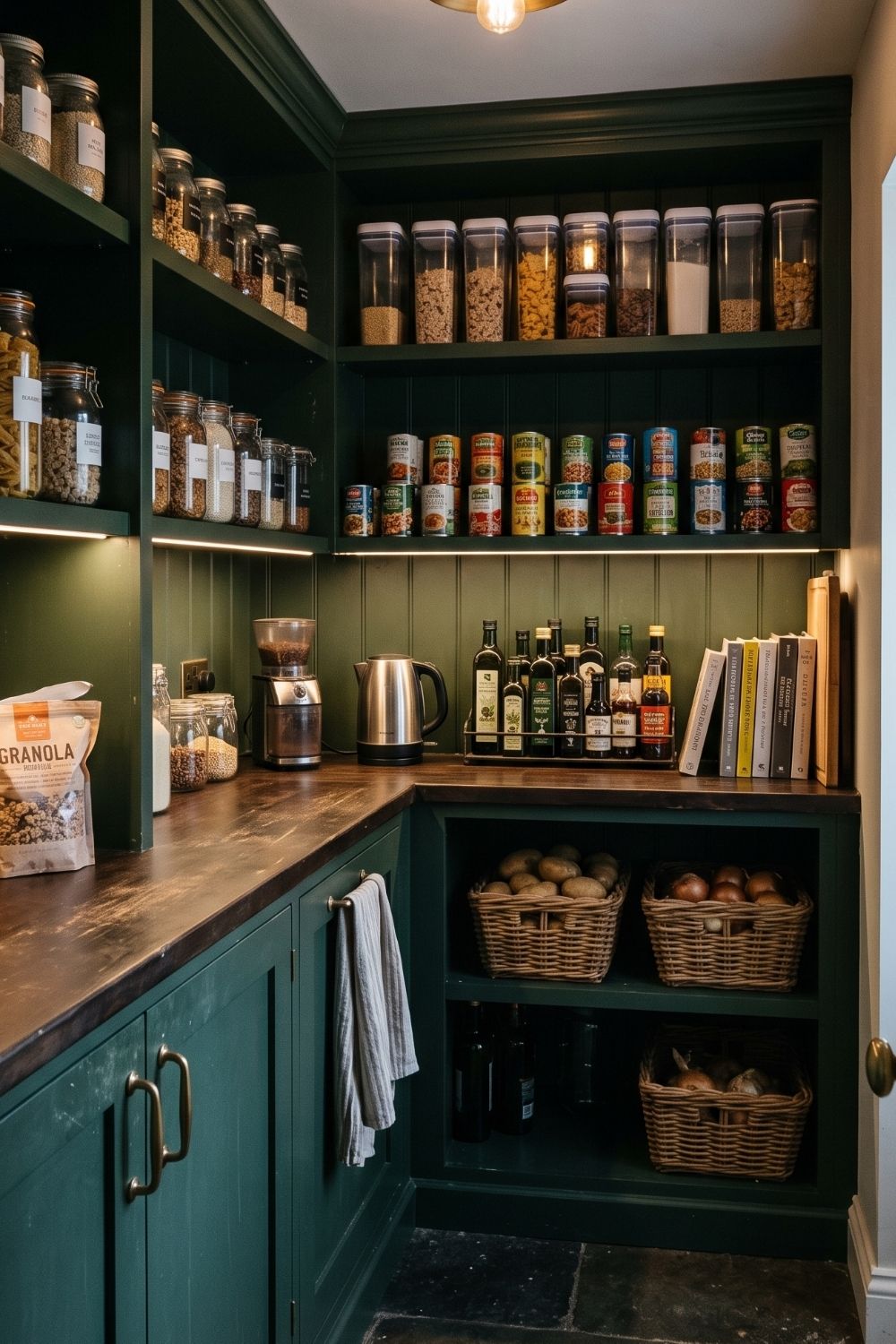
Deep green, navy, charcoal, and dark brown can make a pantry feel rich and polished. Pair darker finishes with wood, brass, pale counters, and clear containers.
Strong ceiling lighting and under-shelf lights are essential for keeping labels easy to read.
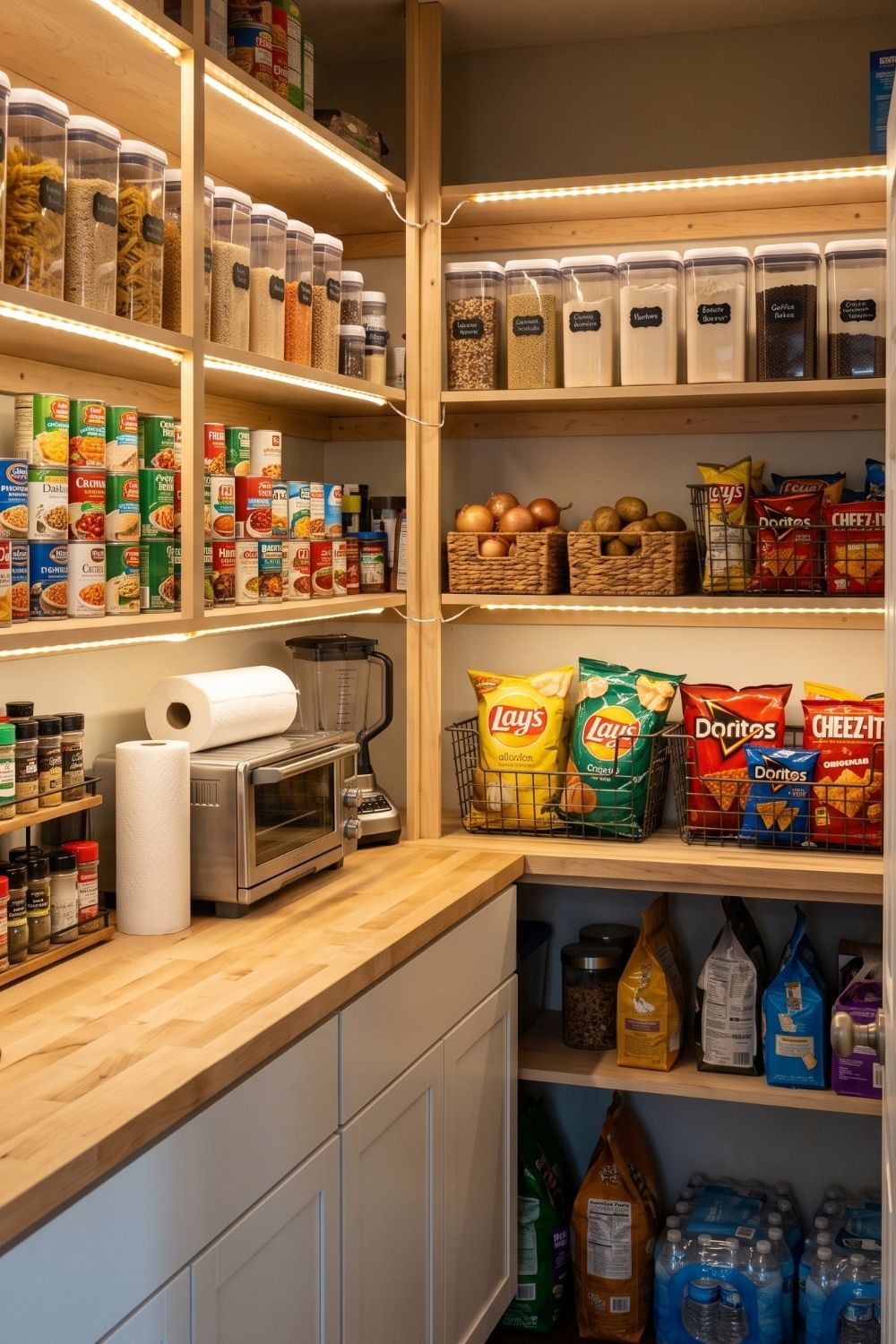
LED strips or slim light bars brighten shelves and make stored items easier to see. Place the lights near the front edge so they illuminate the contents rather than only the back wall.
Rechargeable lights suit simple updates, while hardwired lighting should be planned before shelving is installed.
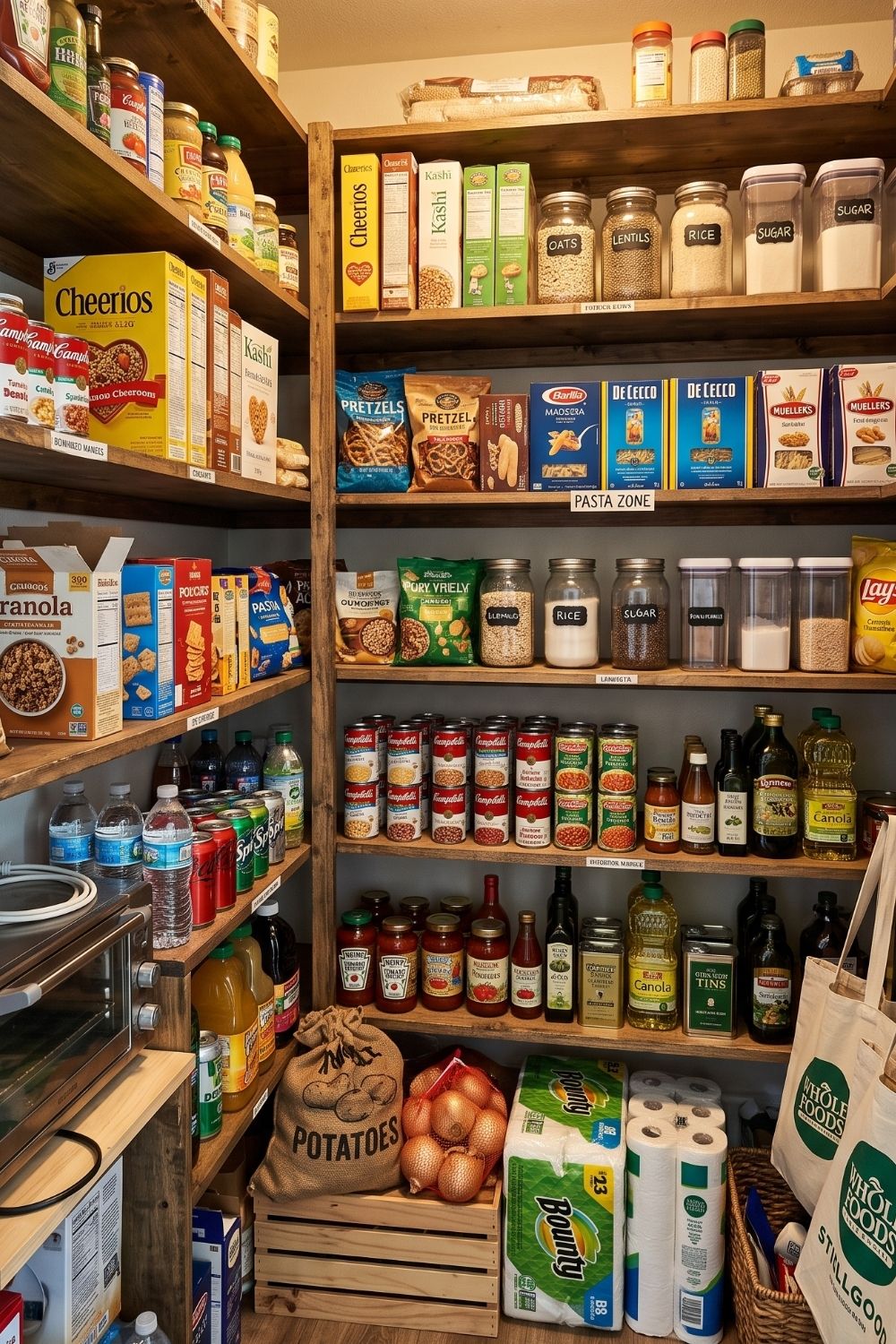
A practical pantry can combine clear containers, baskets, risers, boxed food, paper goods, and appliances. Everything does not need to match.
Consistent zones and broad labels create order, while an overflow shelf makes room for multipacks and extra groceries.
Walk-In Pantry Layout Ideas and Planning Tips
Take Inventory
Test the Layout
Use painter’s tape to mark shelves, counters, and the door path. Walk through the room while carrying a grocery bag and check whether drawers can open without blocking the aisle.
Shelves around 10 to 12 inches deep suit cans, jars, and sauces. Deeper lower shelves work better for appliances, baskets, and bulk items.
Vary Shelf Heights
Use short gaps for cans, medium gaps for boxes and baskets, and tall openings for appliances. Adjustable shelves make it easier to change the pantry later.
Deep shelves are most useful when they include pull-outs or hold large items in a single row.
Create Practical Zones
- Store breakfast foods together.
- Keep lunch supplies and snacks in one area.
- Place baking ingredients near measuring tools.
- Group canned food, sauces, and dinner staples.
- Separate backstock from open packages.
- Keep children’s items on lower shelves.
- Reserve one shelf for overflow.
Frequently used items should sit between waist and eye level. Heavy appliances and drinks belong lower down.
For more detailed pantry organization ideas, see our complete pantry organization guide.
Plan Lighting and Power
A ceiling fixture may not fully illuminate deep or lower shelves. Add under-shelf lighting where needed and plan electrical outlets before installing built-ins.
Follow appliance instructions for ventilation and clearance, and use a qualified professional for permanent electrical work.
Choose the Right Door
Leave Some Empty Space
Shopping habits change, children grow, and new appliances arrive. Adjustable shelves, removable bins, and broad labels make the pantry easier to update.
Leave a small area open for incoming groceries and unexpected overflow.
Frequently Asked Questions
What is a good size for a walk-in pantry?
How deep should pantry shelves be?
What material is best for pantry shelves?
How can a pantry look more expensive?
How do you keep a pantry organized?
Start with clear zones, broad labels, and enough space for new groceries. Our step-by-step pantry organization guide includes practical pantry storage tips, bin ideas, and a quick organization map you can follow.
The most useful walk-in pantry ideas solve everyday problems rather than creating a room that only looks good in photographs. Start with the issue that causes the most frustration, whether that is hidden cans, crowded counters, poor lighting, or snacks spread across several shelves.
The best pantry organization ideas keep food visible, place everyday items within reach, and leave enough flexibility for real life. A pantry does not need to stay perfectly styled, but it should make cooking, shopping, and busy mornings easier.