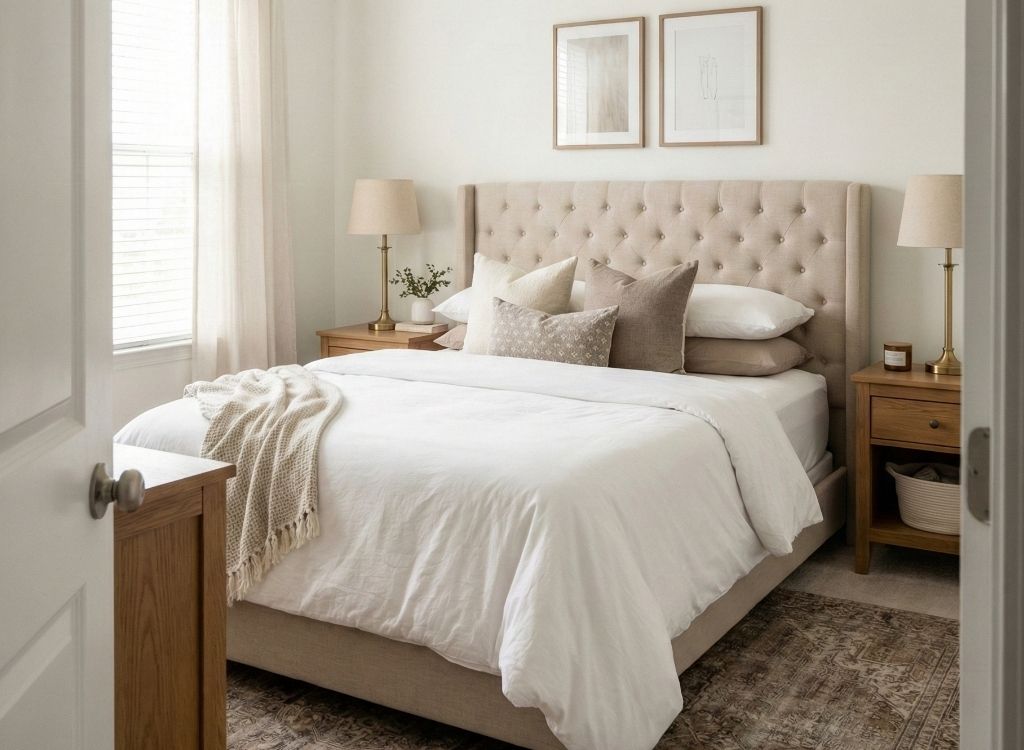
Master bedroom ideas can get weirdly overcomplicated. One minute you are looking for a better headboard, and suddenly you are comparing plaster wall finishes, custom drapery, and bedding that costs more than a weekend away.
A beautiful master bedroom should feel grown-up, calm, and easy to live with. It should look pulled together when the bed is made, but still let you toss a throw over the foot of the bed and call it good. That balance matters, especially in a space that is supposed to help you actually rest.
The best master bedroom ideas usually come back to the same core pieces: layered bedding, a strong headboard, good lighting, a rug that is large enough, calm color, and a little texture. These pieces are not especially trendy, but they are reliable.
Here are master bedroom decor ideas that feel elegant without turning the room into a showroom.
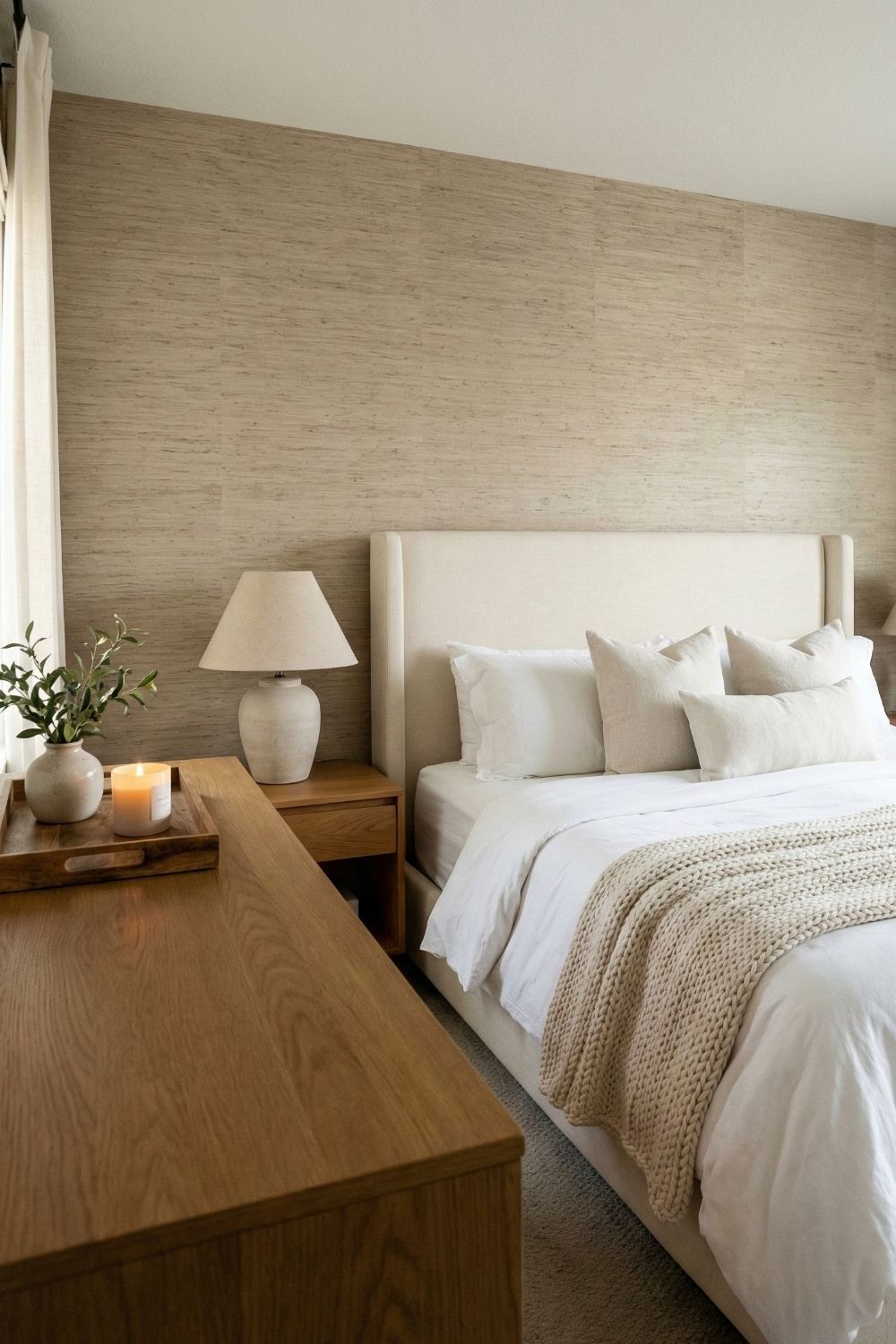
To recreate it:
- Start with warm neutrals instead of bright white.
- Use oatmeal, ivory, sand, or warm beige through pillows and throws.
- Add a light linen headboard for a soft focal point.
- Choose matching nightstands and paired lamps for calm structure.
- Try grasscloth, subtle wallpaper, or a plaster-style treatment behind the bed.
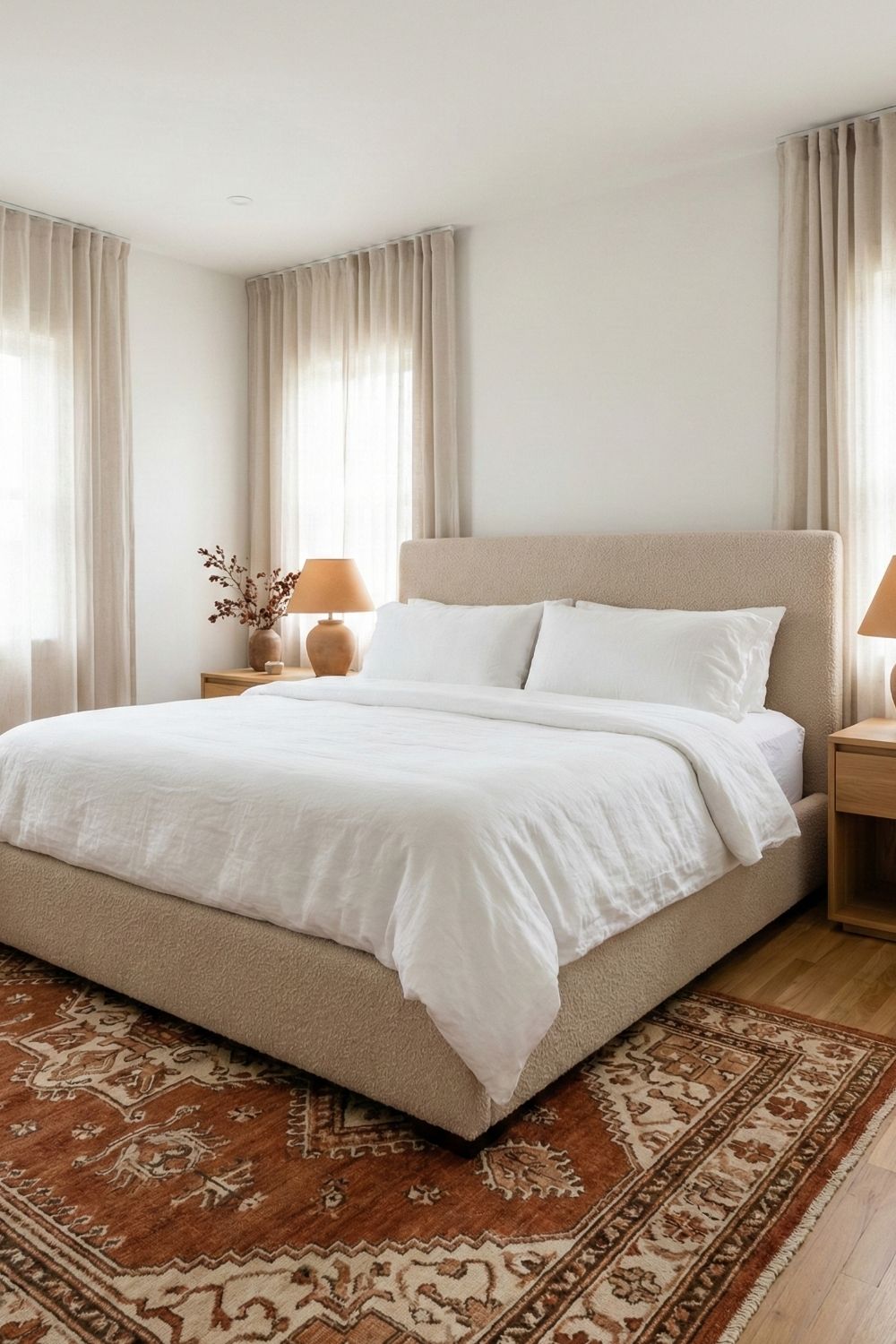
To recreate it:
- Let the bouclé bed be the main feature.
- Keep the bedding simple, clean, and mostly white.
- Add warm lamps or soft fabric shades to avoid a cold hotel look.
- Place a large vintage-style rug under the bed.
- Let the rug extend beyond both sides and the foot of the bed.
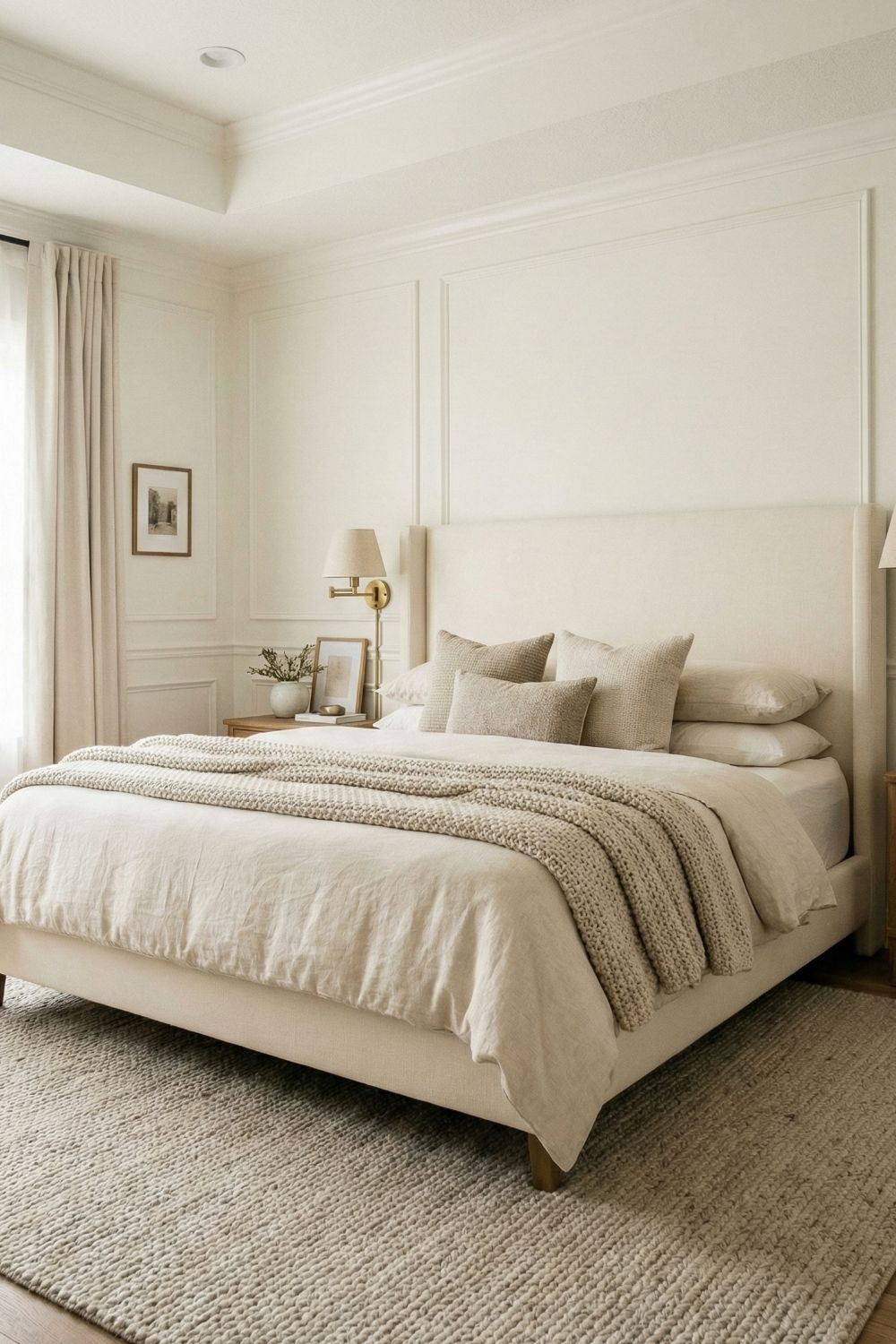
To recreate it:
- Add applied trim behind the bed.
- Paint the molding the same color as the wall.
- Choose warm white, cream, or soft greige for a subtle look.
- Layer white bedding with textured pillows and a chunky throw.
- Use brass sconces or slim brass lamps for a classic finish.
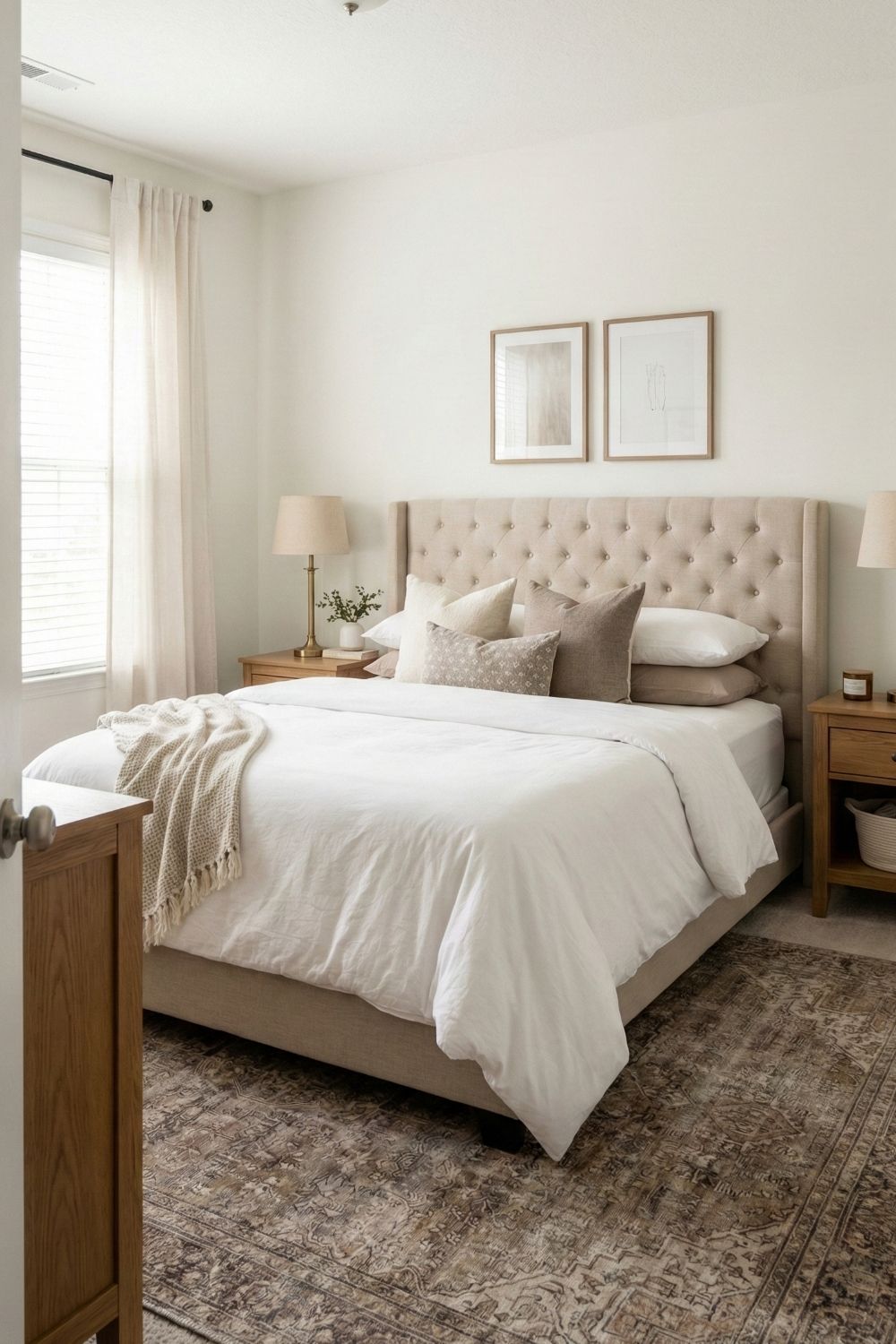
To recreate it:
- Choose a light beige, taupe, or greige tufted headboard.
- Pair it with white bedding and warm wood furniture.
- Use matching nightstands and lamps for an intentional look.
- Hang two simple frames above the bed.
- Choose calm art, such as a soft landscape or neutral abstract print.
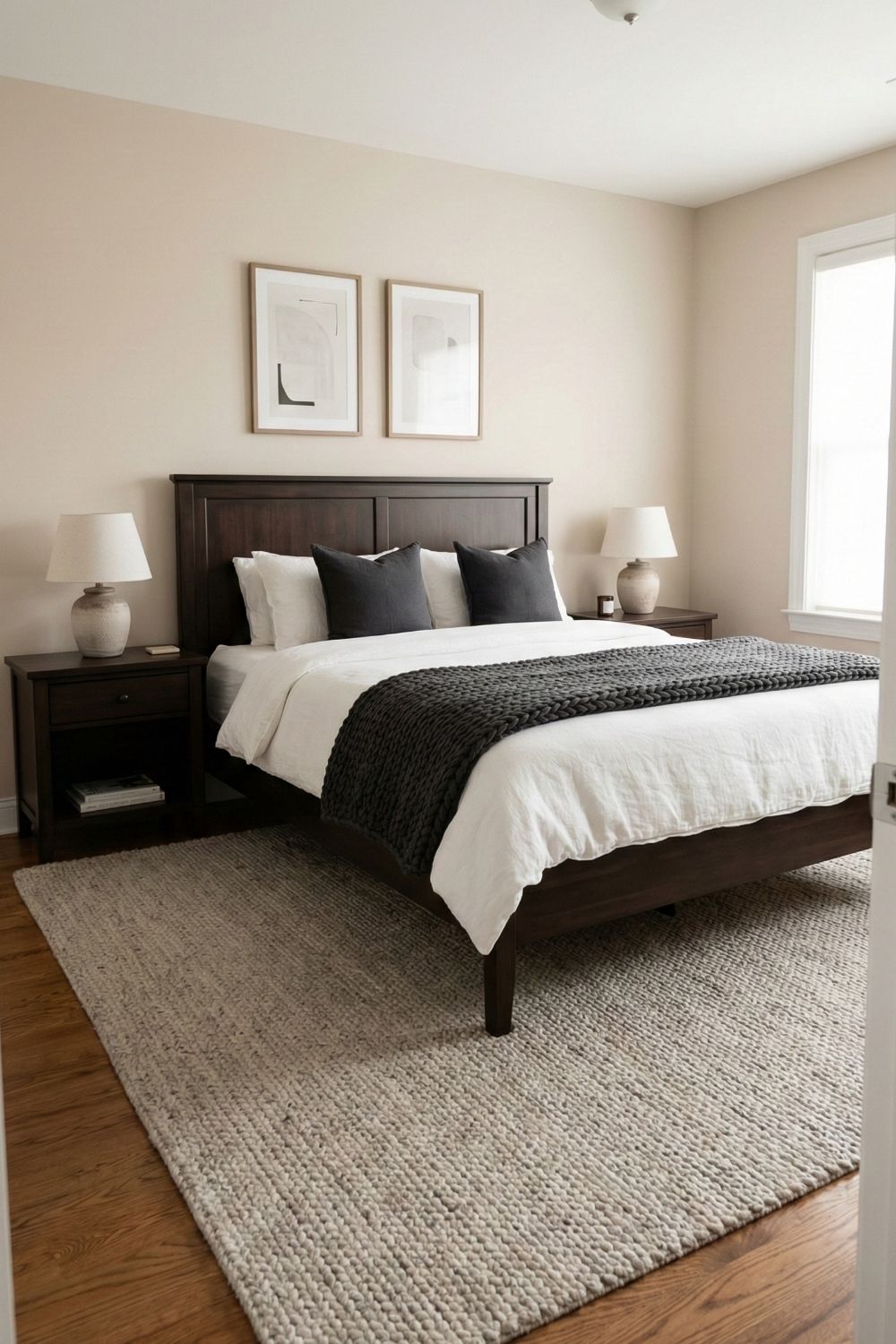
To recreate it:
- Use one strong anchor piece, such as a dark wood bed frame or dresser.
- Keep the bedding light so the room still feels fresh.
- Add a charcoal throw, dark pillow, or muted rug detail.
- Repeat the deeper tone once or twice so it feels intentional.
- Keep the styling clean with simple lamps and minimal art.
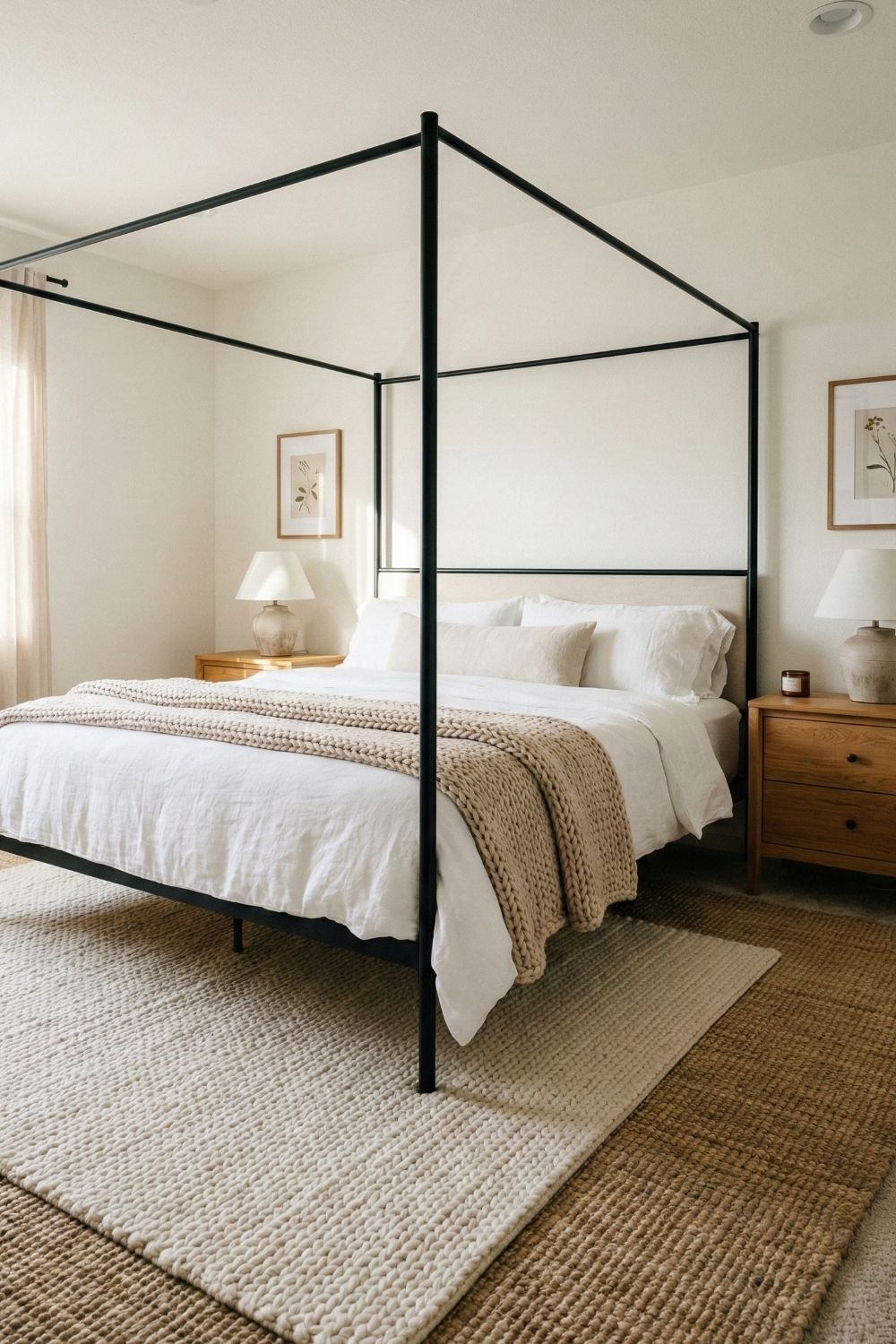
To recreate it:
- Choose a simple black metal canopy bed.
- Let the bed shape be the main focal point.
- Use cream, white, oatmeal, and warm wood to soften the black frame.
- Avoid heavy art or overly complicated bedding.
- Layer a natural-fiber rug under a softer top rug for extra comfort.
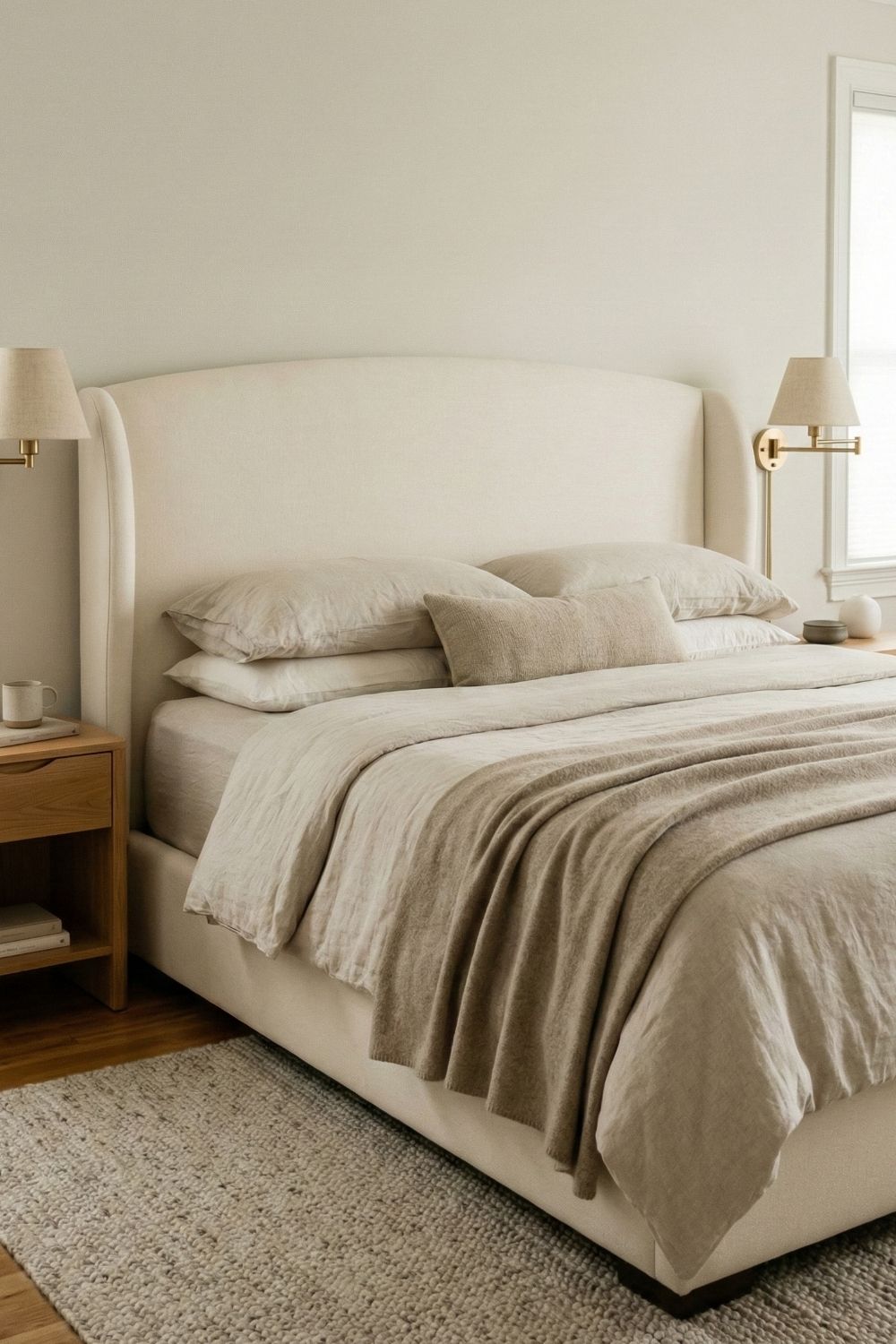
To recreate it:
- Pick one statement shape, such as a rounded headboard.
- Choose beige, ivory, or taupe upholstery.
- Keep the bedding in a narrow tonal range.
- Use greige sheets, an ivory duvet, and a simple lumbar pillow.
- Add brass sconces to free up nightstand space.
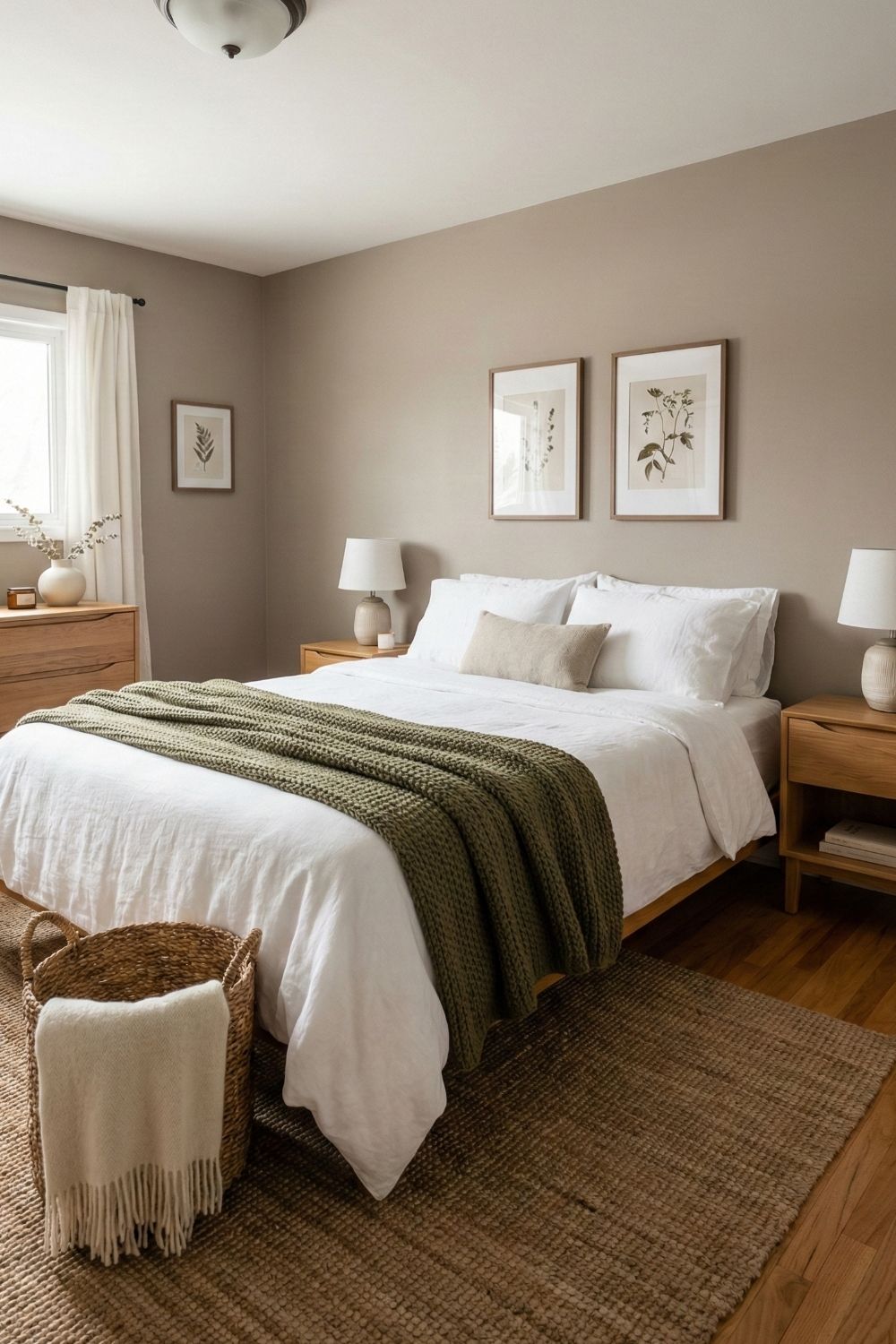
To recreate it:
- Choose a warm neutral wall color between taupe, beige, and gray.
- Avoid icy undertones if you want the room to feel cozy.
- Use one muted accent color, such as olive, camel, rust, or dusty blue.
- Add natural texture through a woven basket, natural rug, or linen lampshade.
- Keep the rest of the palette quiet and layered.
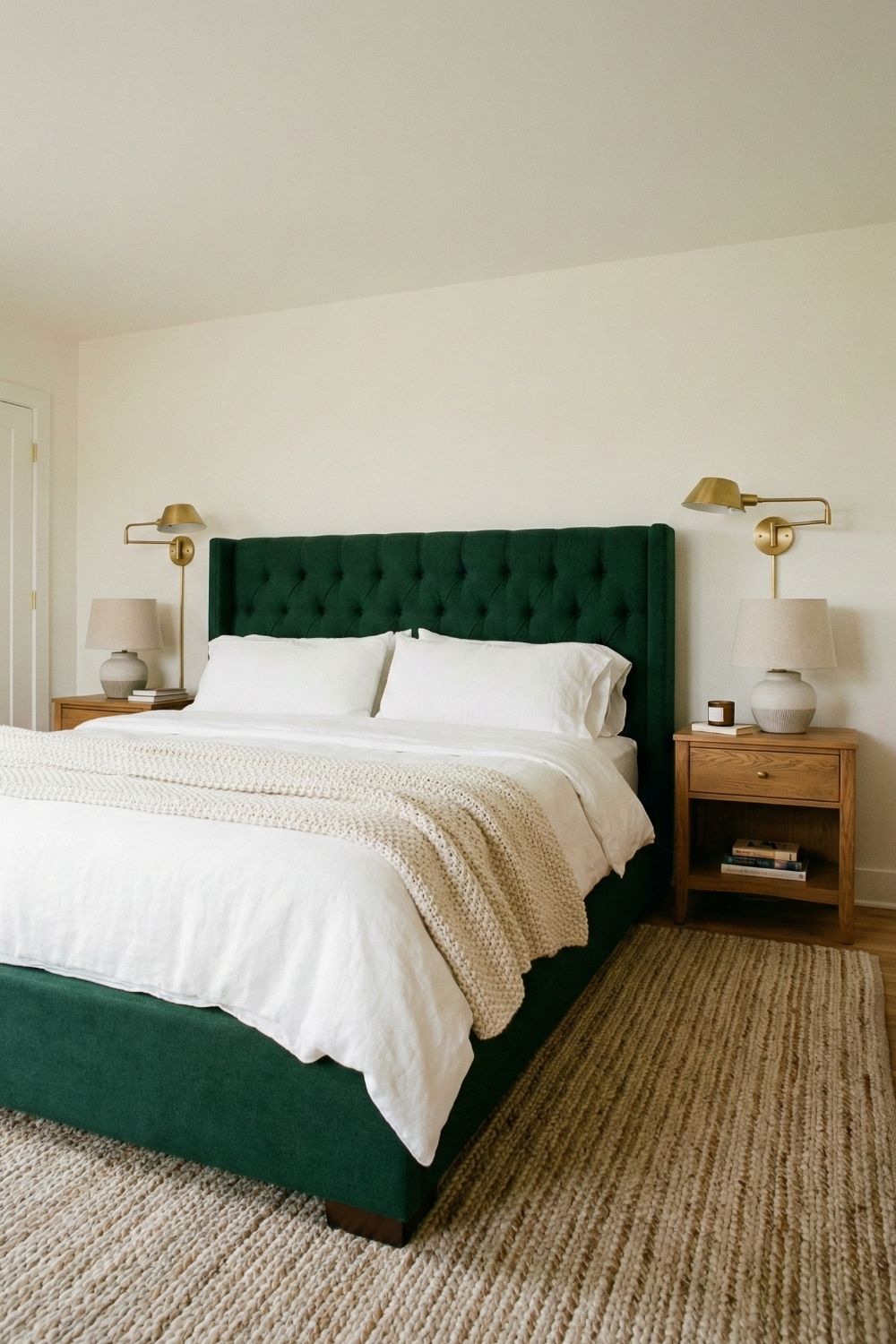
To recreate it:
- Make the headboard the star of the room.
- Choose forest green, moss, or deep olive velvet.
- Balance the richness with white bedding and warm neutrals.
- Pair the bed with brass sconces or brass lamps.
- Keep surrounding decor simple so the velvet does not feel heavy.
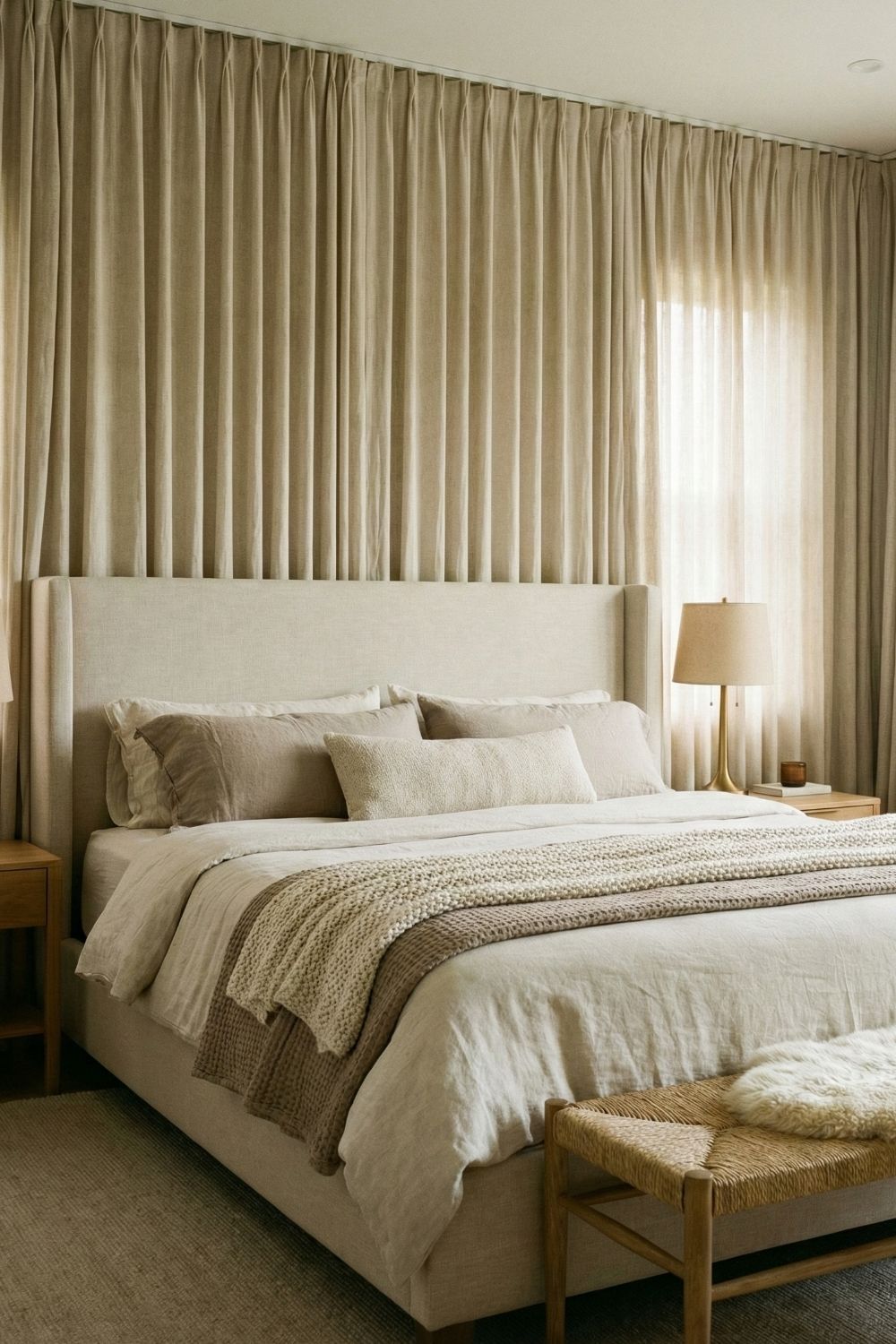
To recreate it:
- Hang the curtain rod close to the ceiling.
- Run the fabric wider than the window.
- Choose ivory, sand, taupe, or soft beige curtains.
- Keep the bedding tone-on-tone for a calm effect.
- Add a woven bench or warm table lamp for the final layer.
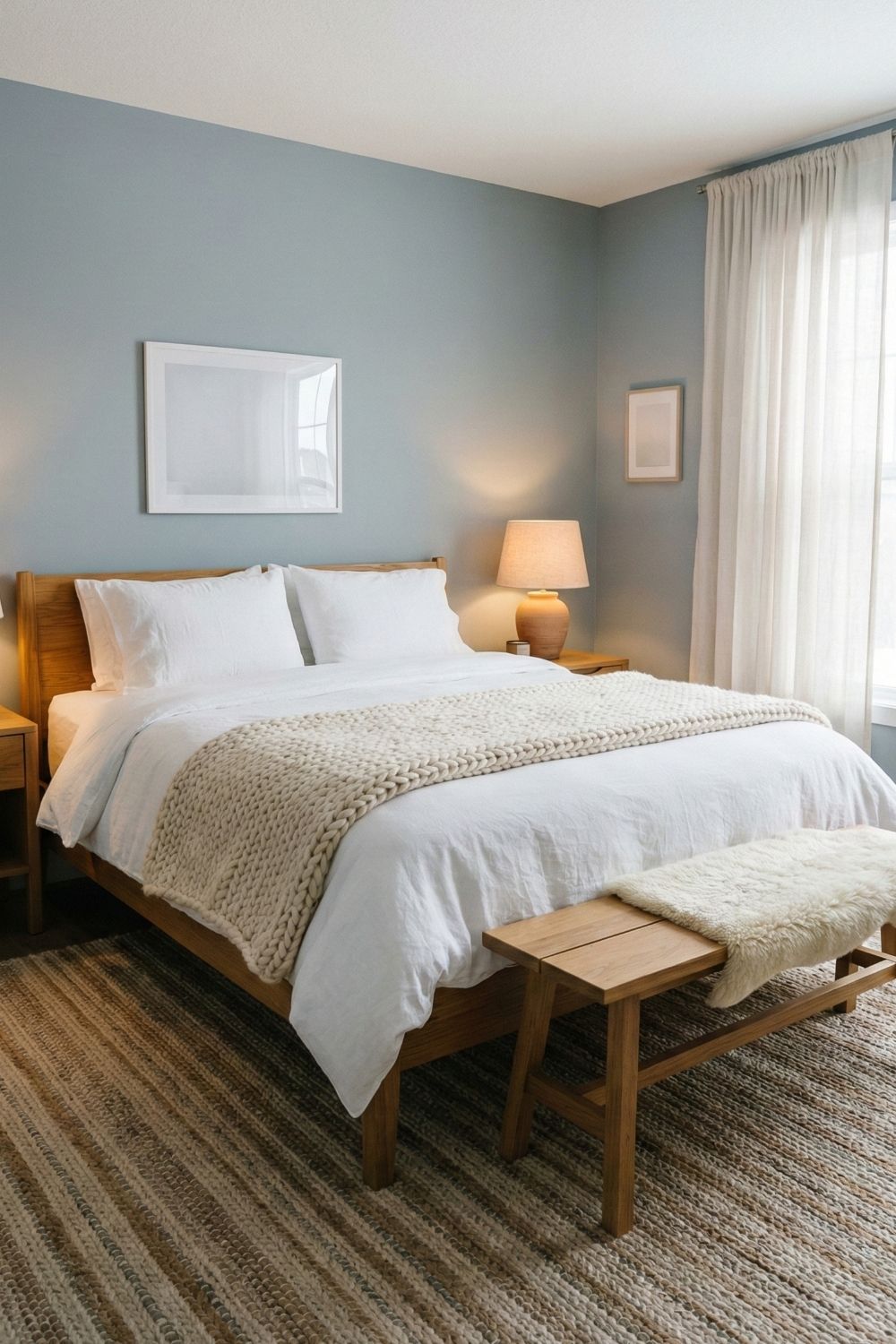
To recreate it:
- Choose a muted blue-gray instead of a bright blue.
- Keep the bedding crisp and simple.
- Add one heavier texture, such as a thick knit throw.
- Use warm wood furniture to balance the cool wall color.
- Keep art and accessories soft so the room stays relaxed.
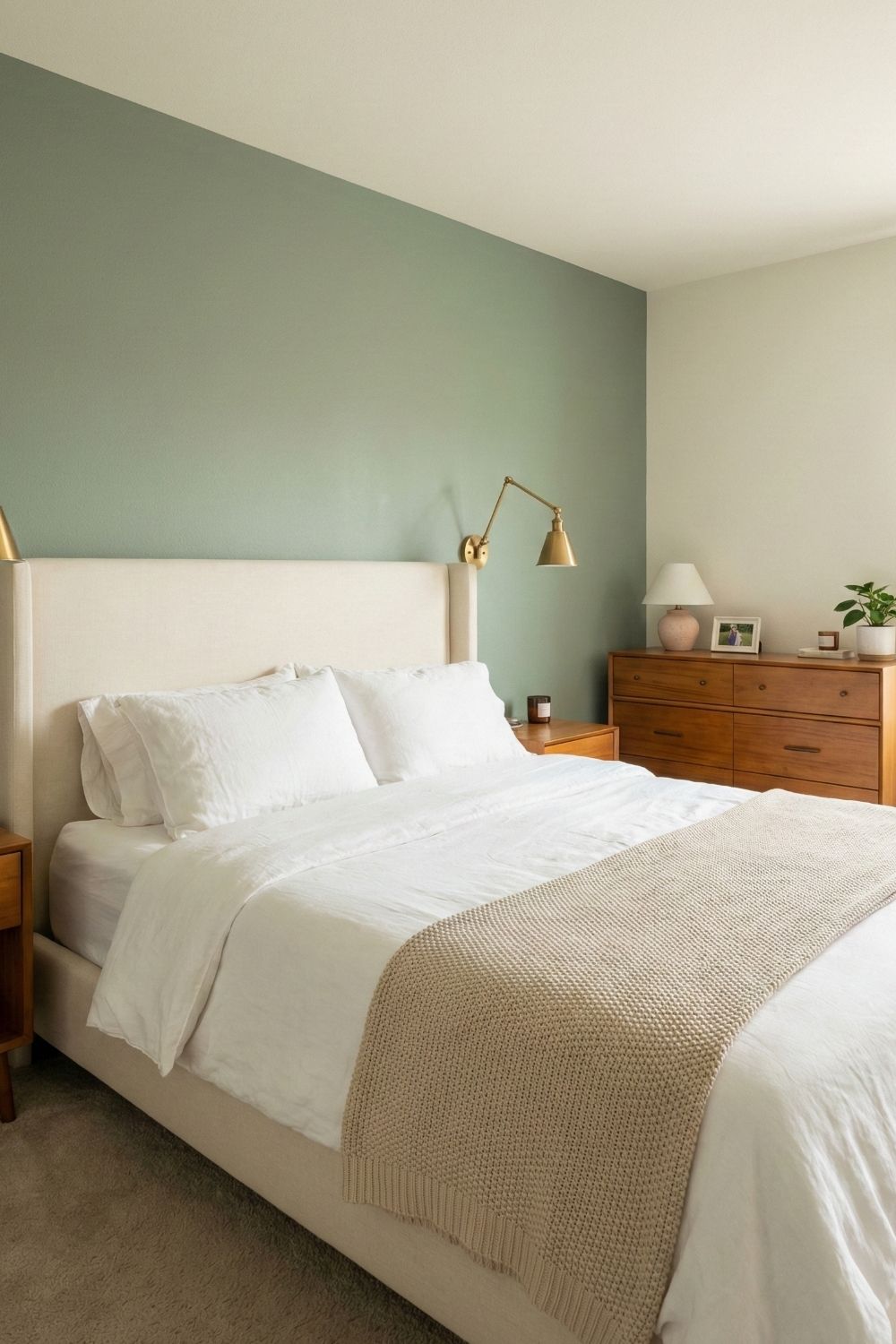
To recreate it:
- Use sage on the wall behind the bed.
- Pick a green-gray shade instead of a minty one.
- Style the bed with white bedding and a neutral knit throw.
- Add one simple pillow shape to keep the look pared back.
- Mix sage with warm wood and brass for a grown-up finish.
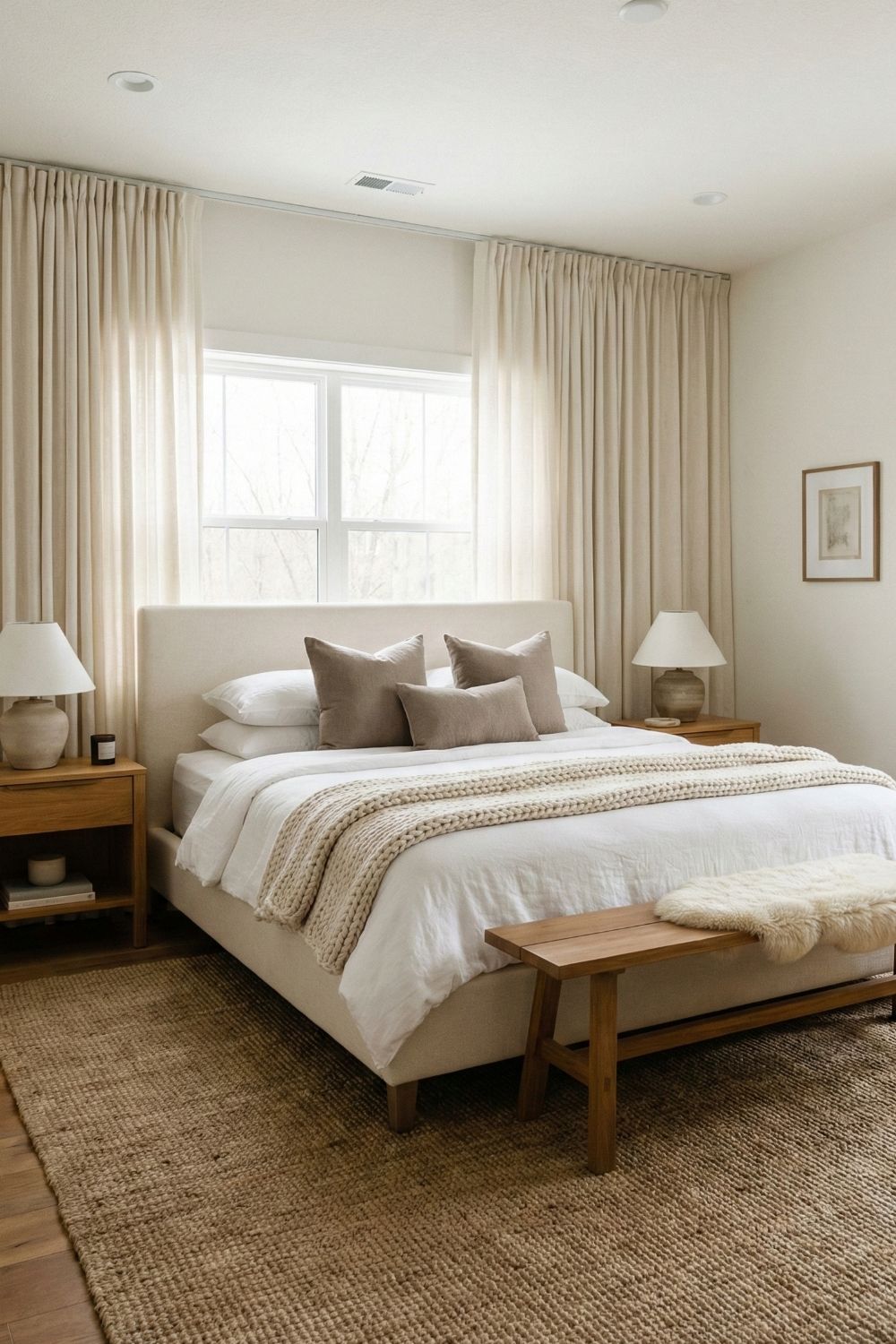
To recreate it:
- Frame the bed with drapery if the layout allows.
- Hang curtains high and wide.
- Choose fabric with a little weight so it falls nicely.
- Build a warm pillow stack with white, taupe, cream, or caramel tones.
- Ground the room with a jute rug, wood bench, or woven shade.
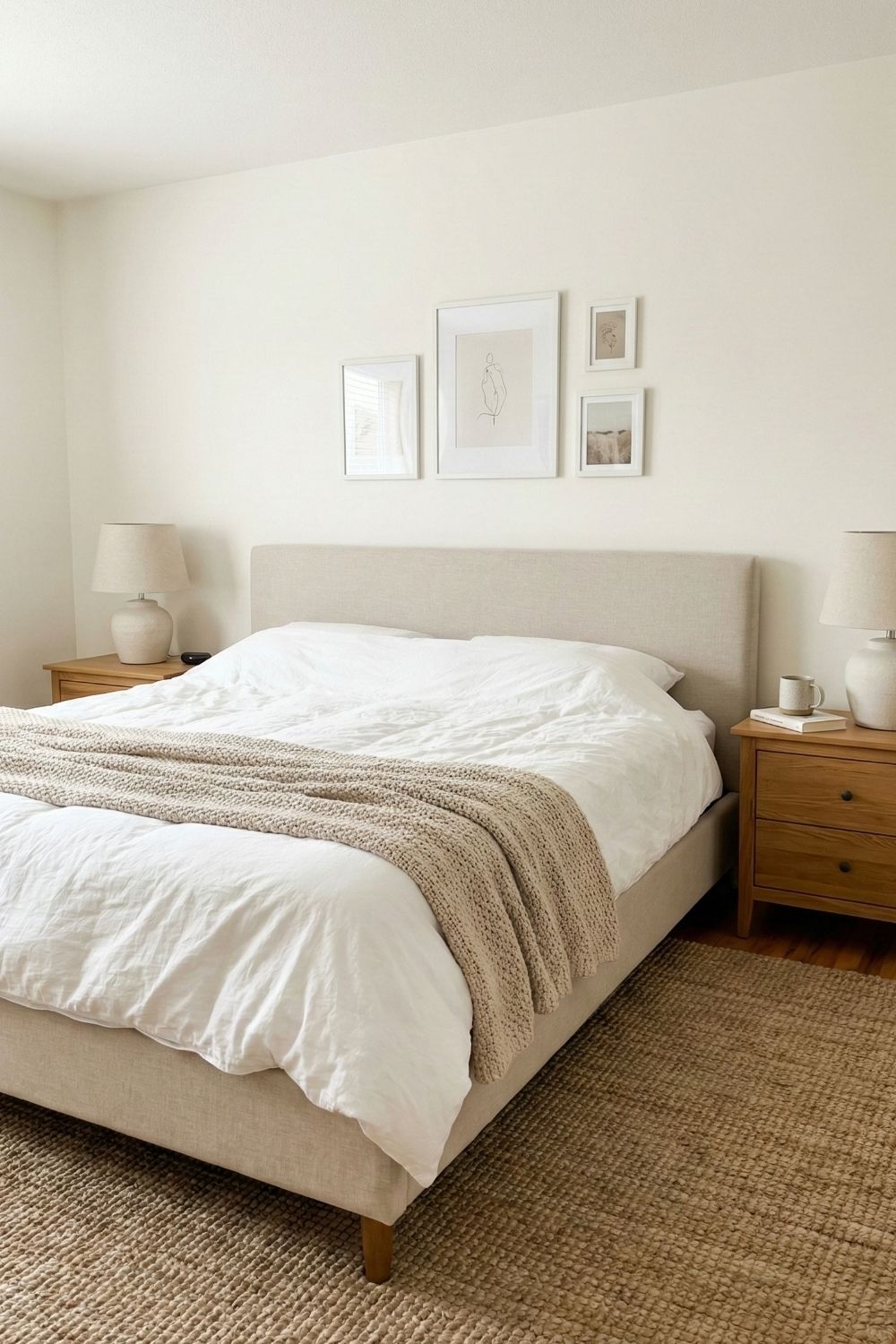
To recreate it:
- Start with a linen-look bed and mid-tone wood nightstands.
- Use white bedding as a clean foundation.
- Let the duvet look relaxed rather than overly staged.
- Mix one larger frame with a few smaller neutral pieces.
- Keep the frames similar so the arrangement feels calm.
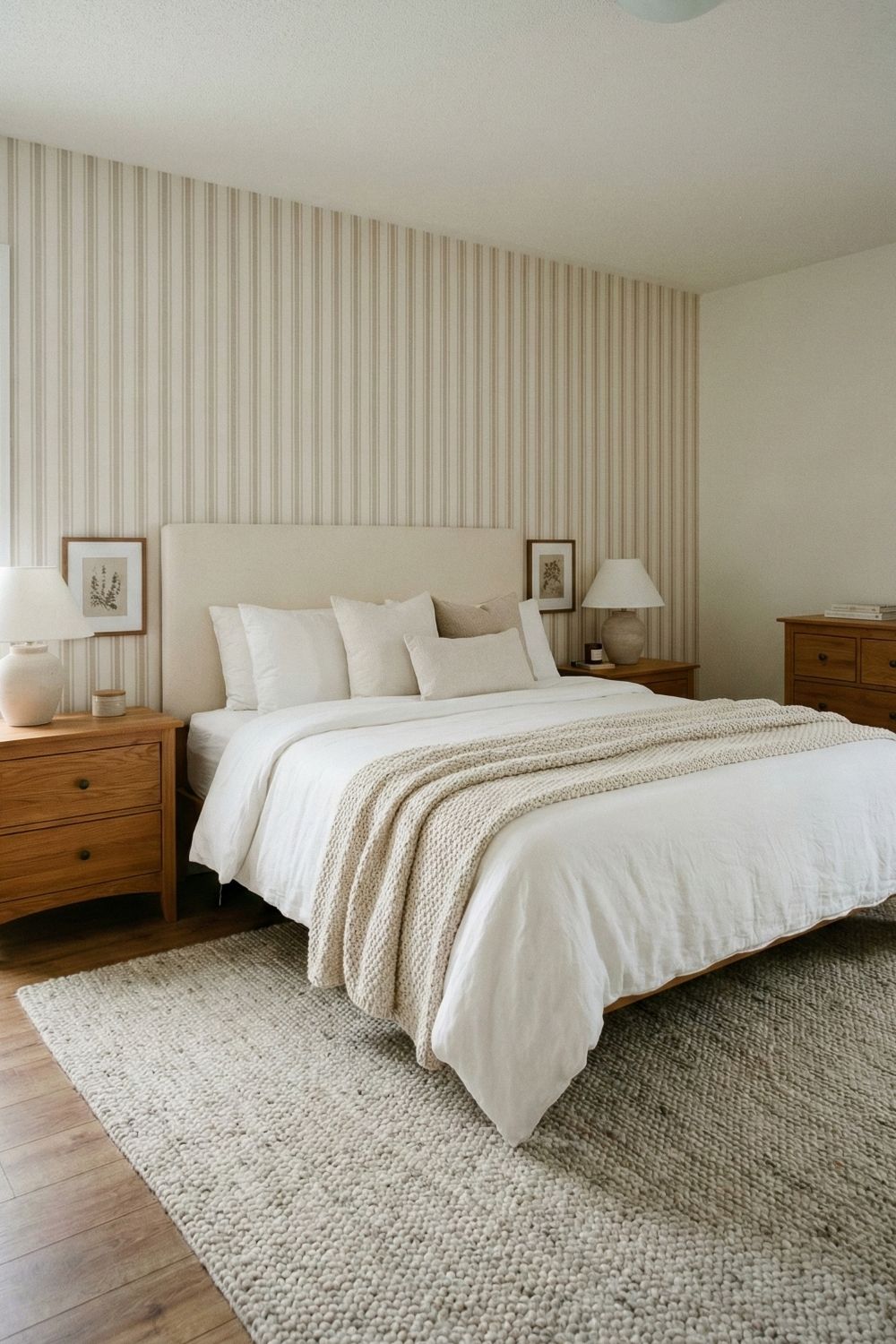
To recreate it:
- Use a tone-on-tone stripe behind the bed.
- Choose beige, cream, taupe, or soft gray wallpaper.
- Pair it with an oatmeal headboard and white bedding.
- Add a chunky knit throw for softness.
- Keep bedside styling symmetrical with matching lamps and small framed prints.
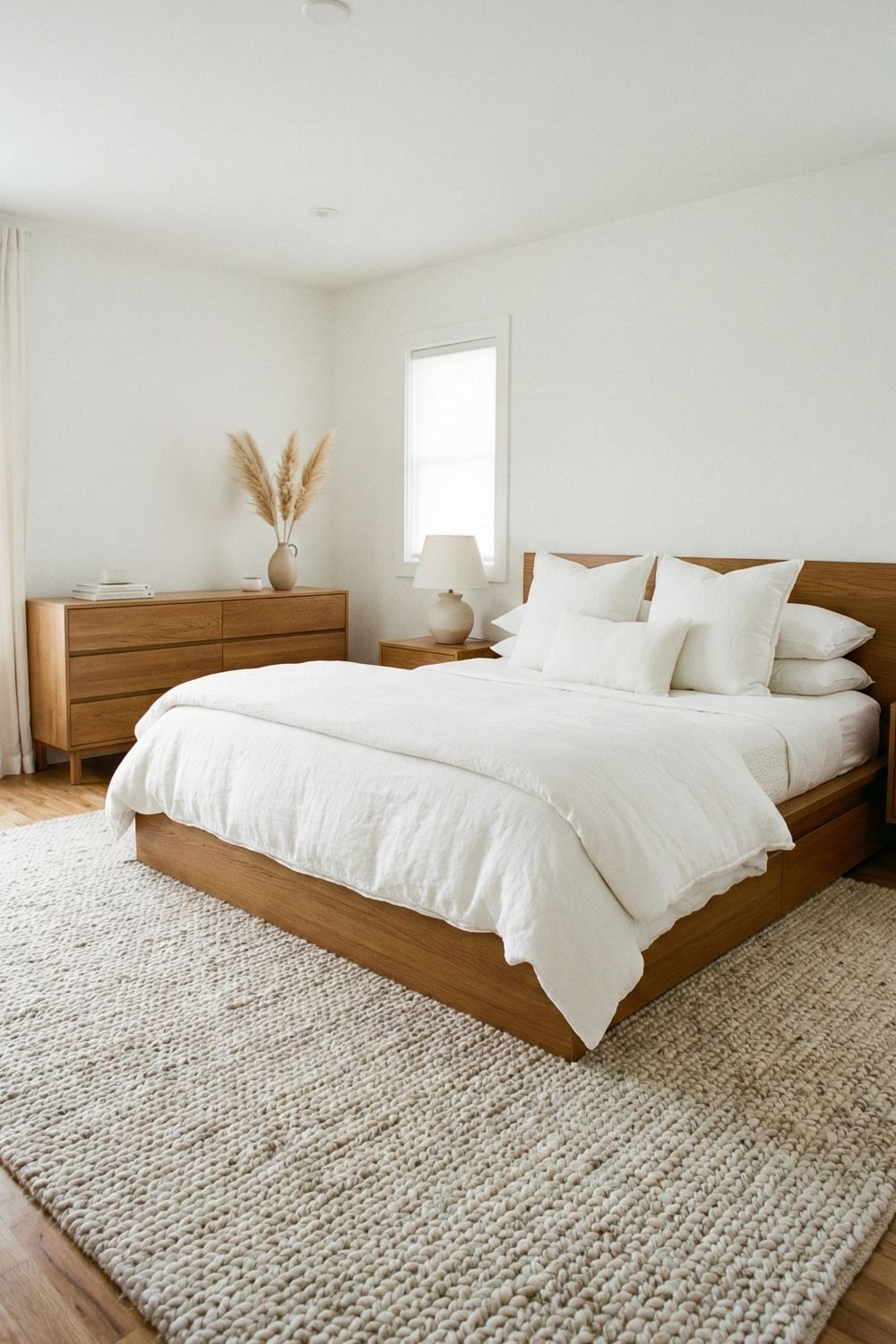
To recreate it:
- Choose a wood bed as the anchor.
- Look for a platform frame or clean-lined wood headboard.
- Layer pillows by shape instead of color.
- Use standard pillows, Euros, and a small lumbar for dimension.
- Add an oversized texture piece, such as a looped rug or woven shade.
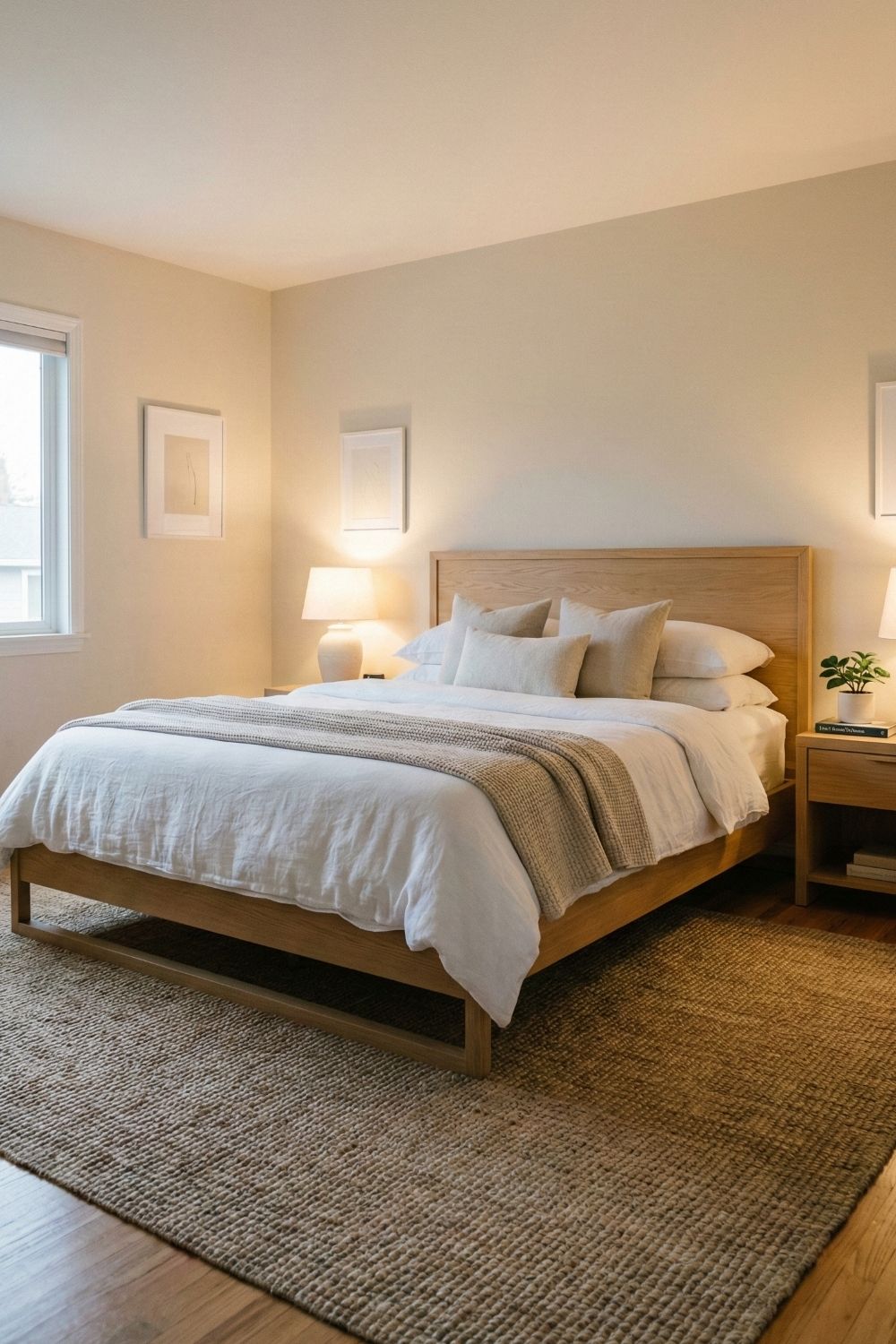
To recreate it:
- Start with simple wood furniture.
- Choose clean lines to keep the room modern.
- Layer the bed with a crisp base and one cozy throw.
- Place the throw across the lower third of the bed.
- Use matching lamps and minimal art above the bed.
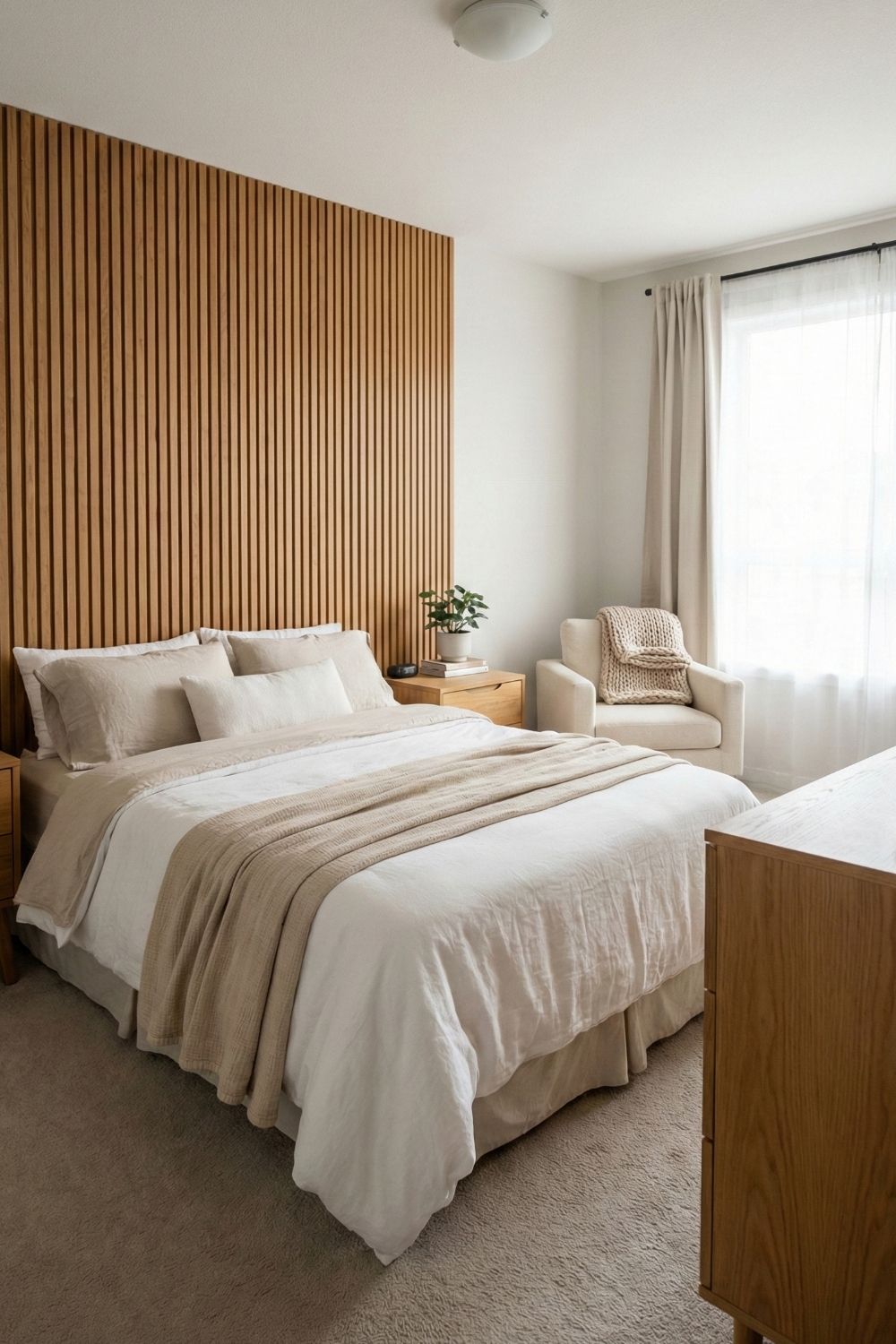
To recreate it:
- Install slats or battens behind the bed.
- Choose a warm wood finish that does not look too orange.
- Balance the wood with creamy bedding.
- Use white, ivory, sand, and soft beige layers.
- Add a compact chair with a throw near the window if space allows.
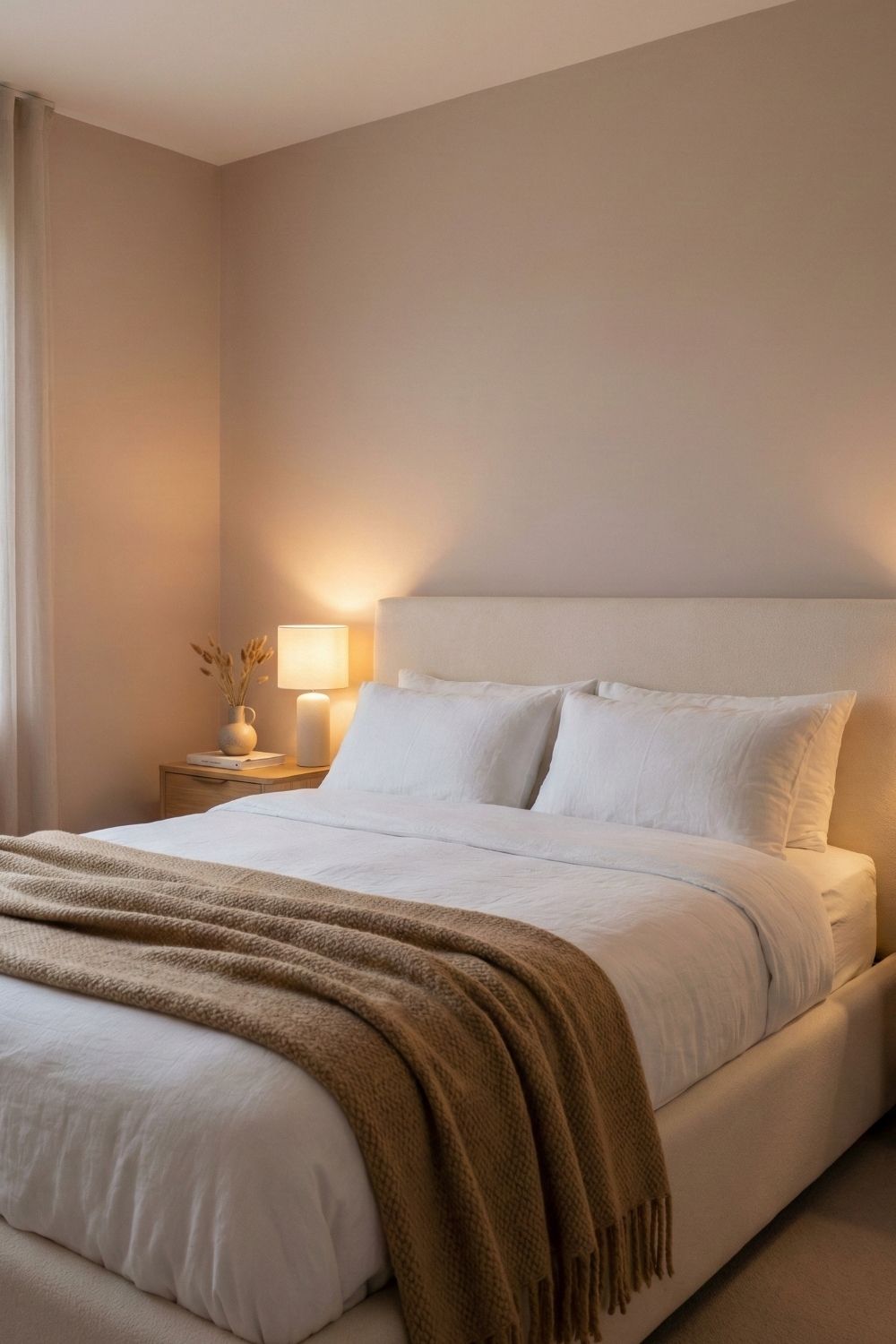
To recreate it:
- Choose mushroom, warm taupe, or beige-gray paint.
- Avoid shades that feel too cool or flat.
- Use warm bulbs in bedside lamps.
- Add dimmers if possible.
- Place one rich texture layer at the foot of the bed, such as wool, knit, bouclé, or velvet.
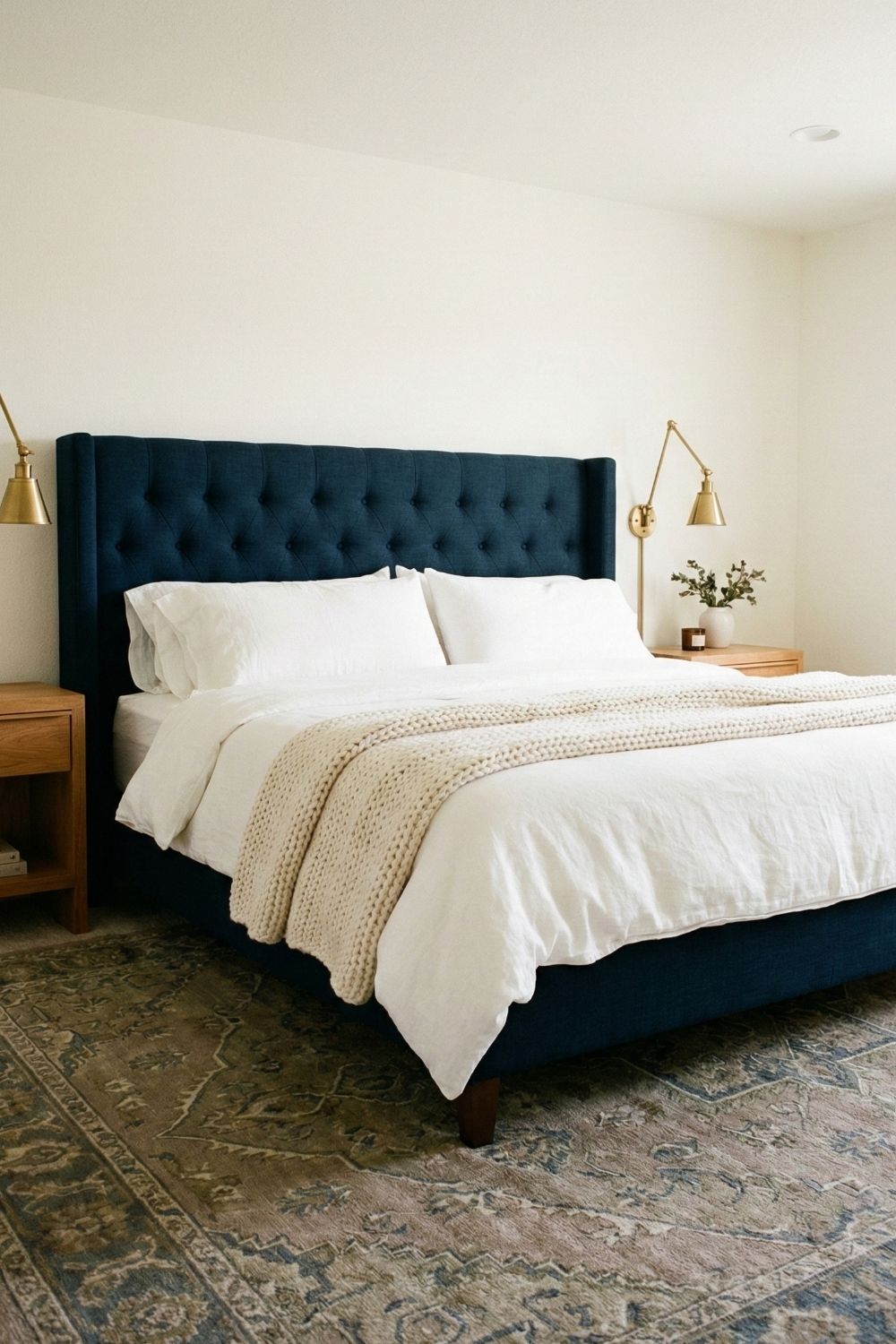
To recreate it:
- Use navy as the main anchor color.
- Keep the walls, bedding, and curtains light.
- Add brass and wood for warmth.
- Pair brass sconces with mid-tone wood nightstands.
- Echo the navy lightly in the rug or art.
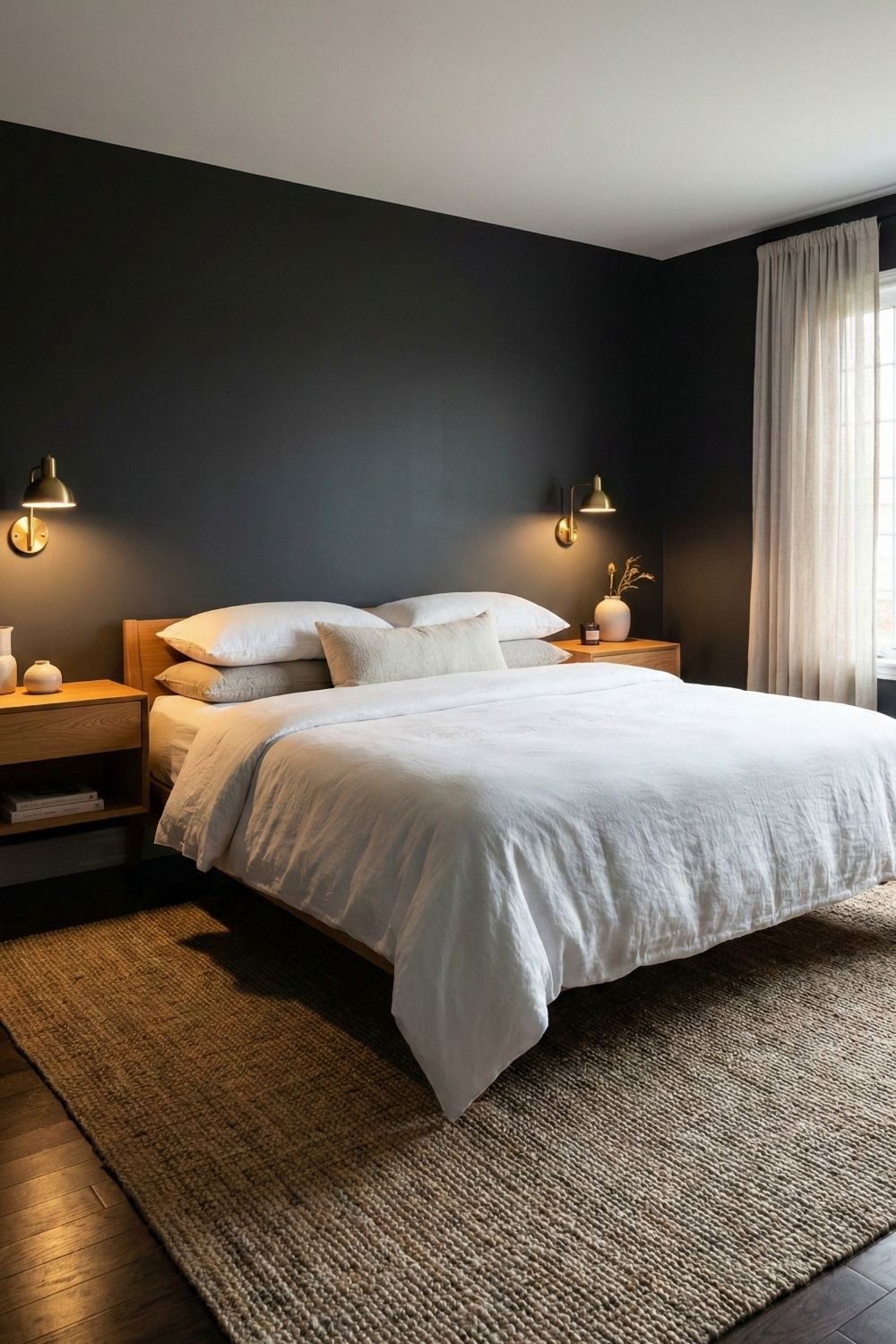
To recreate it:
- Commit to the dark paint instead of using it timidly.
- Balance the walls with wood, brass, and light bedding.
- Use white or ivory linens for contrast.
- Add one neutral accent through a throw or pillow.
- Keep extra decor simple so the walls can set the mood.
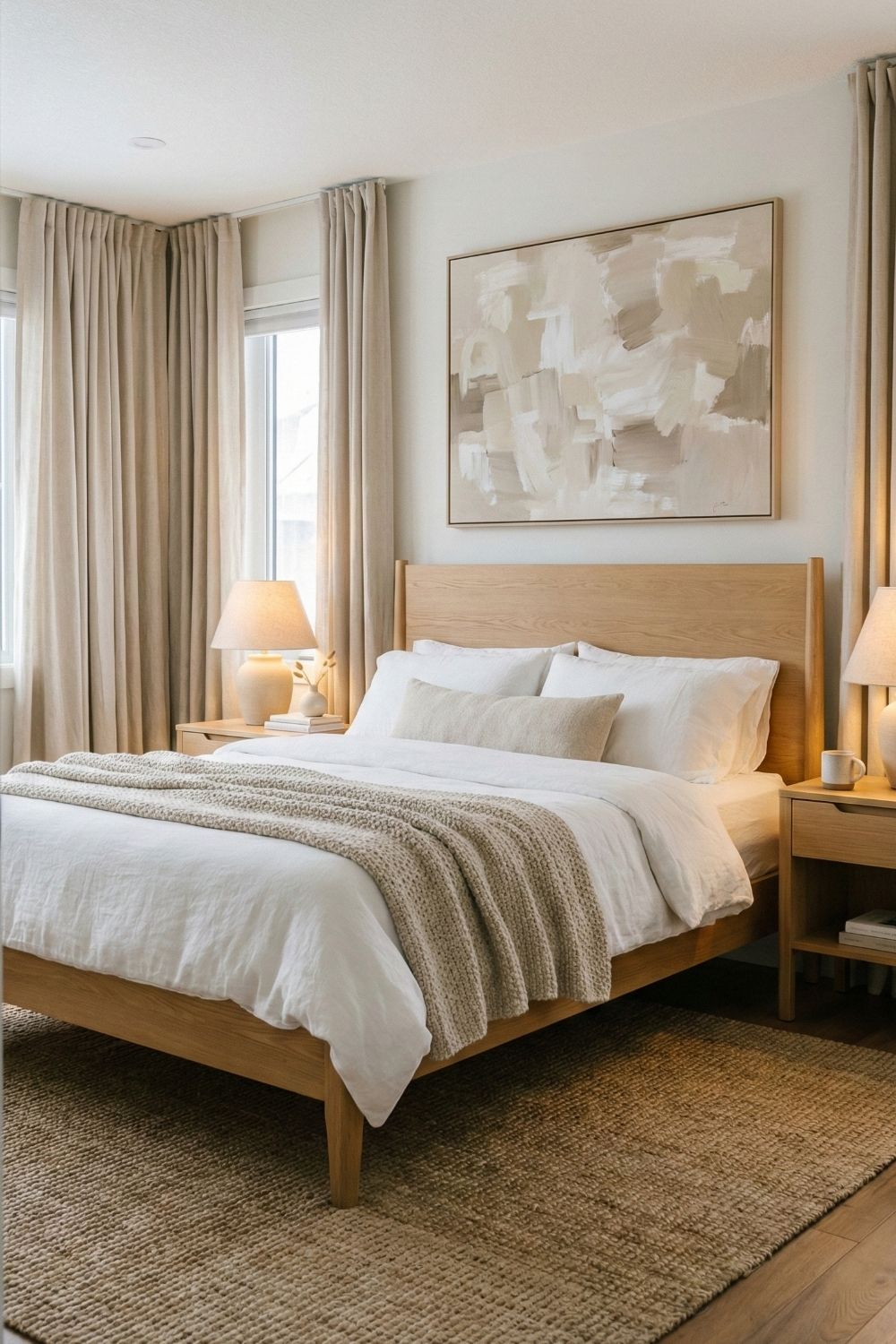
To recreate it:
- Hang one oversized piece above the bed.
- Choose a neutral abstract, soft landscape, or framed textile.
- Use full-height curtains to soften the room.
- Hang curtains high and wide for a generous look.
- Keep the bed layered but clean with white bedding, a neutral lumbar pillow, and a textured throw.
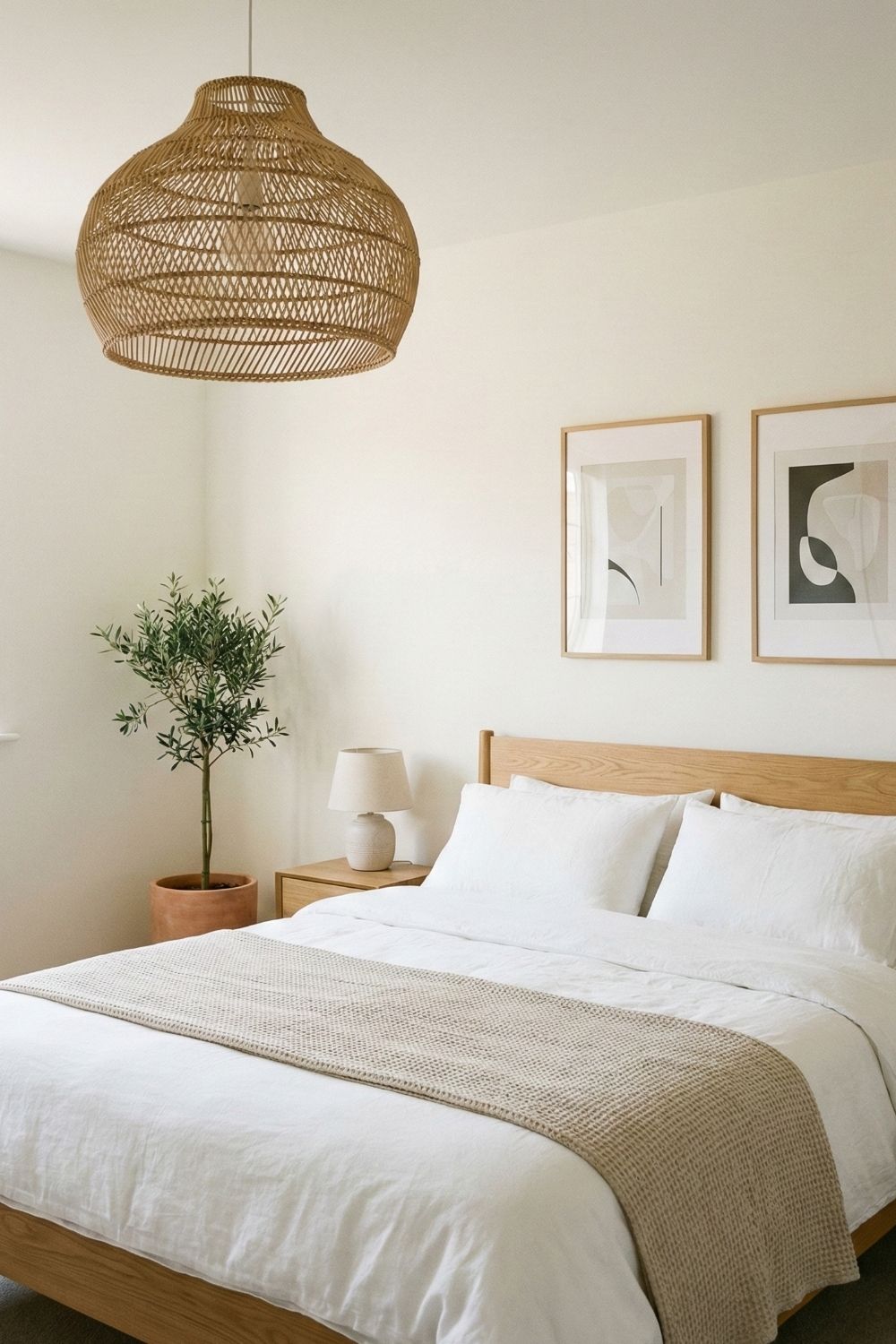
To recreate it:
- Choose one statement light in a natural material.
- Use a woven pendant if the rest of the room is simple.
- Keep the bed airy with white bedding.
- Add one textured throw at the foot of the bed.
- Style the wall and corner with matching framed prints and a tall plant.
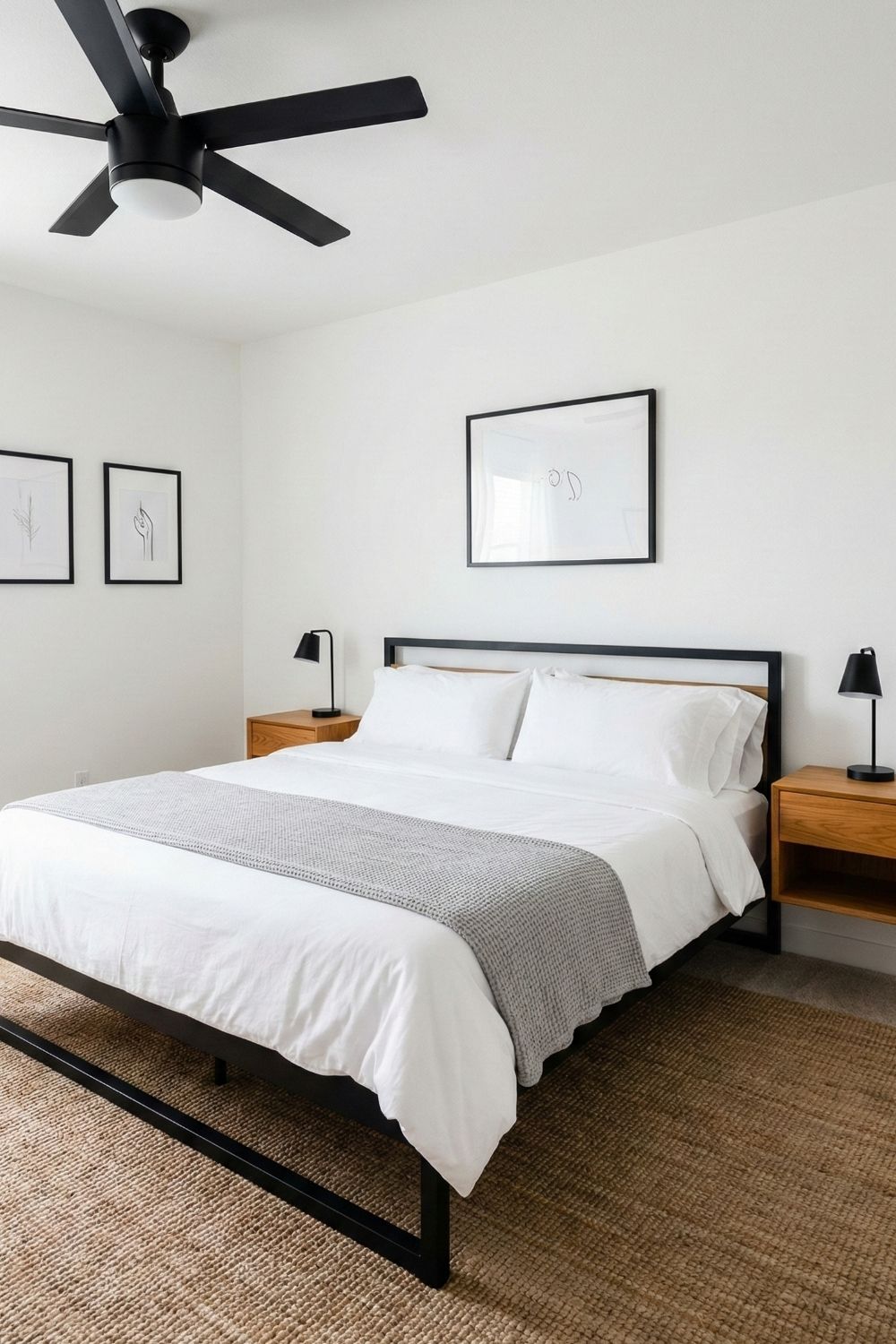
To recreate it:
- Use black in the bed frame, fan, lamps, or picture frames.
- Repeat black in a few places so it feels balanced.
- Keep the bedding crisp with a white duvet.
- Add a knit or waffle throw for softness.
- Place a woven rug under the bed to warm up the clean lines.
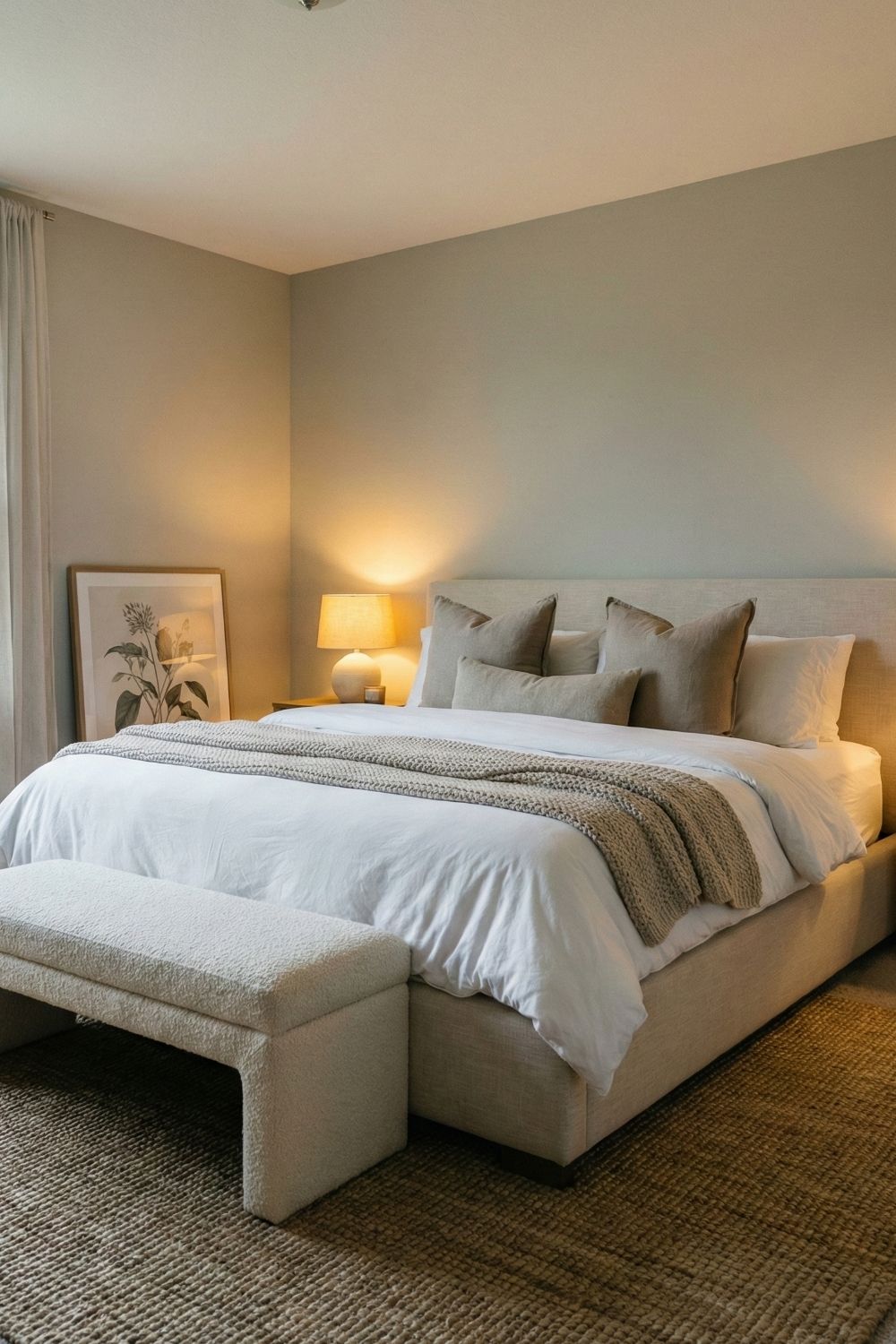
To recreate it:
- Start with warm greige or taupe walls.
- Layer the bed with clear, simple shapes.
- Use white bedding, taupe pillows, and a knit throw.
- Place a bouclé bench at the foot of the bed if there is space.
- Keep the bench color soft so it blends with the palette.
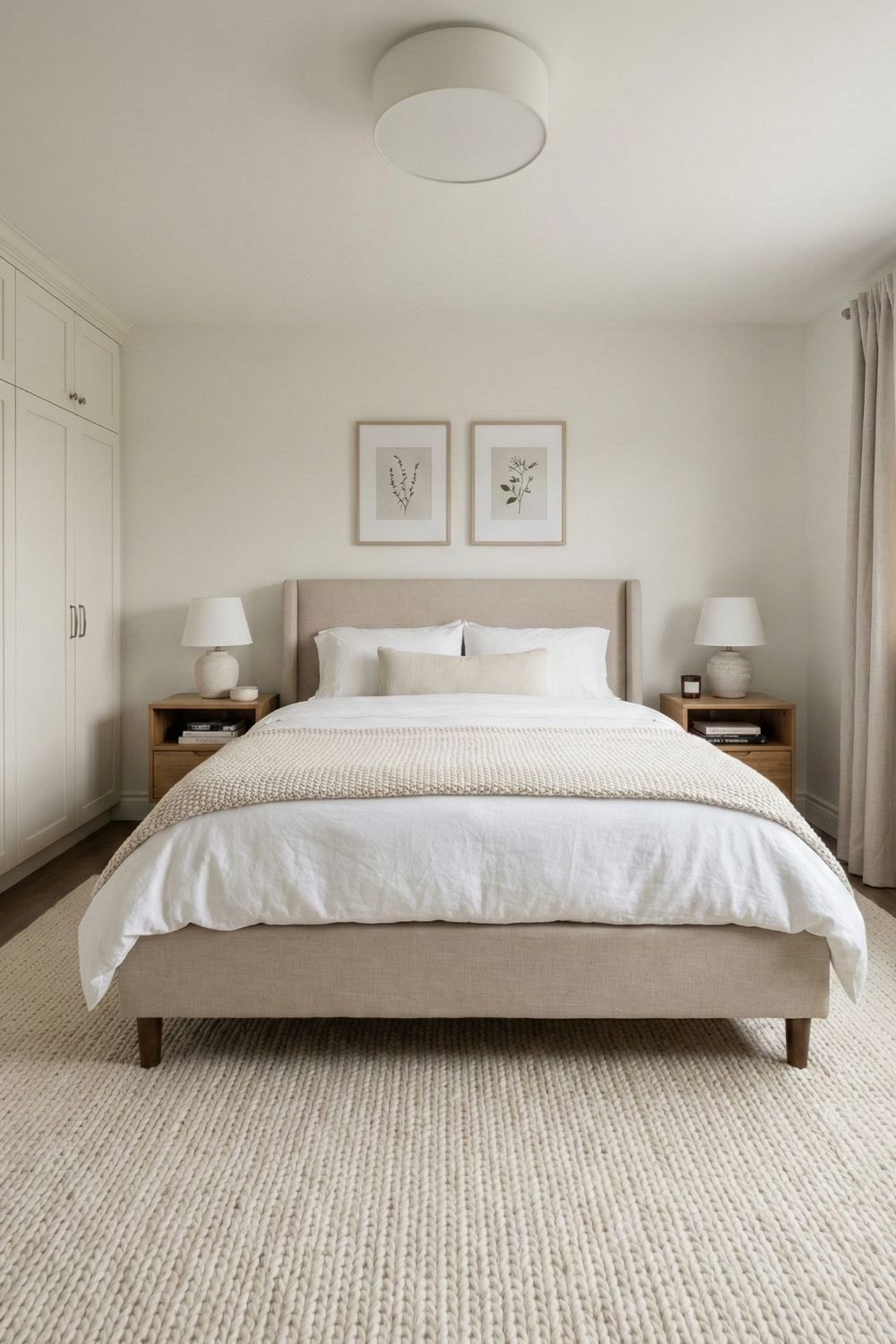
To recreate it:
- Use matching nightstands on both sides of the bed.
- Add matching lamps for a balanced look.
- Keep the palette tight with white, oatmeal, beige, and light wood.
- Avoid using too many colors in the same room.
- Choose a rug that extends beyond the sides and foot of the bed.
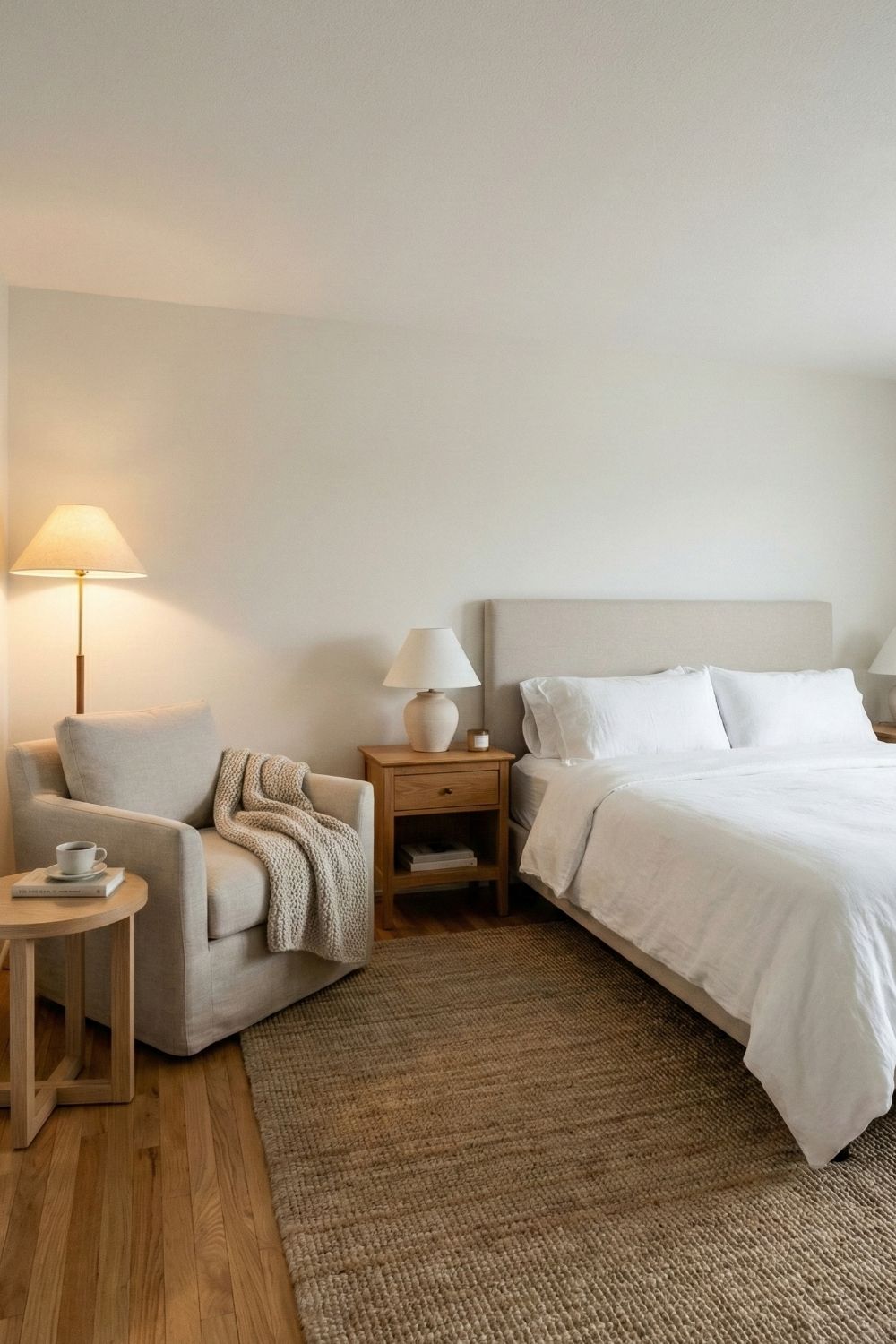
To recreate it:
- Add an upholstered chair if the layout allows.
- Pair it with a floor lamp and small side table.
- Keep the bed simple so the corner does not feel crowded.
- Bring texture into the chair, pillow, or throw.
- Use a natural rug to connect the seating area with the rest of the room.
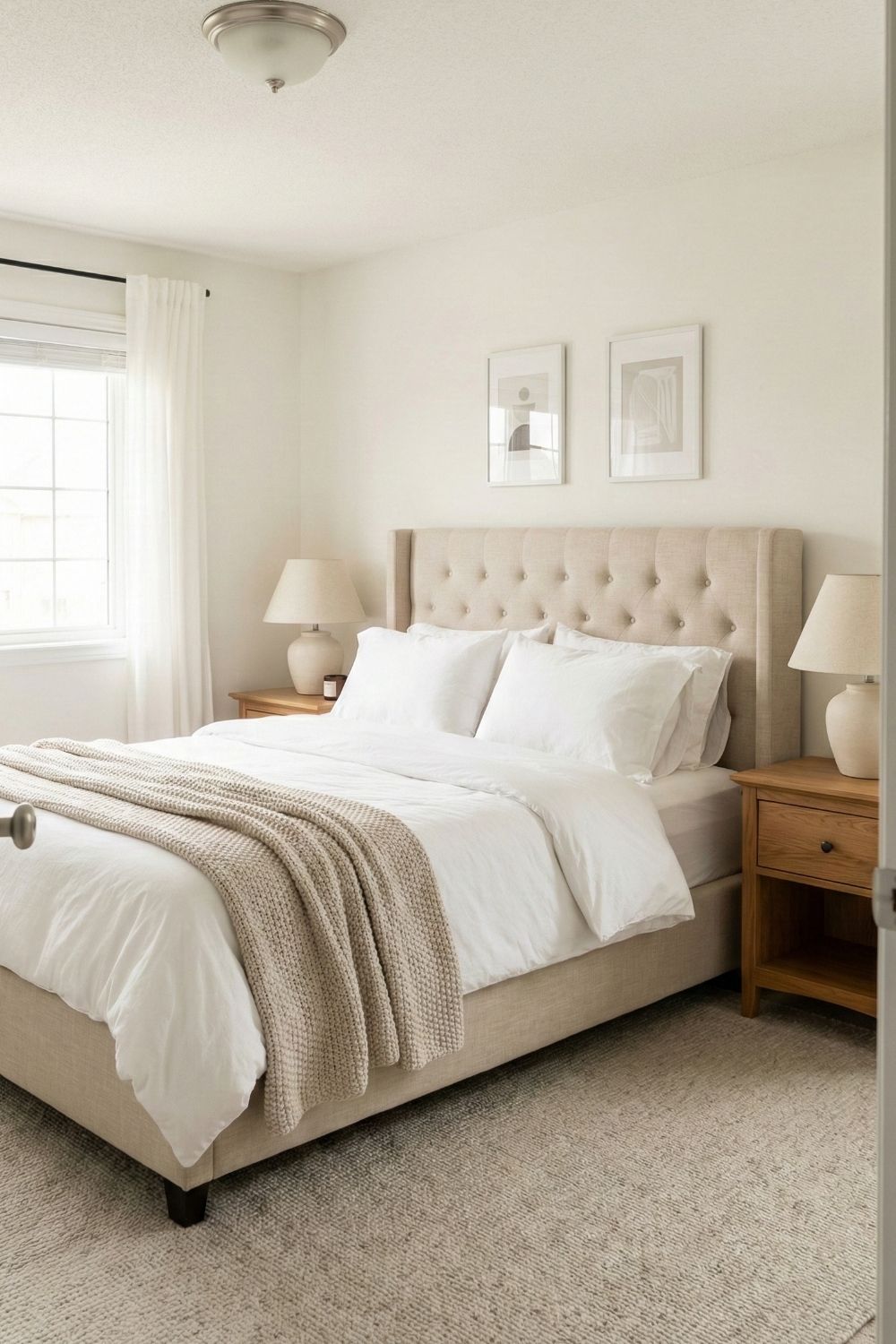
To recreate it:
- Choose a linen-look tufted headboard in beige, cream, or soft gray.
- Use white bedding as the base.
- Add one cozy layer, such as a chunky knit throw.
- Repeat the calm feeling above the bed with simple art.
- Use matching lamps for a soft, balanced finish.
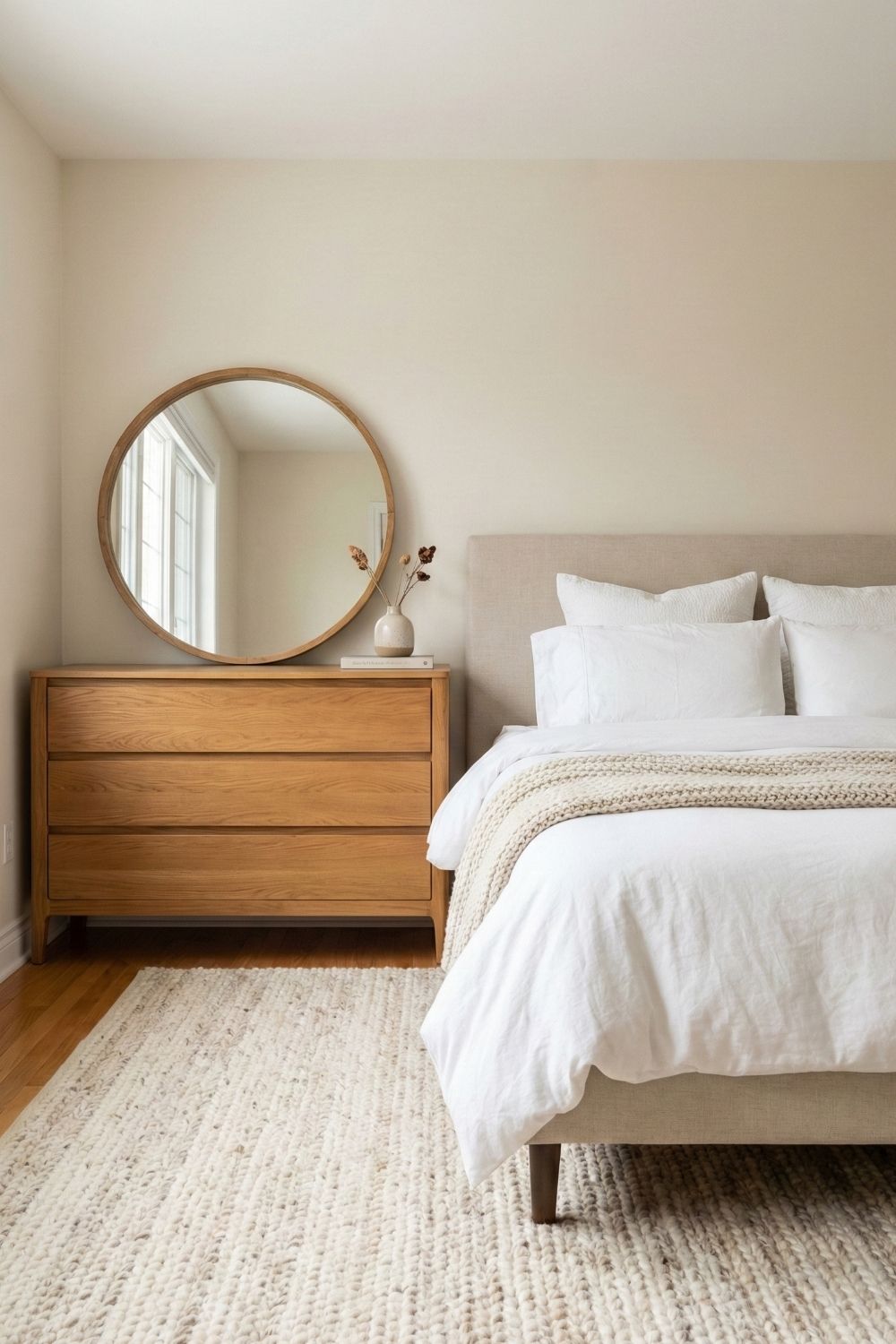
To recreate it:
- Hang or lean one oversized mirror above the dresser.
- Choose a scale that feels intentional rather than small.
- Keep the palette creamy and warm.
- Use wood, beige upholstery, white bedding, and one knit layer.
- Style the dresser with a vase, a short stack of books, or one sculptural object.
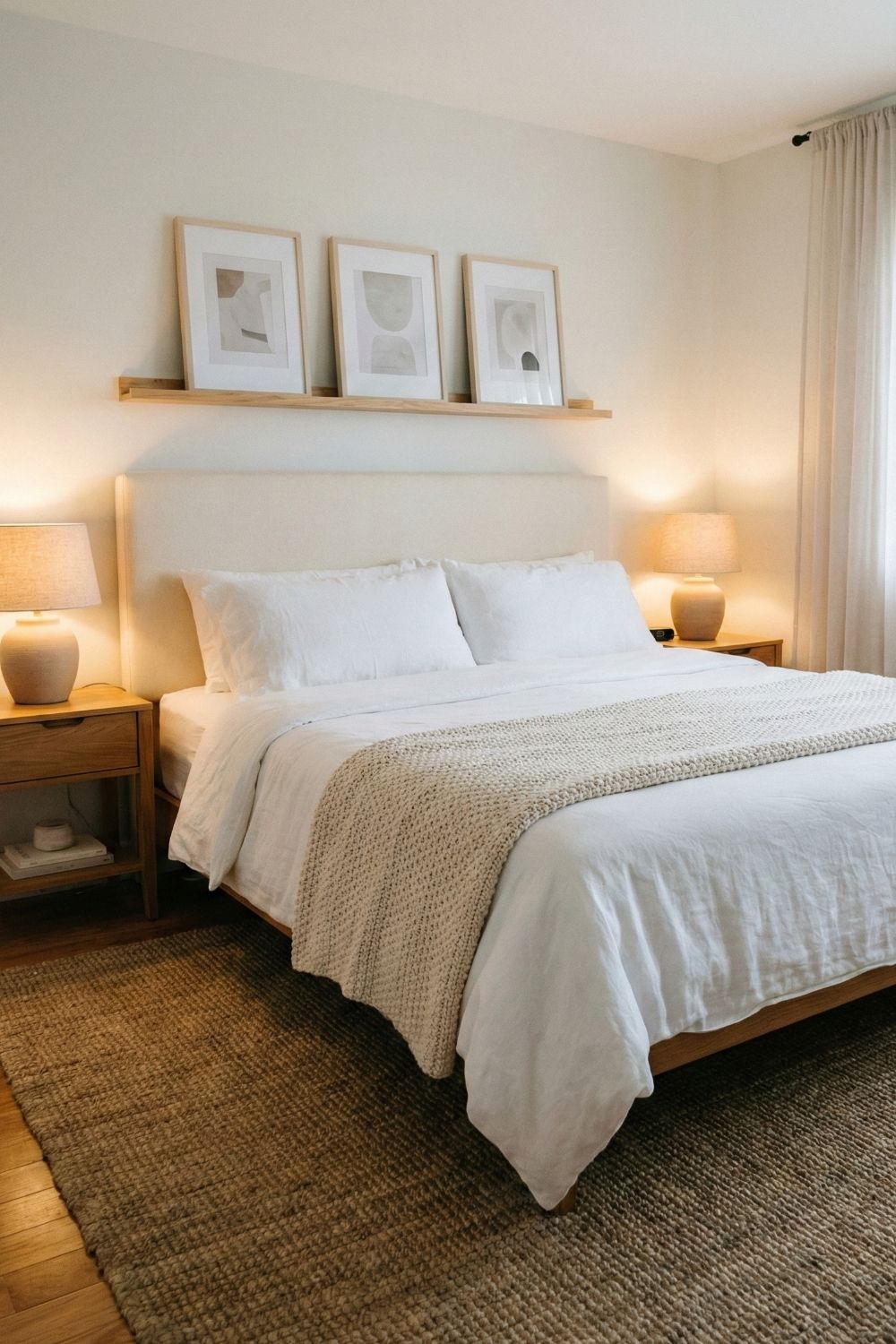
To recreate it:
- Lean a few frames with soft neutral art.
- Mix frame sizes while keeping the palette calm.
- Use a hotel-style bedding base.
- Add texture with a chunky knit throw.
- Finish with matching lamps and warm bulbs for a cozy glow.
More Ways to Make a Master Bedroom Feel Finished
- Choose a rug large enough to sit under the bed and extend past the sides.
- Hang curtains closer to the ceiling instead of directly above the window frame.
- Use warm bulbs instead of cool white bulbs.
- Add one textured layer, such as bouclé, linen, wool, jute, velvet, or rattan.
- Repeat each accent color at least twice so the room feels intentional.
- Keep nightstand styling simple with a lamp, book, small dish, or vase.
- Use fewer, larger pieces instead of many tiny accessories.
Frequently Asked Questions
How can I make a master bedroom look expensive?
What colors work best for a cozy master bedroom?
What is the most important piece in a master bedroom design?
How do I decorate a master bedroom without making it feel cluttered?
The best master bedroom ideas are not usually about buying everything new. More often, they come from fixing the pieces that affect the feeling of the room most: the headboard, the rug size, the lighting, the curtains, and the bedding layers.
You might already be closer than you think. Maybe the room just needs warmer bulbs. Maybe the rug is too small. Maybe the bed wall feels unfinished because the art is too tiny. Small changes can shift the whole space.
Start with the upgrade, you will notice every day. A softer headboard, higher curtains, a bigger rug, or better bedside lighting can make your master bedroom feel calmer almost immediately. Then you can build slowly from there.