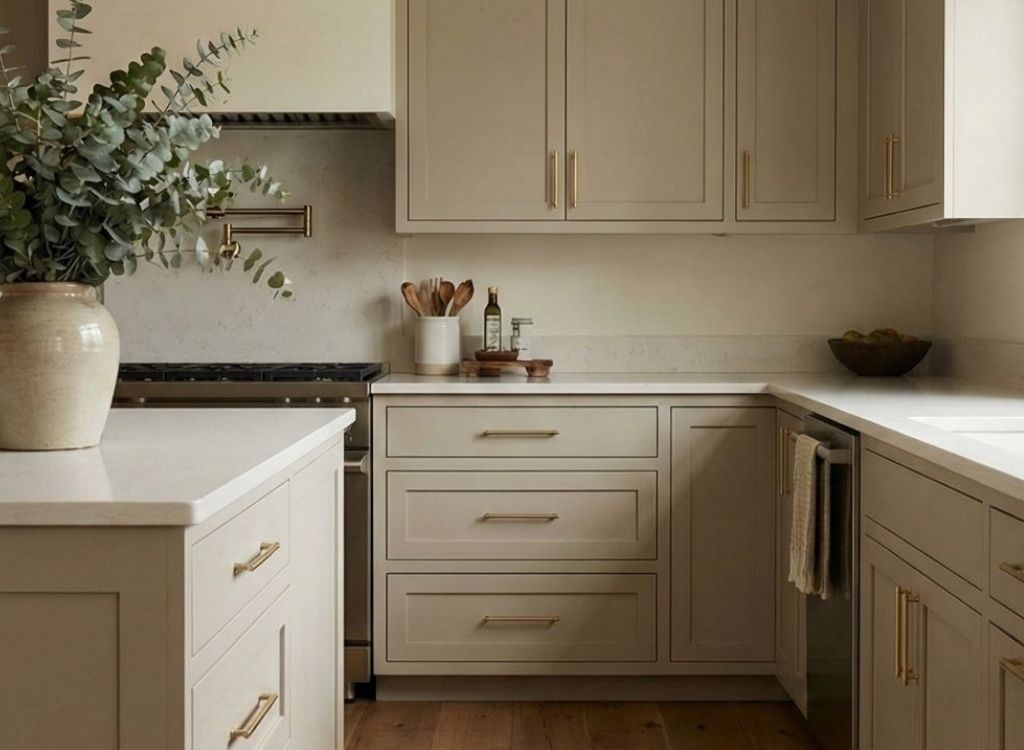
Warm kitchens have a way of feeling finished before you even add much decor. The palette does a lot of the work. Soft taupe, creamy white, sand, greige, aged brass, pale wood. None of it fights for attention, but together it makes the room feel calm, lived-in, and quietly expensive.
That is the appeal.
A good warm kitchen design does not need bold color or trendy contrast to feel interesting. It just needs some depth, a little texture, and enough restraint to let the materials speak for themselves. When it is done well, the whole room feels softer and easier to be in.
If you are looking for warm kitchens that feel polished without feeling cold, these ideas should help.
1. Keep the palette simple and let the materials do the work
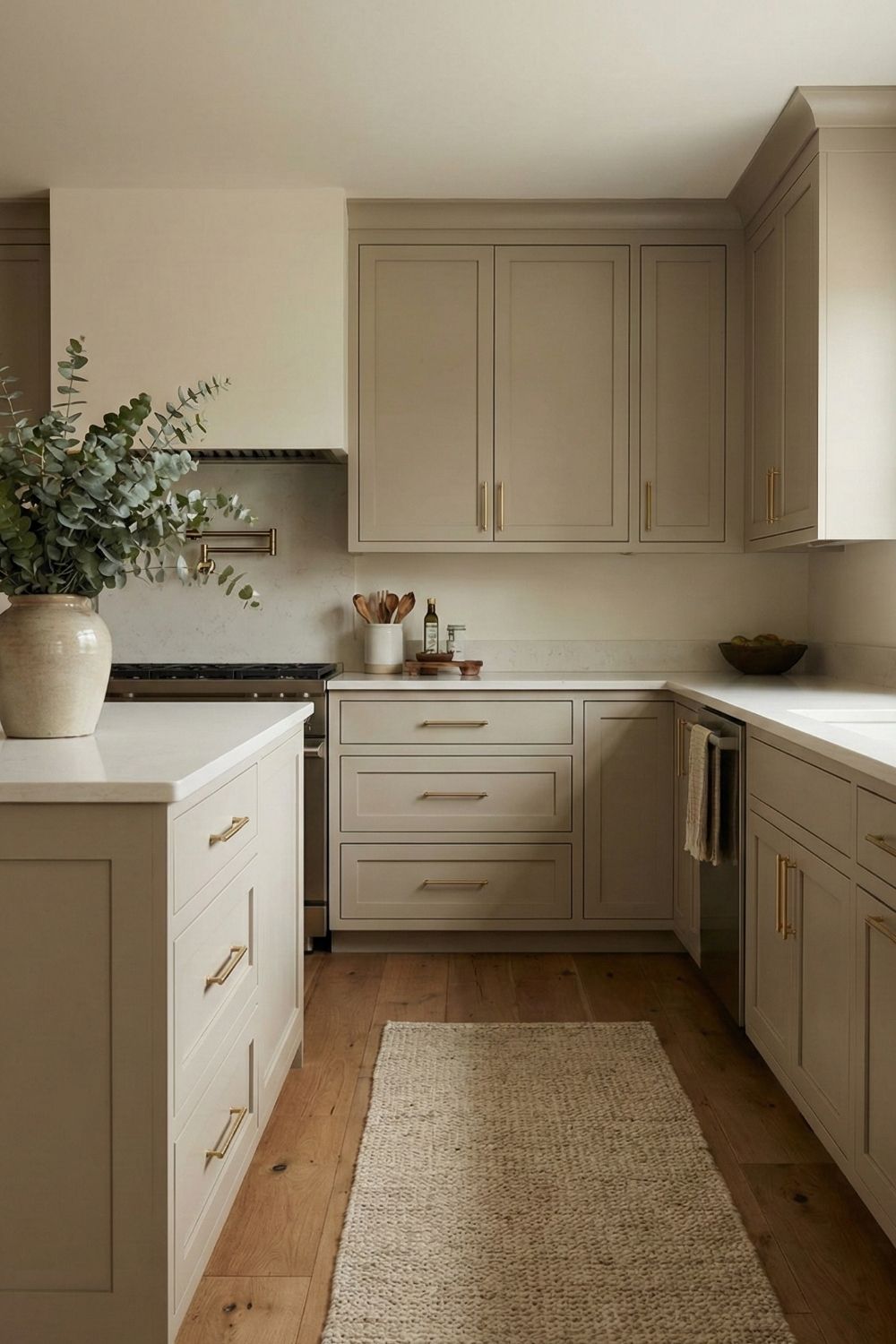
Some warm kitchens look beautiful because they do not try to do too much. Start with one main neutral, like greige or taupe, then bring in a creamy white around it. Use those tones across the larger surfaces so the room feels settled and cohesive.
Warm metals help too, especially brushed brass. Keep that finish consistent. It adds richness without creating visual clutter.
Then bring in one natural texture to soften everything. Woven shades, linen, raw wood, maybe even a handmade ceramic piece. One or two touches are usually enough.
2. Use tidy symmetry, but do not make it feel stiff
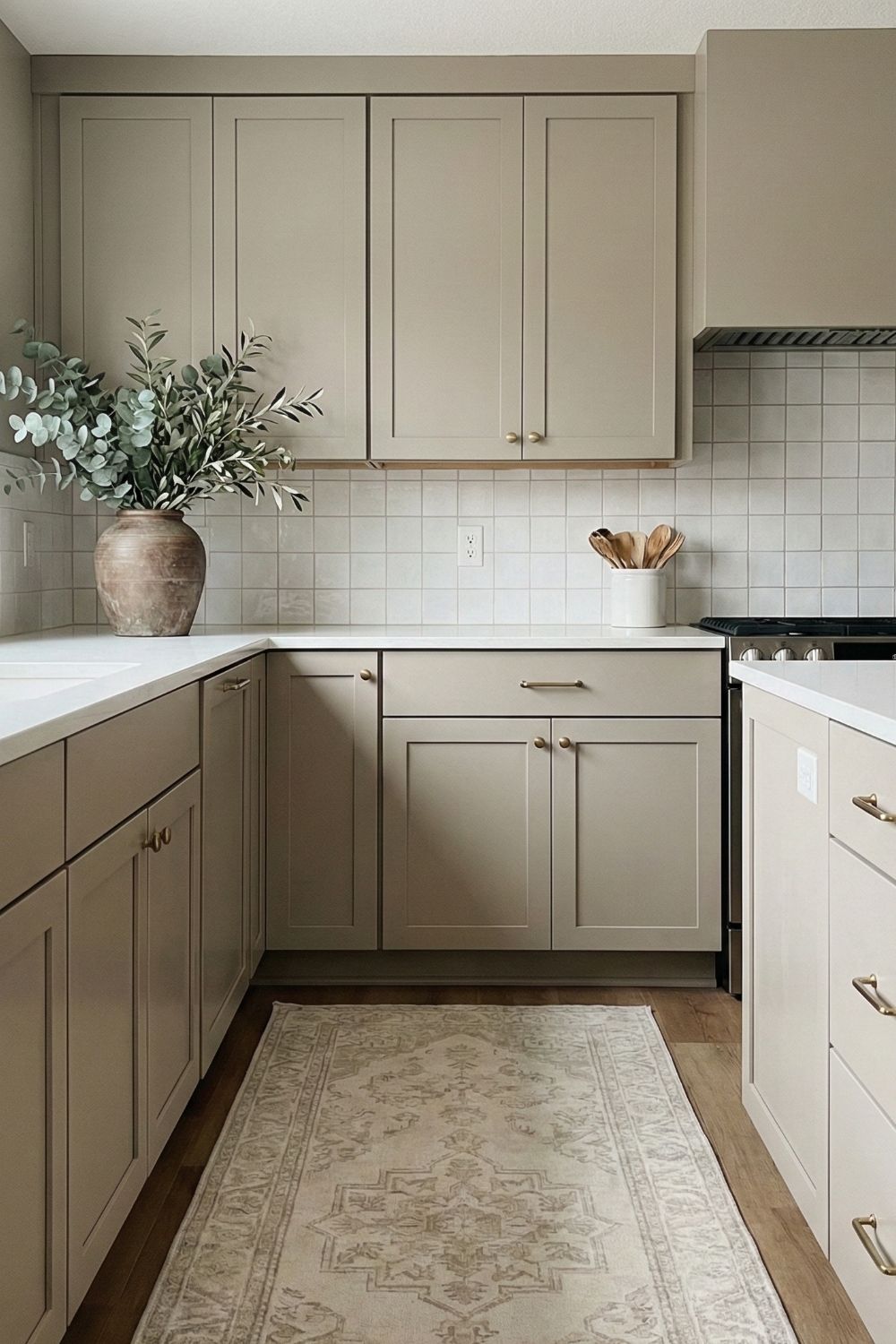
A lot of warm kitchen designs work because they feel balanced. Not formal. Just balanced.
Muted neutrals, a little symmetry, and a mix of matte and smoother finishes can make the whole space feel calm and intentional. If your cabinets are a warm neutral, pair them with a soft off-white on the surrounding walls or backsplash so the room stays light.
Keep the tile simple, too. One quiet shape in a pale tone works better than something busy. Match the grout closely so the wall fades into the background instead of breaking everything up.
When it comes to styling, small grouped moments feel better than scattered decor. A bowl, a board, maybe one organic object. Done.
3. Pair warm neutrals with natural wood
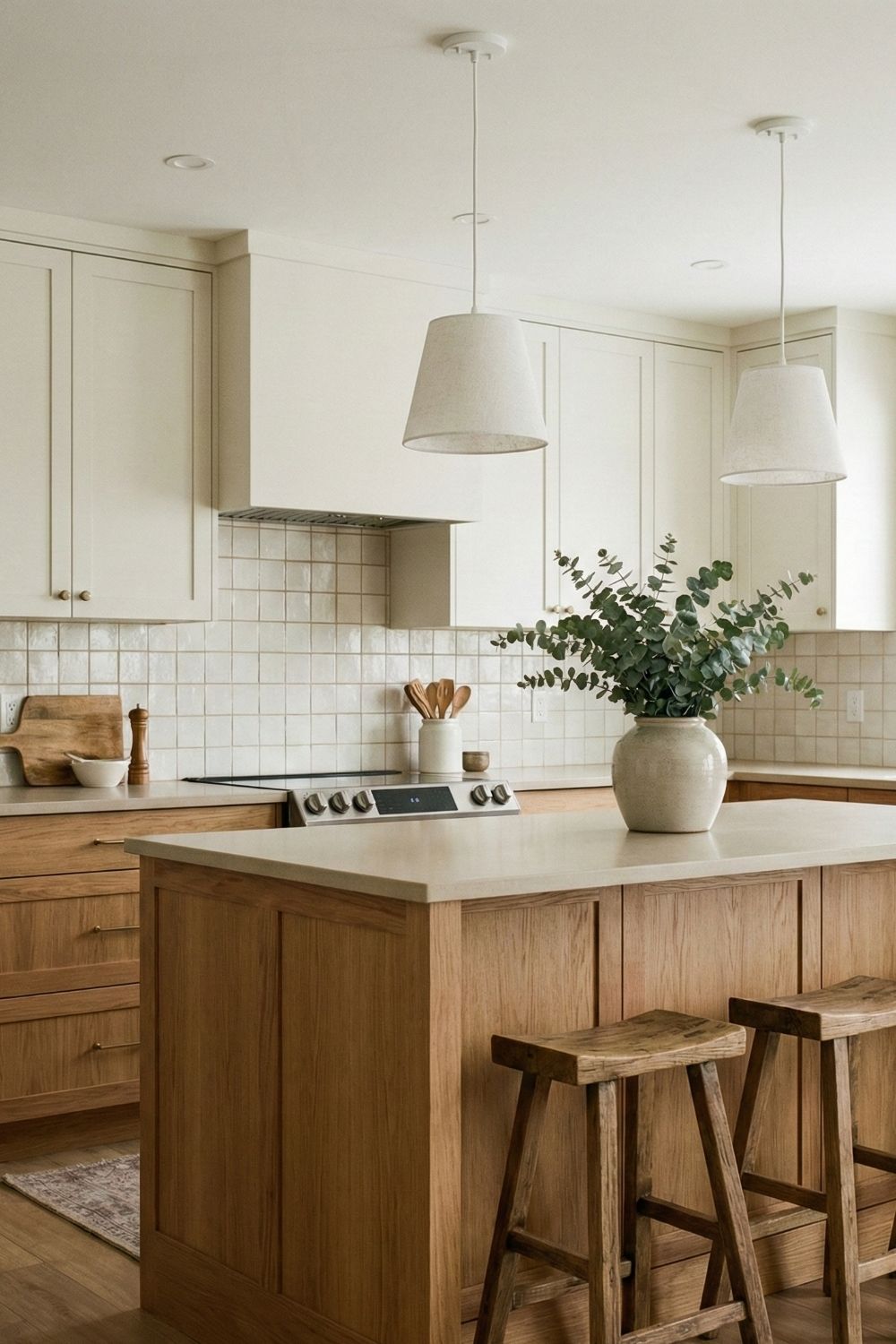
This is one of the easiest ways to make warm kitchens feel grounded.
Keep the shell light. Warm white walls, soft neutral cabinetry, clean counters. Then add wood where it matters, like shelving, stools, trim, or one larger surface. The contrast comes from tone, not color, which keeps everything calm.
Lighting matters here, too. Go for something soft-looking instead of shiny. Linen shades, matte finishes, creamy glass. Nothing too reflective.
And do not over-style it. One larger sculptural piece usually does more than a bunch of little accessories.
4. Go for a sun-warmed look instead of a stark white one
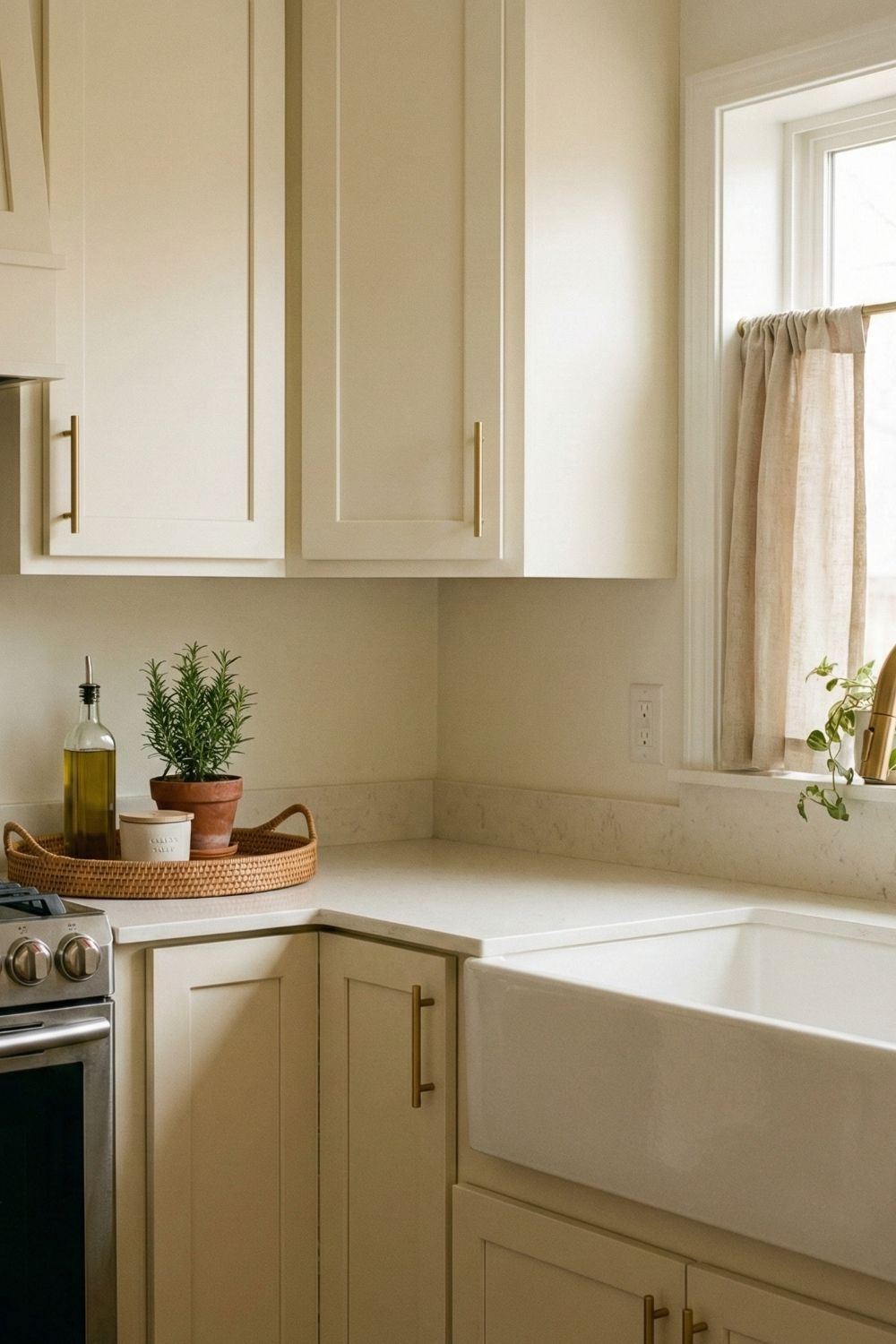
There is a big difference between white and warm white. You can feel it right away.
If you want a softer kitchen, choose an off-white with creamy undertones and keep that warmth consistent across the paint, cabinetry, and textiles. That is what makes the room feel cohesive instead of slightly mismatched.
Texture helps even more. Woven elements, linen, matte ceramics, and a softly aged wood tone. These details give the room warmth without forcing you to add more color.
And keep the styling useful. A tray with everyday items looks better than random filler all over the counter.
5. Mix soft sheen with earthy texture
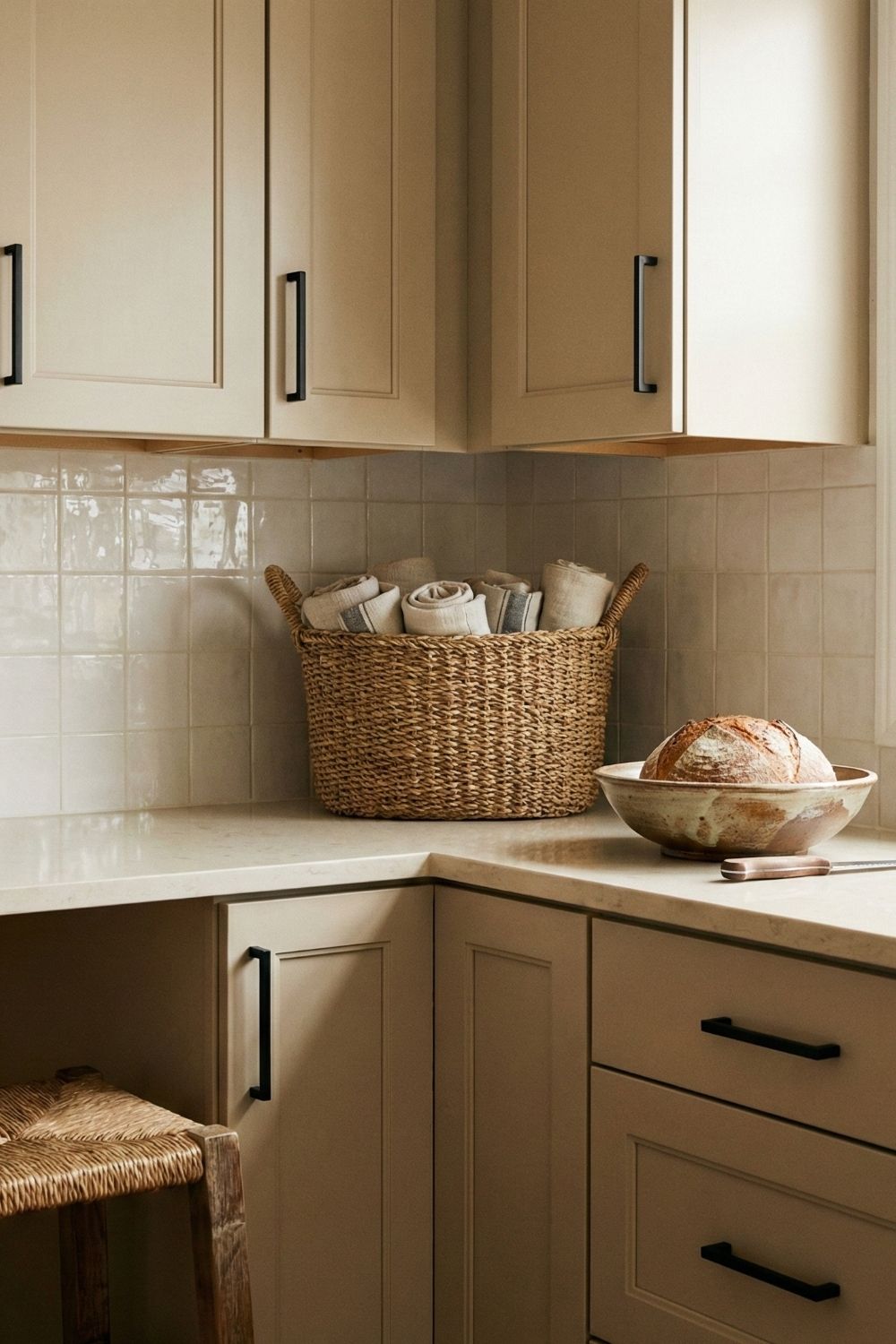
Some warm modern kitchen ideas need a little edge so they do not drift into bland territory. That is where finish contrast comes in.
A warm neutral base looks especially good with darker hardware because it gives the cabinetry some definition. Not harsh. Just enough.
Then add softer utility textures. Woven stools. A linen café curtain. A ceramic bowl with fruit. Things that feel practical but still beautiful.
This kind of room does not need a lot. One grounded vignette is usually plenty.
6. Keep the contrast low and the texture quiet
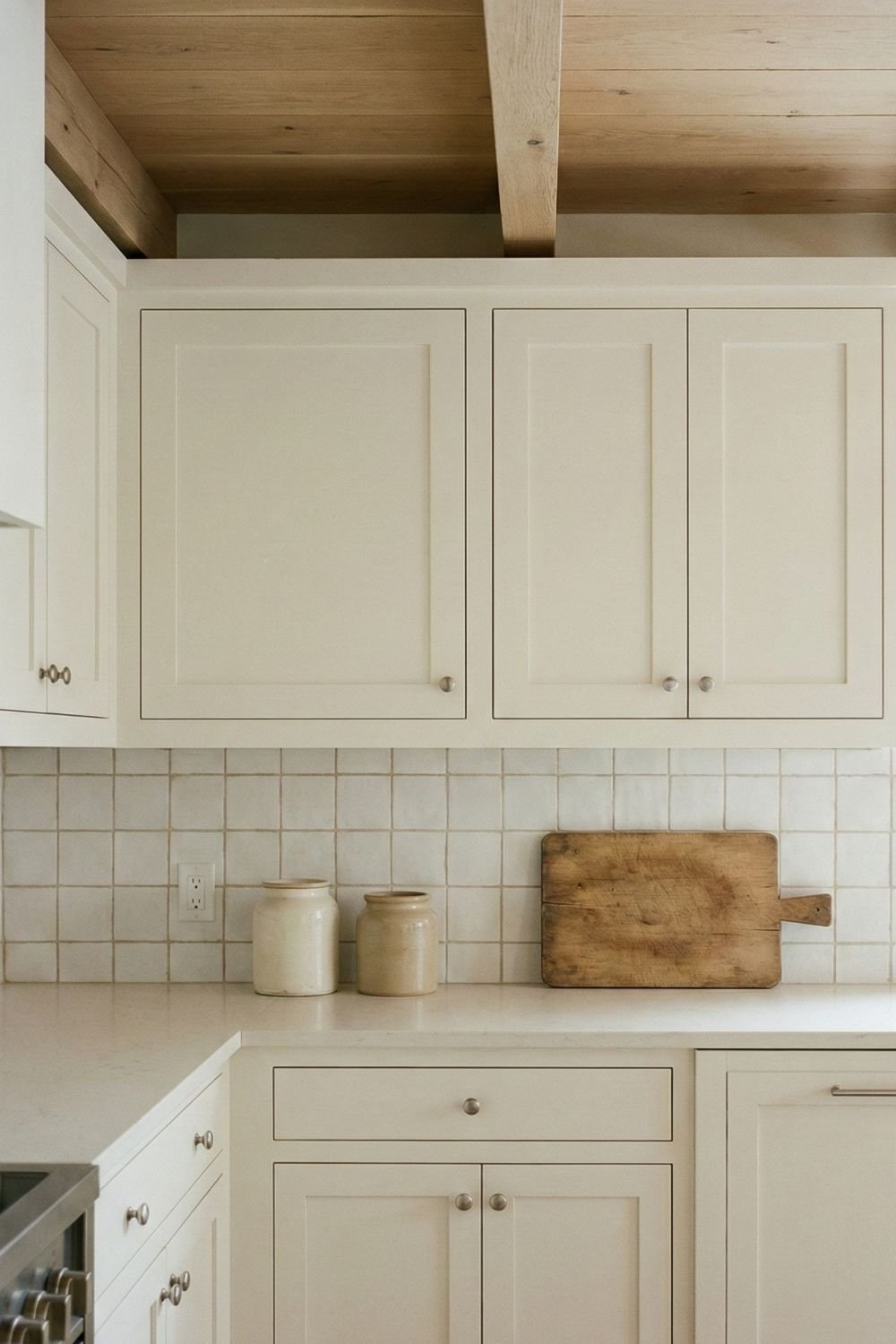
If you like warm kitchens that feel timeless, this approach works almost every time. Use warm whites that sit close together, then let texture carry the interest. Matte paint. Soft tile. A touch of aged wood. Maybe a slightly vintage brass finish.
The trick is not overexplaining the space with decor.
Consistent hardware helps a lot here. Same finish. Same style. It makes the whole room feel more intentional, even if everything else stays very simple.
And leave some empty counter space. That calm, clean look needs room to breathe.
7. Layer creamy neutrals so the room feels lived in
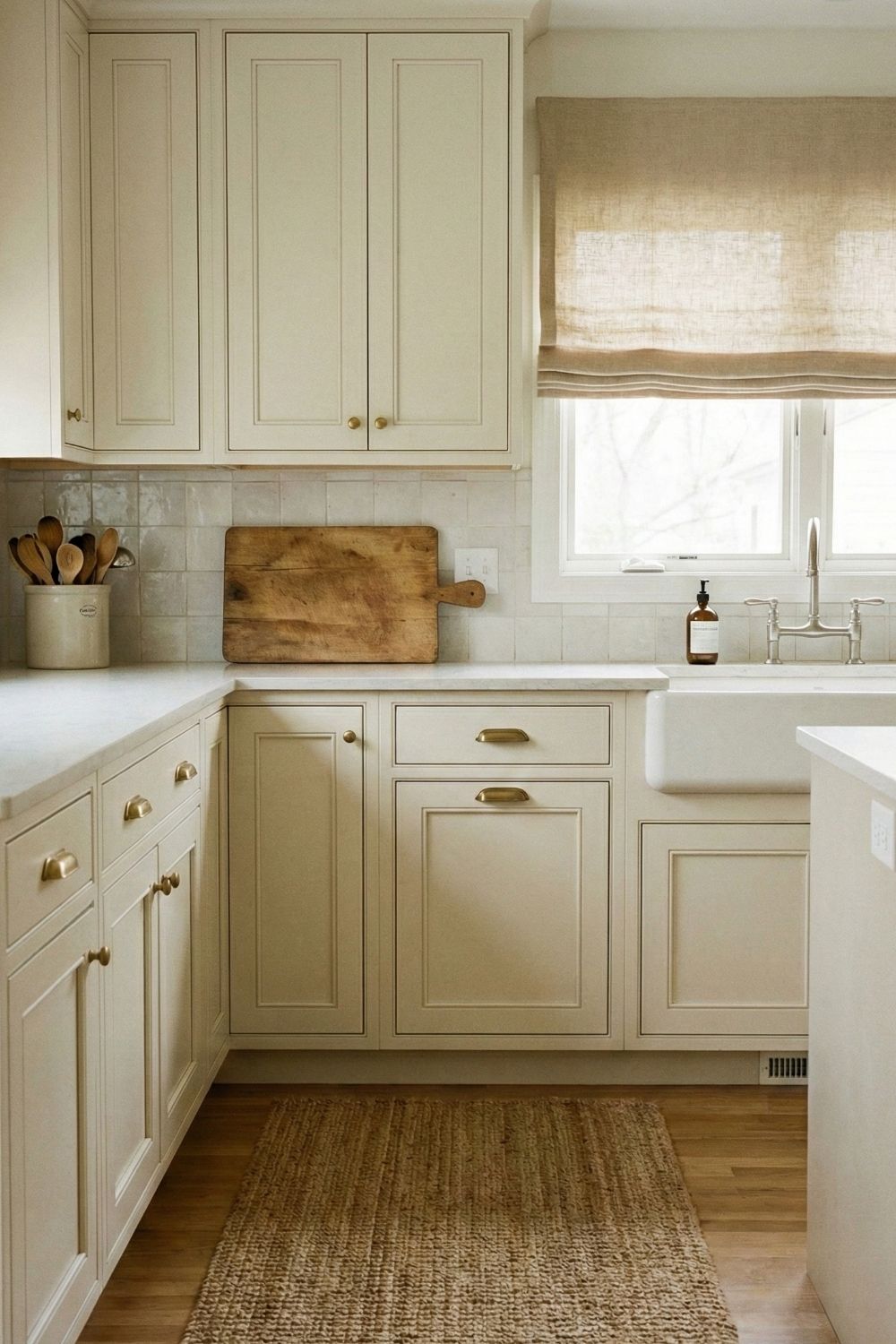
There is something about creamy neutrals with a little vintage warmth that makes a kitchen feel instantly more welcoming.
Repeat warm whites with beige undertones across the main surfaces so the room feels blended, not choppy. Then add one softening textile, maybe a woven rug or a linen-look shade, to relax all the hard finishes.
After that, a couple of earthy materials go a long way. Aged wood. Warm metal. Maybe both. You do not need much more than that.
8. Add one statement wood element
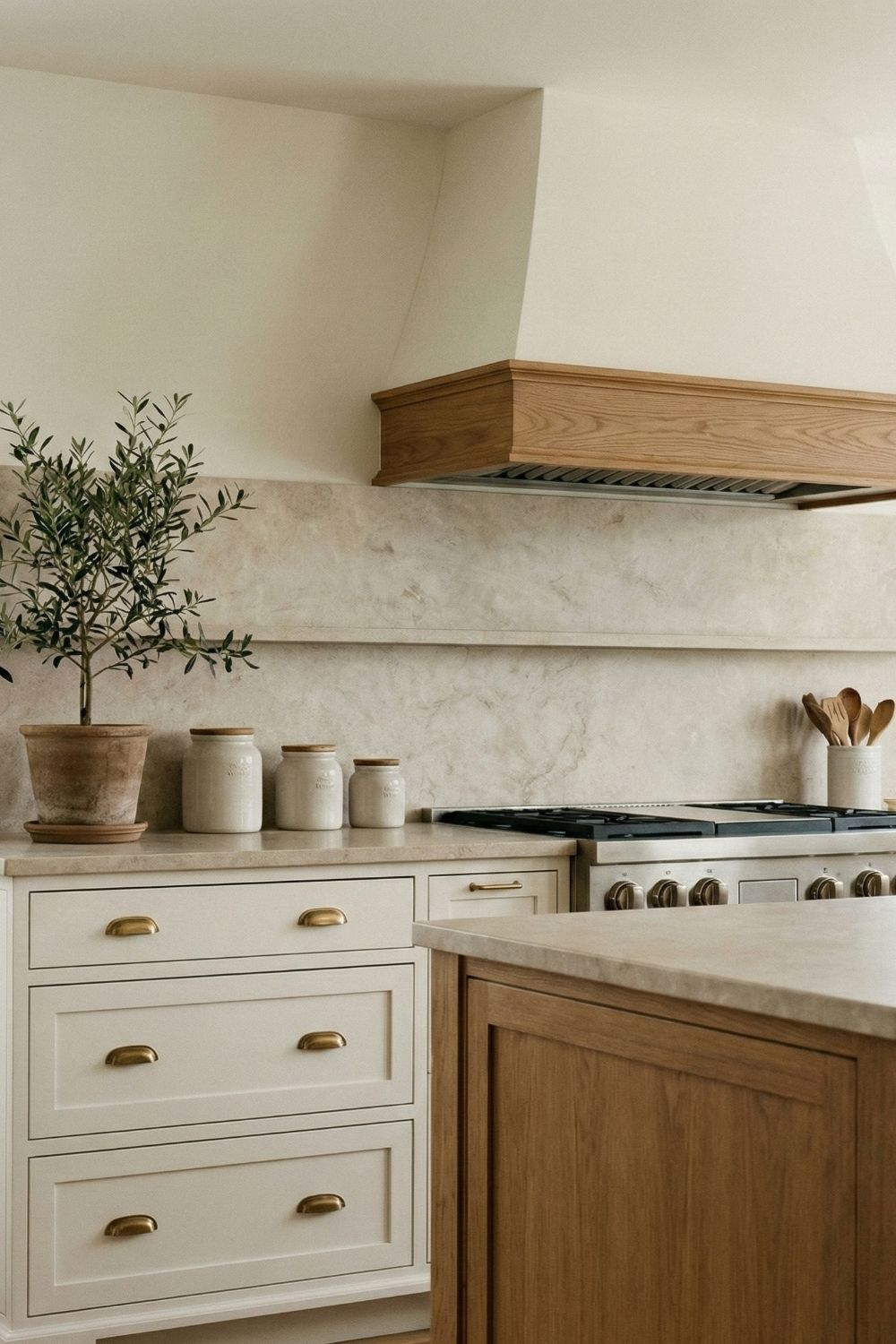
This is a good one for anyone who likes warm kitchen design but does not want the room to feel flat.
Pick one wood feature that actually matters. Shelving, trim, a table, an island detail, even a standout stool choice. One stronger wood note can anchor the whole room without pulling it away from the neutral palette.
Around that, keep the backdrop tonal and soft. Stone-inspired finishes work well because they add movement without looking busy.
And when you style it, stay in the same color family. Cream, sand, soft clay, brass. Those tones naturally work together.
9. Make it feel more like a room than a workspace
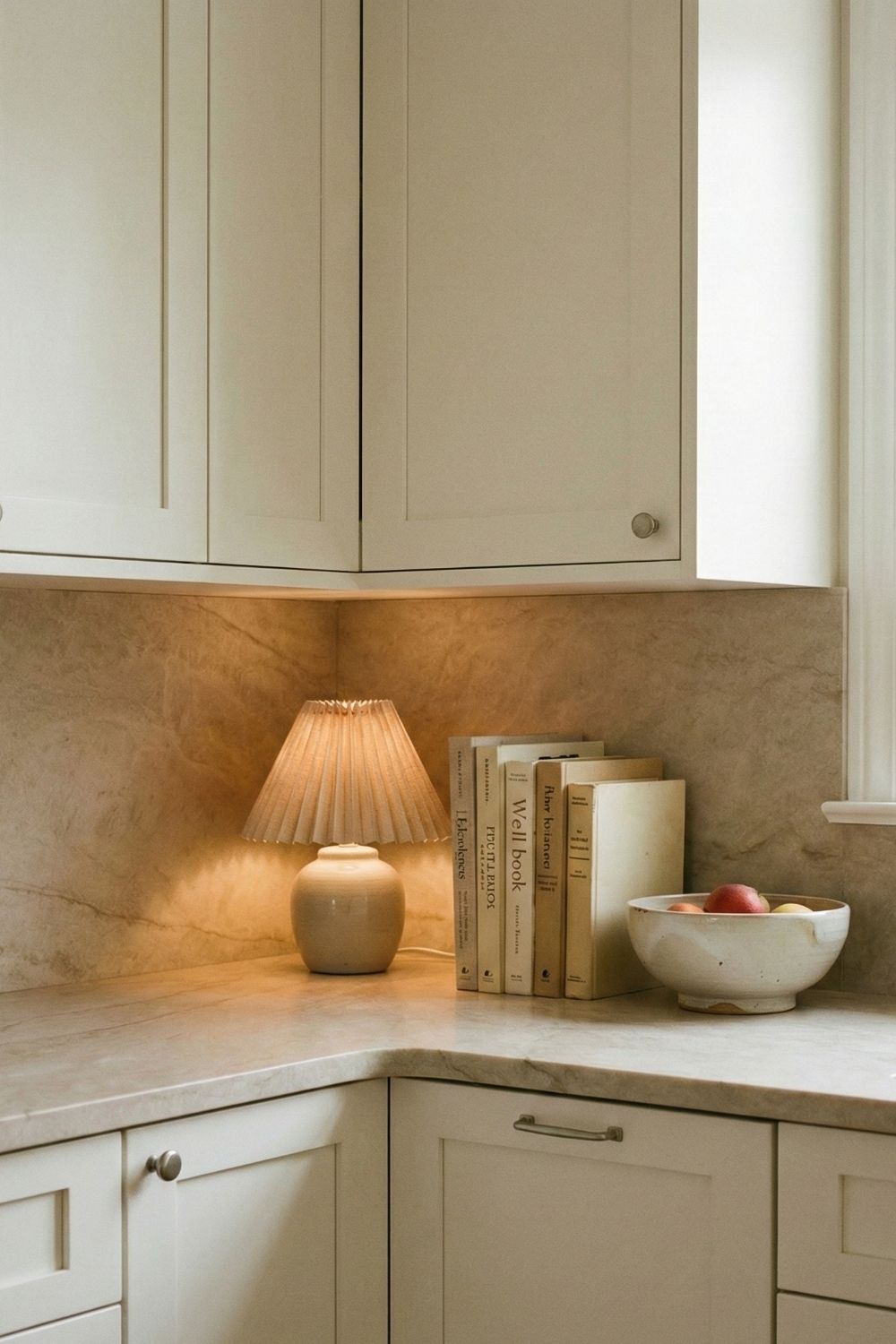
Some of the best warm kitchens do not read as purely functional. They feel a little softer than that. A little more lived in.
Warm lighting helps more than people expect. A small lamp in the corner, a plug-in sconce, a soft-shaded fixture. It changes the mood completely, especially in the evening.
Keep the palette creamy and tonal, then let subtle veining or stone texture bring in depth. Nothing dramatic.
Style one corner like an actual vignette. Not five corners. One. A stack of bowls, an organic shape, something useful. That is enough to make the room feel collected.
10. Use greige to keep things modern but gentle
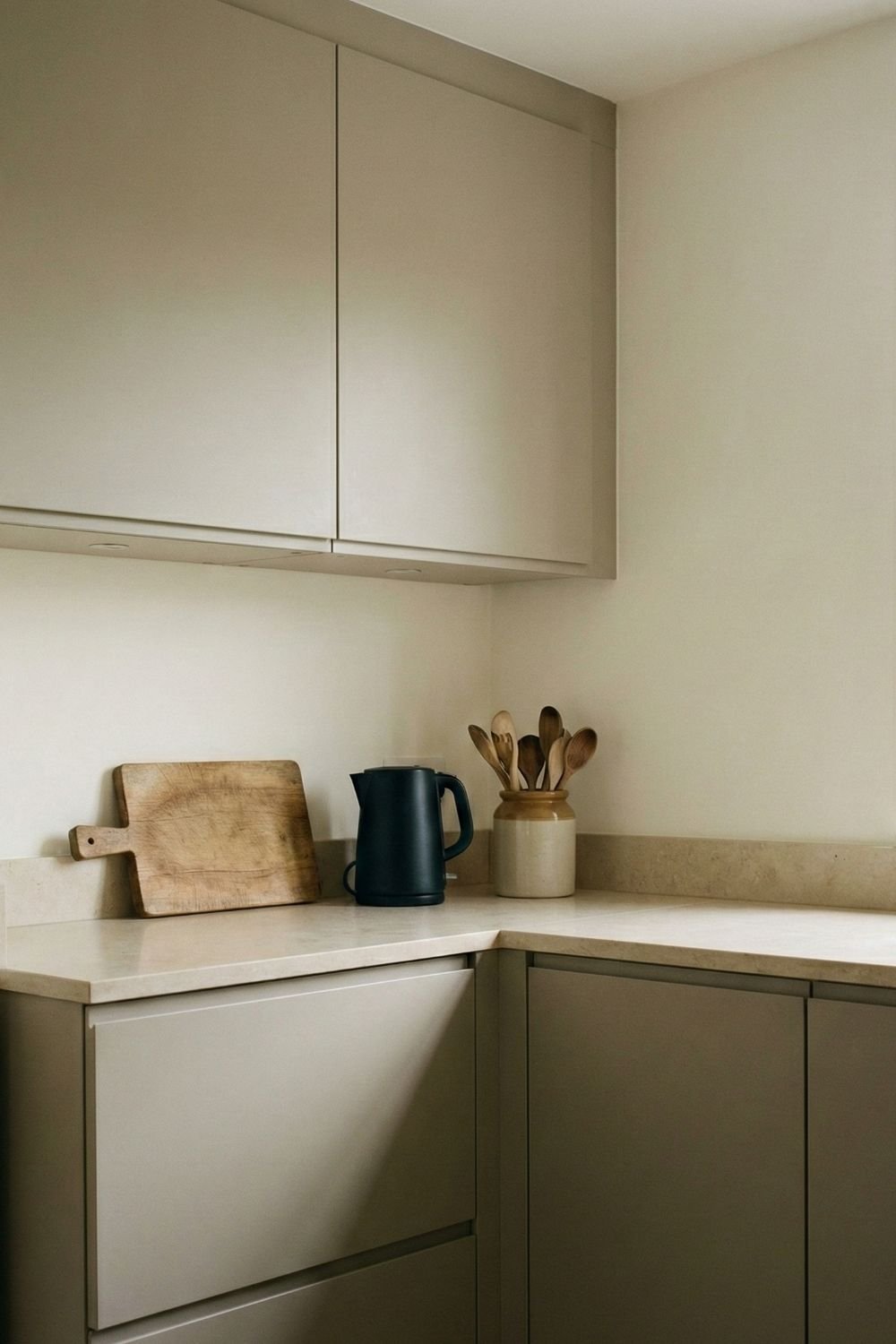
For a warm modern kitchen, greige is hard to beat. It keeps the room sleek, but it does not feel cold the way cooler grays can.
Use closely related neutrals across the walls, cabinetry, and counters so the room feels low contrast and serene. Then bring in one natural material to stop it from feeling too flat. Wood, linen, or a stone-look finish all work.
Styling should stay minimal here. A few everyday pieces in one area are plenty. Anything more and the clean mood starts to slip.
11. Mix warm whites with light oak for an easy modern cottage feel
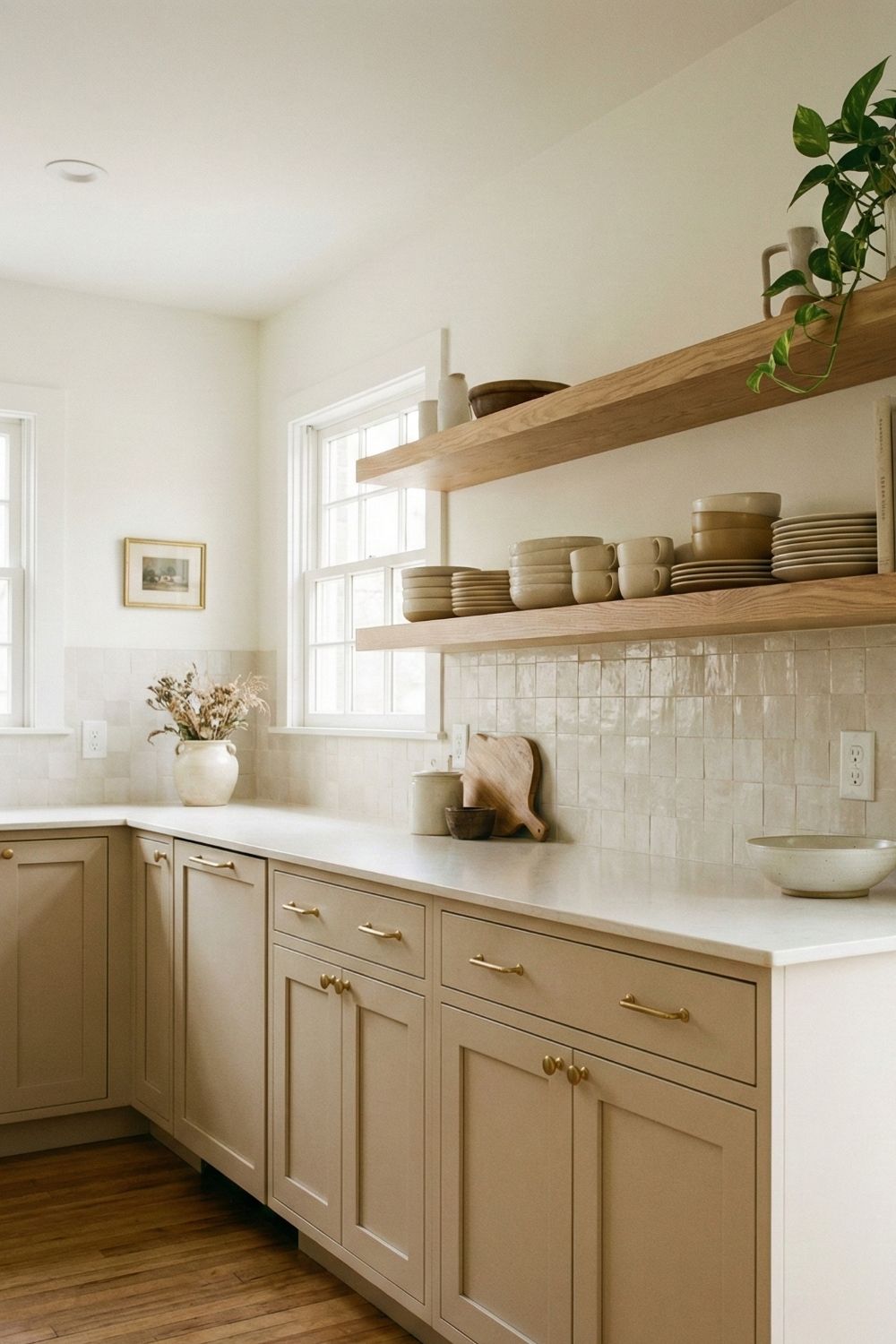
This look is soft and airy, but it still feels practical. That is part of the charm.
Start with a bright base, like warm white and soft greige, then repeat light oak in a few places so the warmth feels intentional. Shelving, stools, cutting boards, maybe even the floor.
If you have open storage, keep the dishware in the same neutral family. Vary the shape, not the color. That is what makes it look curated instead of messy.
Add one organic touch, too. A branch. A small plant. Something dried. Just enough life to keep the room from feeling too controlled.
12. Let flat-front cabinetry feel softer with texture
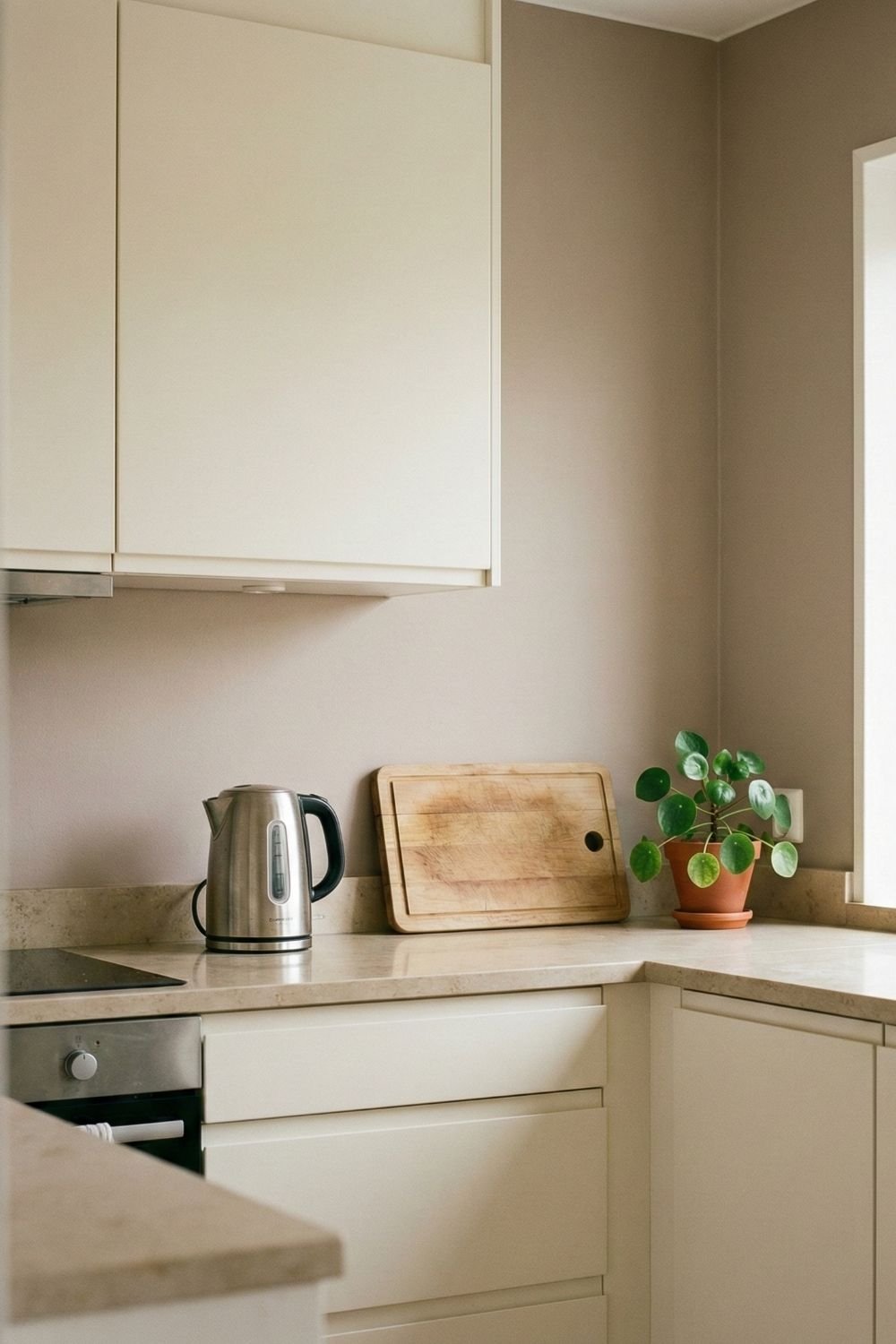
Flat-front cabinets can sometimes read a little severe. Warm tones fix that fast.
Choose a warm off-white or cream for the cabinetry, then pair it with a slightly deeper greige on the walls. That little shift in depth gives the room dimension without introducing obvious color.
Use matte or brushed finishes whenever possible. Shiny hardware can throw off the softness.
On the counters, keep things edited. One practical piece, one natural piece, one warm-toned object. That trio tends to work every time.
13. Bring in texture-heavy materials so the room never feels cold
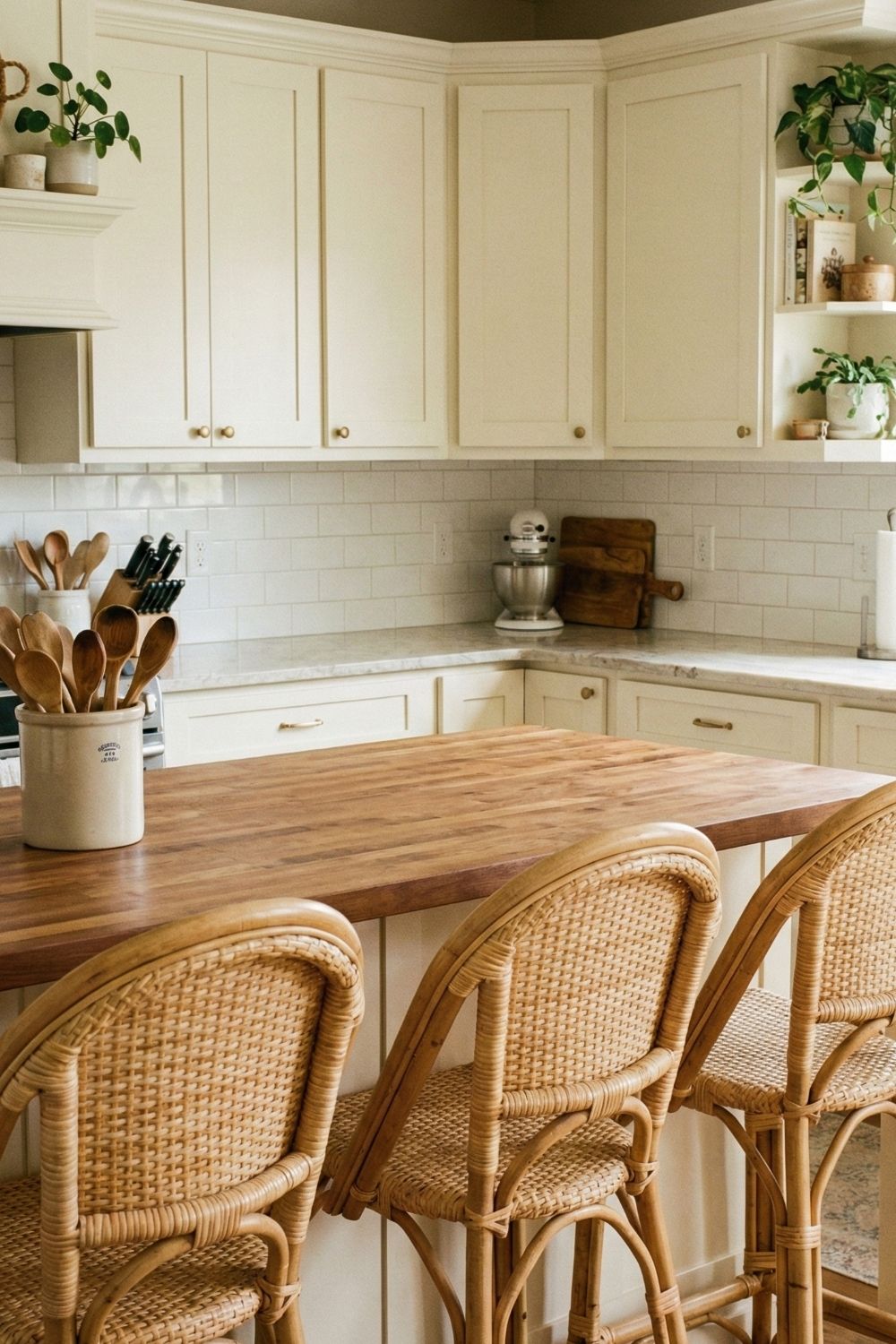
Warm colors for kitchens do not have to mean obvious colors. Often, warmth comes more from material choice than paint.
Woven seating, wood surfaces, linen accents, soft ceramics. Those textures make even a simple neutral room feel welcoming. Then repeat one warm metal finish in a few places so the room gets a subtle glow and some cohesion.
Open shelving can work here, too, but only if you stay restrained. A little greenery. A few everyday ceramics. Plenty of open space around them.
14. Try a moodier neutral for a more grounded look
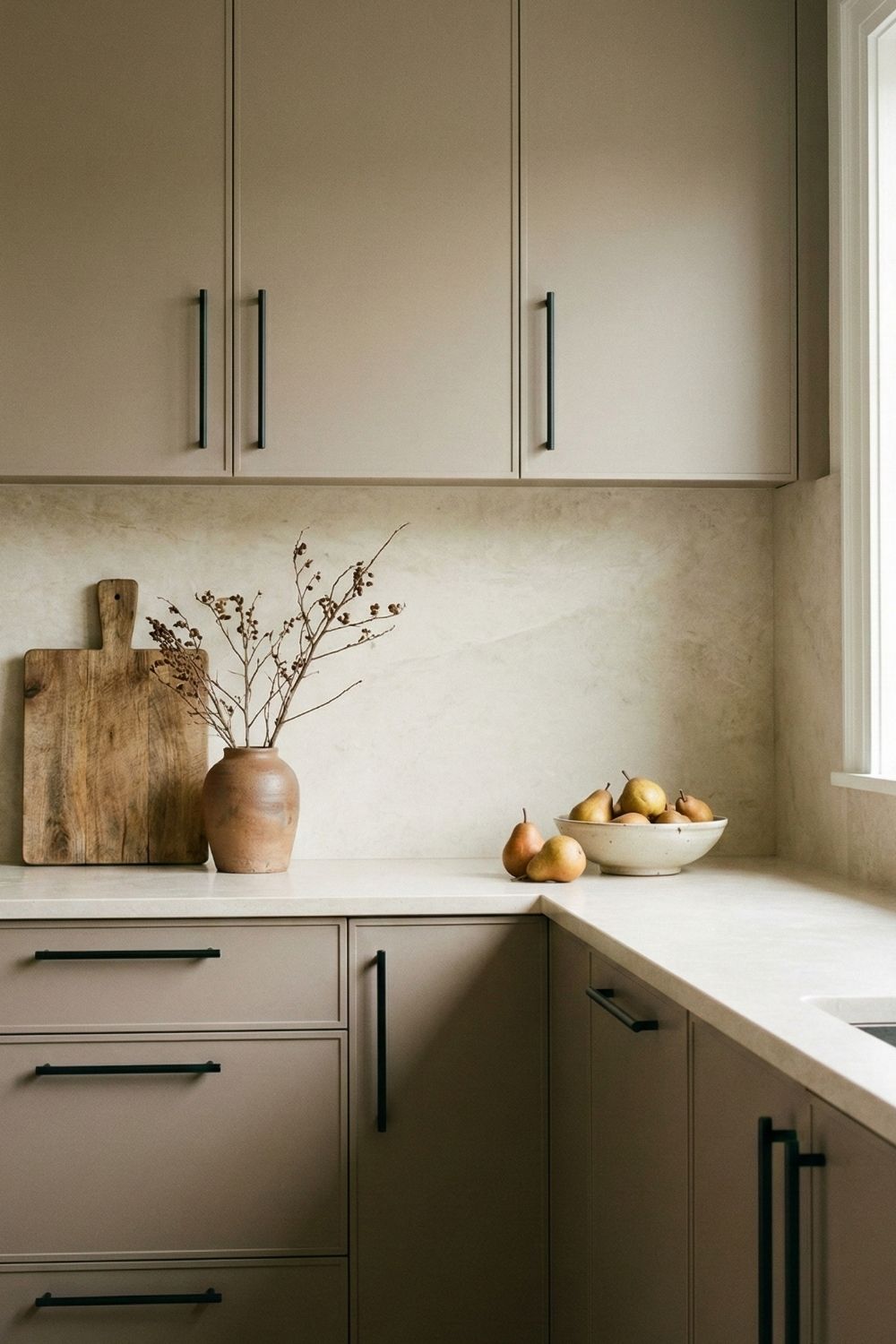
Not every warm kitchen has to be light and airy. A deeper greige or taupe can feel incredibly calm when the finish is soft, and the styling stays minimal.
This is where warm taupe kitchen cabinets really shine. They bring depth, but they still feel softer than charcoal or black. Especially in matte finishes.
To sharpen the look a little, add one darker linear detail. Hardware, a faucet, maybe a frame. That small amount of contrast gives the room structure without making it feel heavy.
Then keep the styling organic. Clay, aged wood, simple produce, maybe a handmade bowl. Nothing too polished.
15. Use subtle lighting to create warmth on purpose
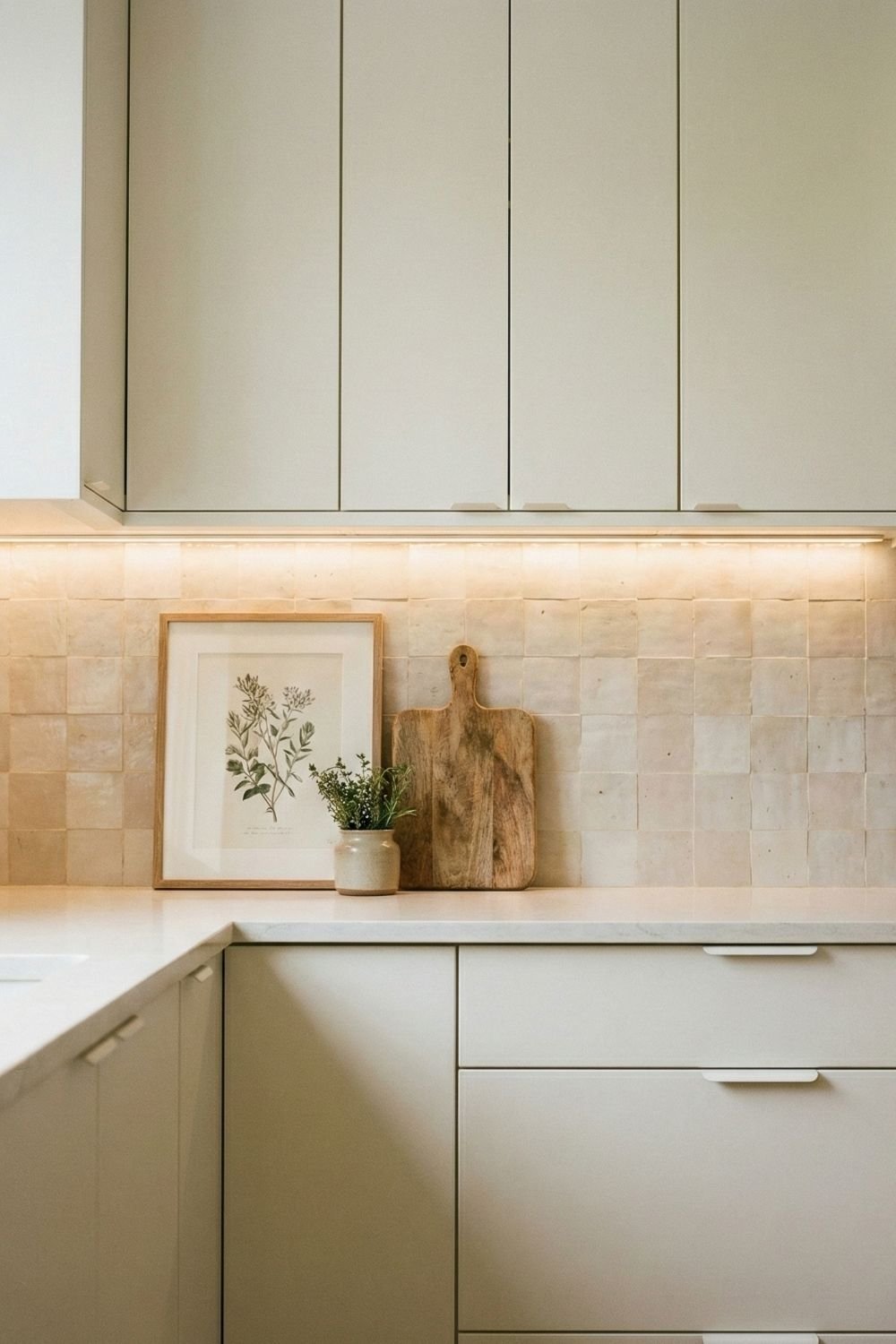
Sometimes a kitchen already has the right colors, but it still feels a little flat. Lighting is usually the missing piece.
Keep the main surfaces tone on tone, like warm white and pale greige, and let under-cabinet lighting wash the backsplash in a soft temperature. That glow changes everything. The room feels warmer, calmer, and more finished almost instantly.
Then style one simple layered spot. A flat board, one warm wood tone, one small organic detail. Stop there.
That restraint is what makes it work.
16. Put a warm wall color behind lighter cabinetry
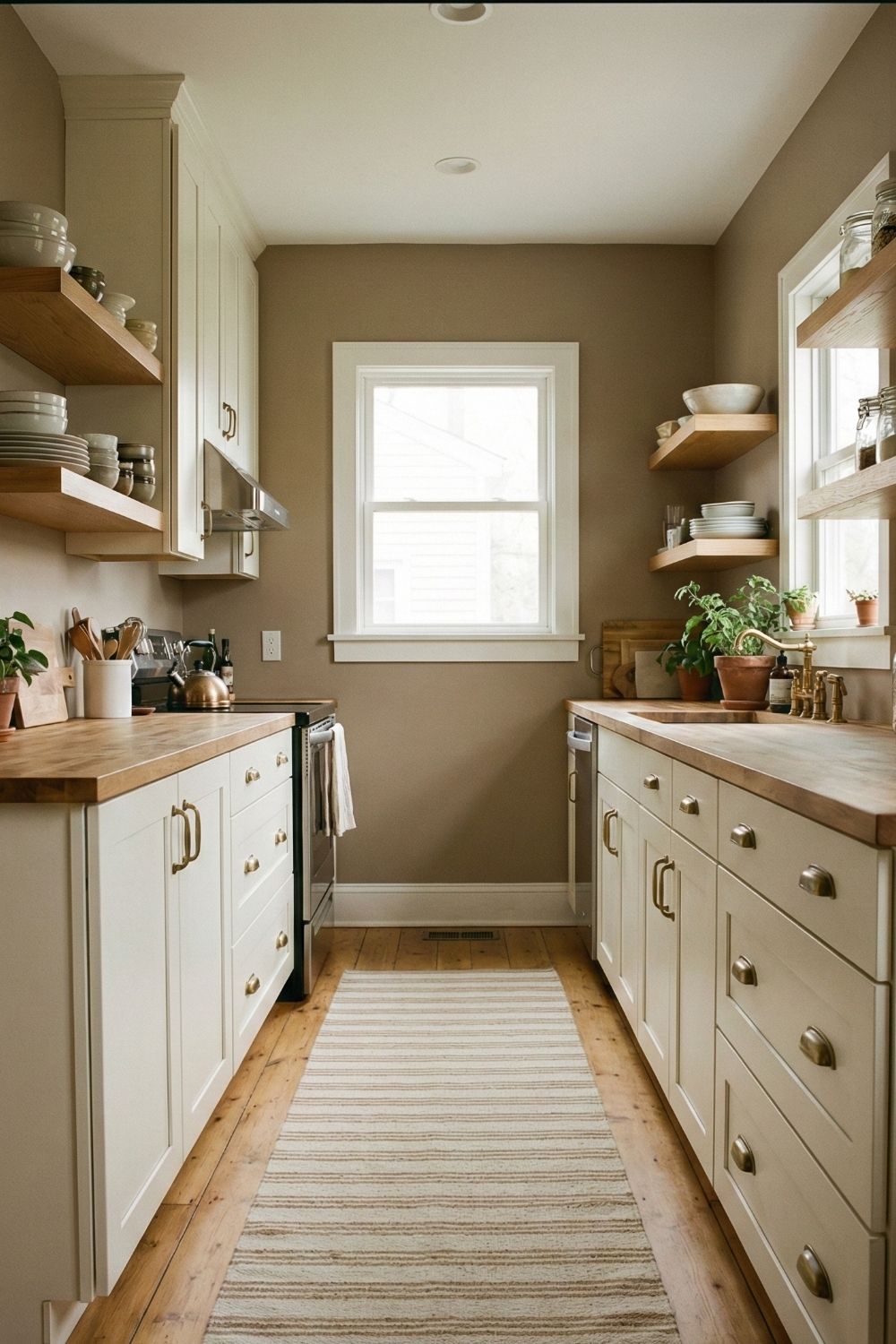
Some warm kitchens look beautiful because they do not try to do too much. Start with one main neutral, like greige or taupe, then bring in a creamy white around it. Use those tones across the larger surfaces so the room feels settled and cohesive.
Warm metals help too, especially brushed brass. Keep that finish consistent. It adds richness without creating visual clutter.
Then bring in one natural texture to soften everything. Woven shades, linen, raw wood, maybe even a handmade ceramic piece. One or two touches are usually enough.
17. Create one oversized focal moment
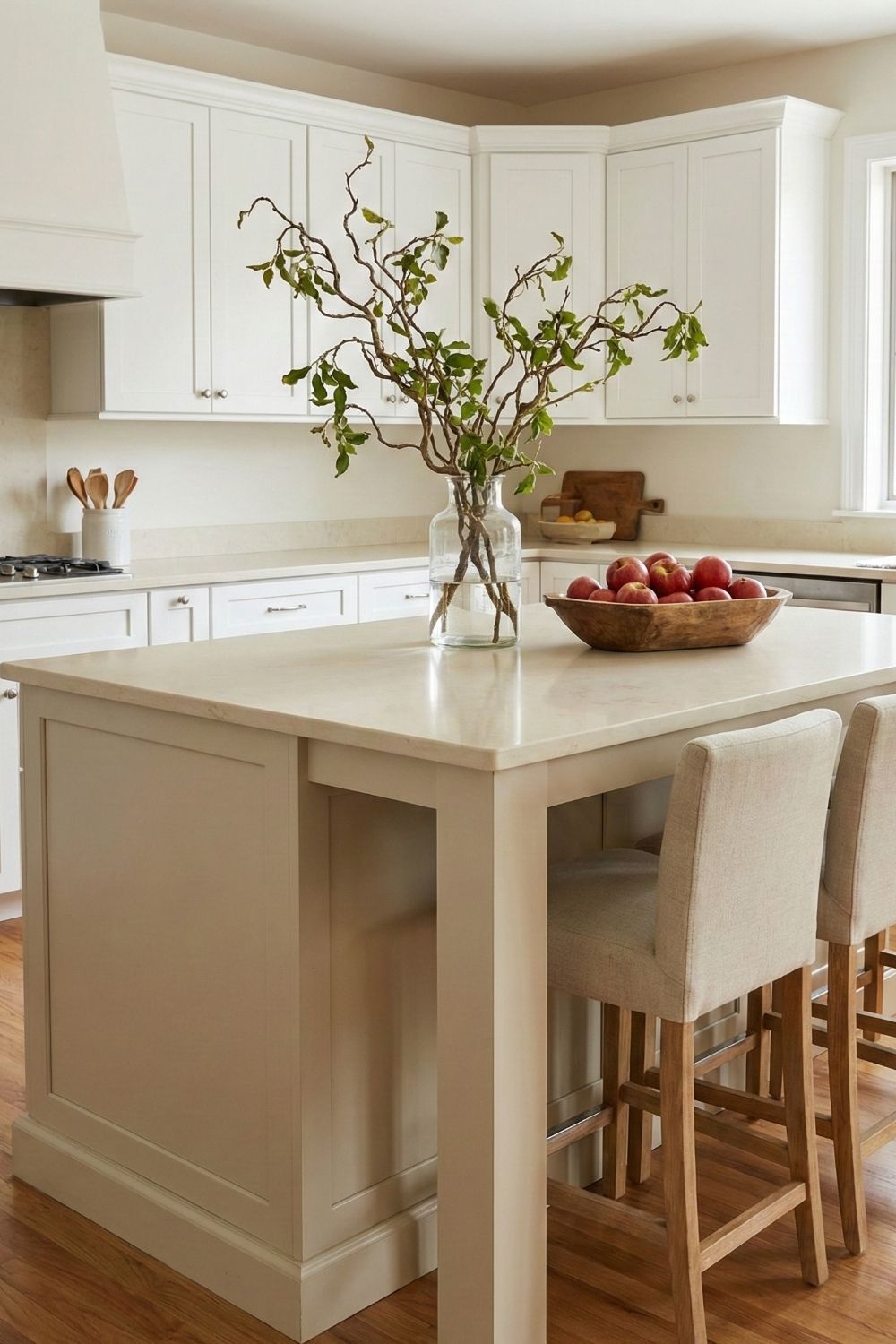
A lot of warm kitchen designs feel expensive because they are not full of tiny decor pieces. They usually have one strong central moment instead.
Keep the foundation light and cohesive with warm whites and soft beige, then bring in wood tones so the room does not feel stark. After that, create one focal point that feels organic and slightly oversized. Branches, greenery, a sculptural arrangement, something with shape.
That one move can make the whole room feel done.
Then soften the cleaner surfaces with a quiet texture in the seating or textiles. Linen, woven details, pale wood. Simple things. Effective things.
FAQ About Warm Kitchens
What colors make kitchens feel warm?
Are warm kitchens still in style?
How do you make a modern kitchen feel warm?
Do warm taupe kitchen cabinets work in small kitchens?
Warm kitchens work because they do not ask much from you visually. They are easy on the eyes. Easy to live with, too.
And that is probably why they last.
Latest posts
A Christmas cake doesn’t need complicated fondant figures or elaborate piping to look beautiful. A smooth layer of buttercream, a few gingerbread cookies, chocolate decorations, or even a light dusting …
Thanksgiving drinks do not need alcohol to feel like part of the celebration. Apple cider, cranberry juice, ginger beer, citrus, warm spices, and seasonal fruit can create drinks that look …
Homemade Holiday trail mix is one of the simplest snacks to put together during fall and Christmas. With ingredients like crunchy pecans, cinnamon cereal, dried cranberries, pretzels, chocolate, and seasonal …
Oversized vintage-style Christmas bulbs already bring plenty of color to a tree, so they only need a few simple details to feel more distinctive. These DIY vintage Christmas light ornaments …
These DIY snow globe Christmas ornaments look detailed once they are hanging on the tree, but they are surprisingly simple to make. Clear fillable baubles, faux snow, red berry sprigs, …
A Christmas centerpiece does not need complicated flower arranging to look full and festive. This DIY Christmas wreath centerpiece starts with a simple floral-foam wreath, then builds up layers of …