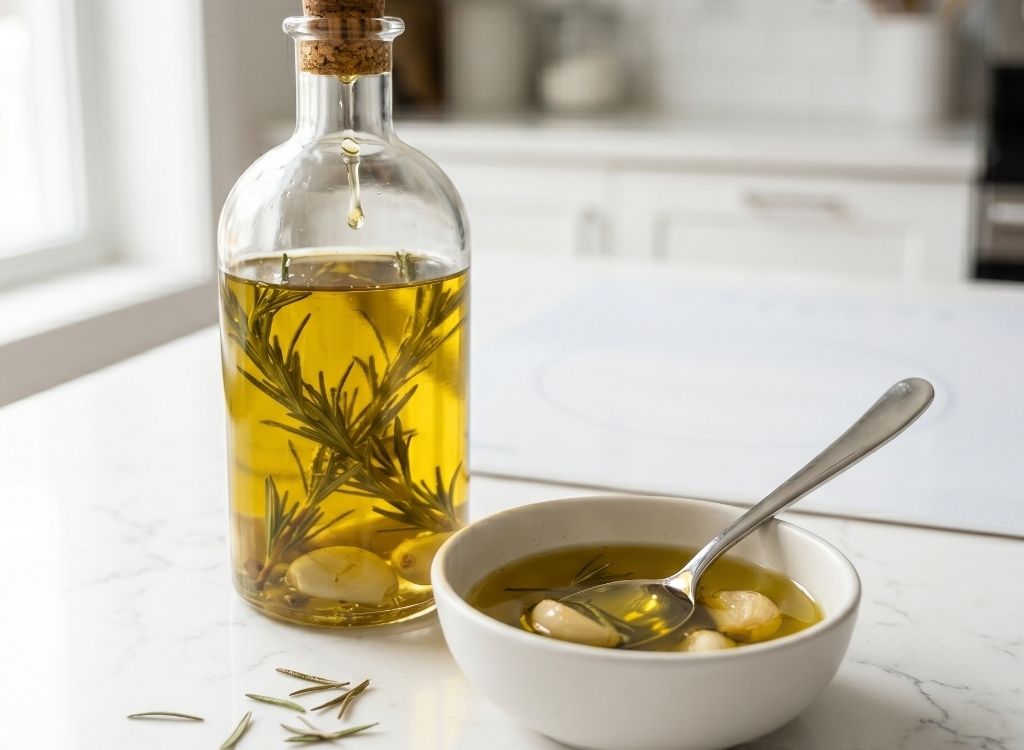
Infusing olive oils at home is one of the easiest ways to make simple food taste more flavorful. You only need olive oil, a few aromatics, gentle heat, and clean storage jars. The idea is simple. Garlic, herbs, citrus peel, spices, or dried ingredients sit in warm oil long enough to release their flavor. The oil then becomes a quick finishing touch for bread, pasta, roasted vegetables, eggs, soups, salads, and grilled meats.
Good infused oils do not need complicated steps. They need low heat, dry ingredients, clean bottles, and safe refrigeration.
This guide covers 10 homemade infused oils, including garlic-infused olive oil, rosemary-infused olive oil, basil-infused olive oil, chili garlic oil, citrus herb oil, and a sweet cinnamon vanilla version.
Safety Tips for Infusing Olive Oils at Home
Infusing olive oils is easy, but homemade oils need careful storage. Garlic, fresh herbs, citrus peel, and vegetables can introduce moisture into the oil. That is why these oils should be treated like fresh refrigerated foods, not shelf-stable pantry products.
- Always keep the heat low. You want the ingredients to release flavor slowly, not fry in the oil. If garlic is sizzling hard or herbs are turning dark, the oil is too hot.
- Dry ingredients matter. Wash fresh herbs if needed, then dry them thoroughly before adding them to the oil. Citrus peel should also be clean and dry.
- Cool the oil before bottling. Warm oil in a sealed bottle can create condensation, and moisture can affect both quality and storage.
- Refrigerate homemade infused oils, especially when you infuse oil with garlic. Use them while fresh, label each bottle with the date, and discard any oil that smells off or looks unusual.
Best Olive Oil for Infused Oils
A mild extra virgin olive oil works well for most savory infused oils. It has enough flavor to taste good on its own, but it will not overpower garlic, rosemary, basil, chili, or citrus.
Use light olive oil for sweet-infused oils. Cinnamon, vanilla, and fruit flavors usually taste cleaner when the base oil is mild.
Avoid using expensive finishing oil for heated infusions. Gentle heat can soften the delicate flavors that make premium olive oil special. Save your best bottle for serving, and use a reliable everyday olive oil for infusing.
Equipment You Need
You do not need special tools for homemade infused oils. A small saucepan, a fine mesh strainer, a clean glass jar, and dry ingredients are enough.
Use glass bottles or jars with tight lids. Wide-mouth jars are easier to clean, while narrow bottles look better for serving.
A fine mesh strainer gives the oil a cleaner texture. For basil-infused olive oil or spice-heavy oils, strain twice for a smoother finish.
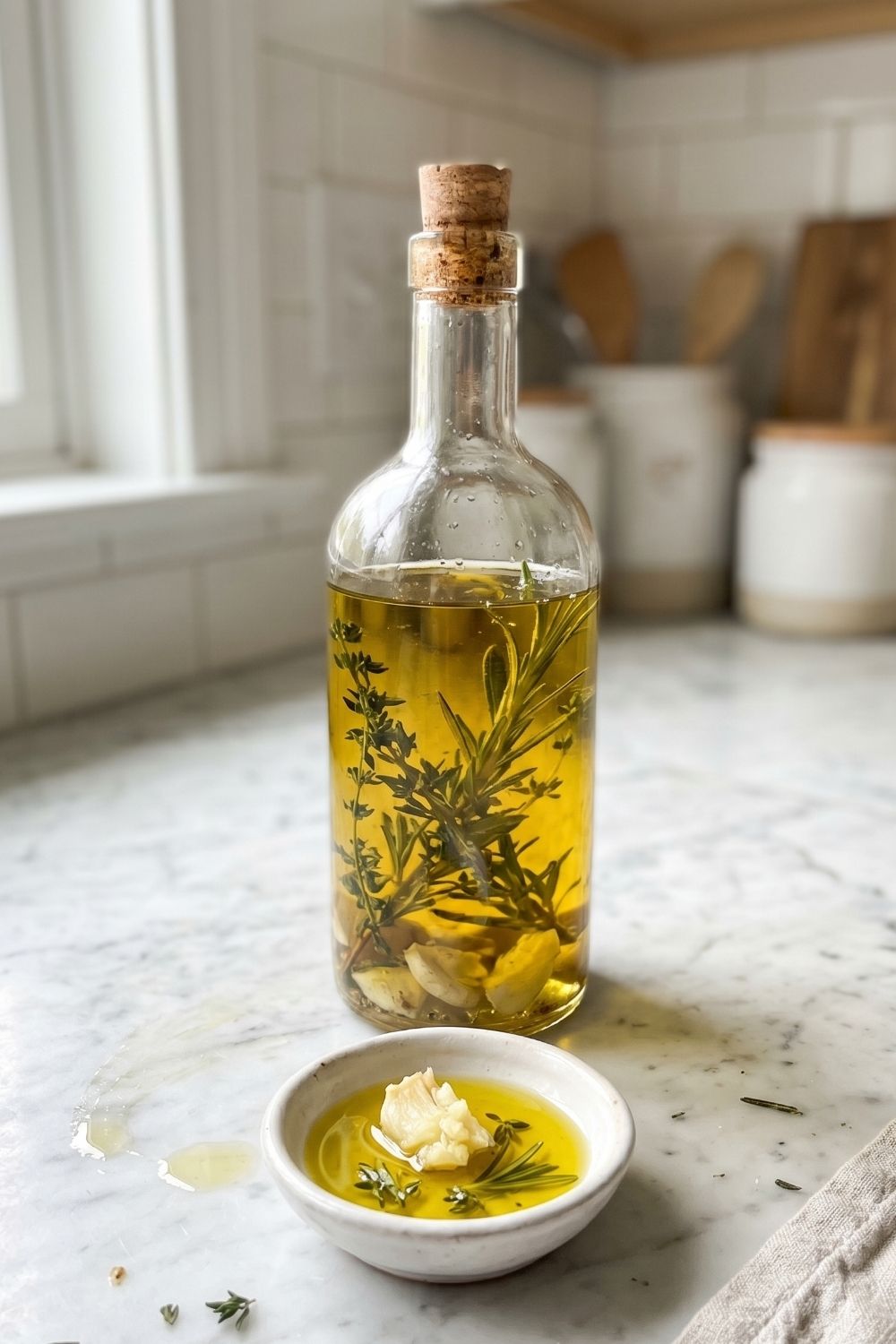
Garlic Herb Infused Olive Oil
Ingredients:
- 2 cups olive oil
- 6 garlic cloves, peeled and lightly crushed
- 2 sprigs fresh rosemary
- 2 sprigs fresh thyme
Instructions:
- Add the olive oil, garlic, rosemary, and thyme to a small saucepan.
- Warm over low heat for 20 to 25 minutes. Do not let the oil boil, and do not let the garlic fry.
- Remove the pan from the heat. Let the oil cool completely.
- Strain into a clean glass bottle or jar. Store in the refrigerator.
Tips:
Lightly crushed garlic gives a smoother flavor than minced garlic.
Bruise the rosemary and thyme between your fingers before adding them if you want a stronger herb aroma.
Use whole garlic cloves for a softer garlic flavor.
How to use it:
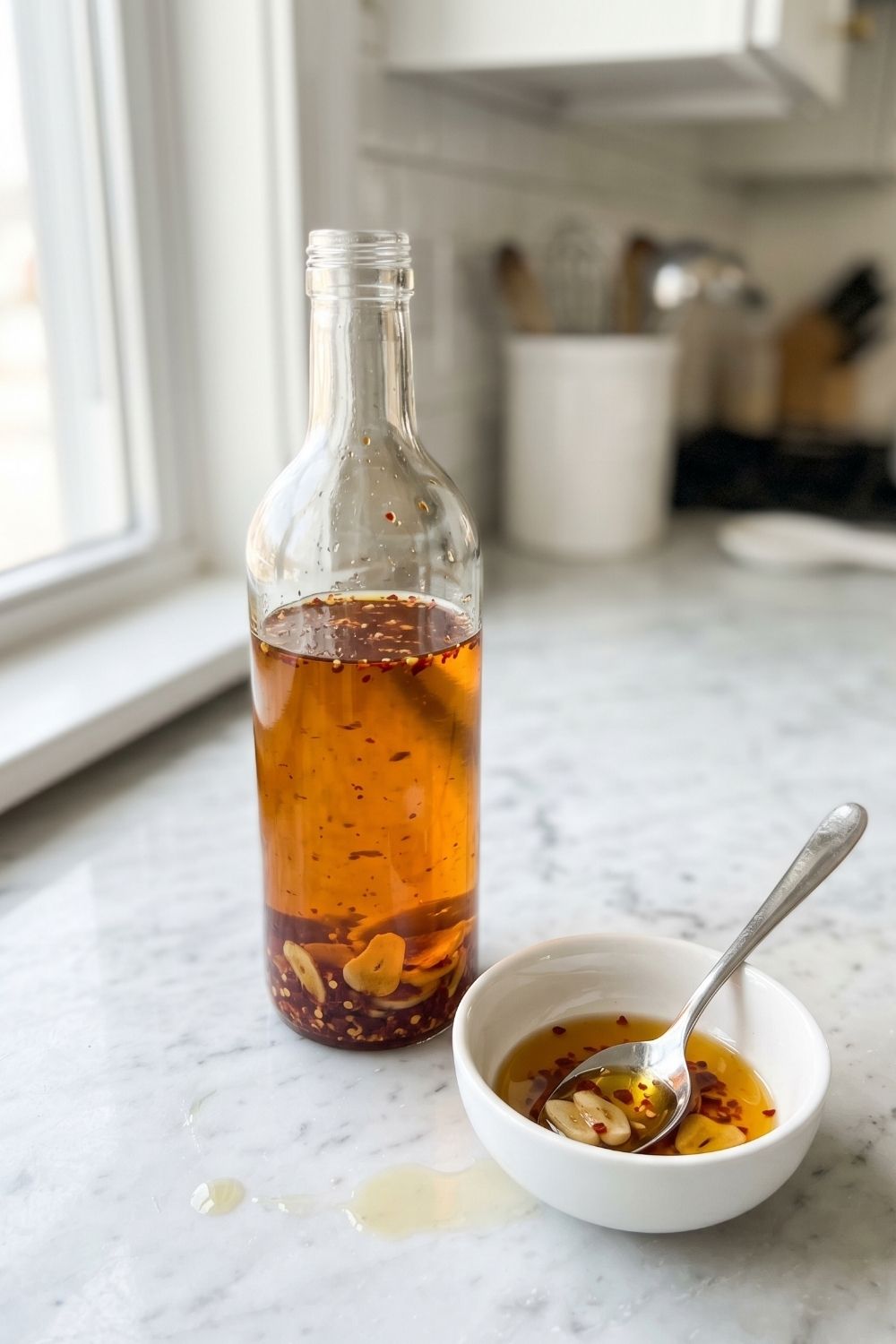
Chili Garlic Infused Oil
Ingredients:
- 2 cups olive oil
- 4 garlic cloves, sliced
- 2 tablespoons red pepper flakes
- 1 teaspoon smoked paprika
Instructions:
- Combine the olive oil, sliced garlic, red pepper flakes, and smoked paprika in a saucepan.
- Warm over low heat for 15 to 20 minutes. Watch the garlic closely so it does not brown too much.
- Remove from the heat and let the oil cool completely.
- Strain for a smoother finish, or leave some pepper flakes in the oil for stronger heat. Store in the refrigerator.
Tips:
Start with 1 tablespoon of red pepper flakes if you prefer mild heat.
Smoked paprika adds warmth and color, but regular paprika also works.
Straining the oil keeps the flavor more controlled over time.
How to use it:
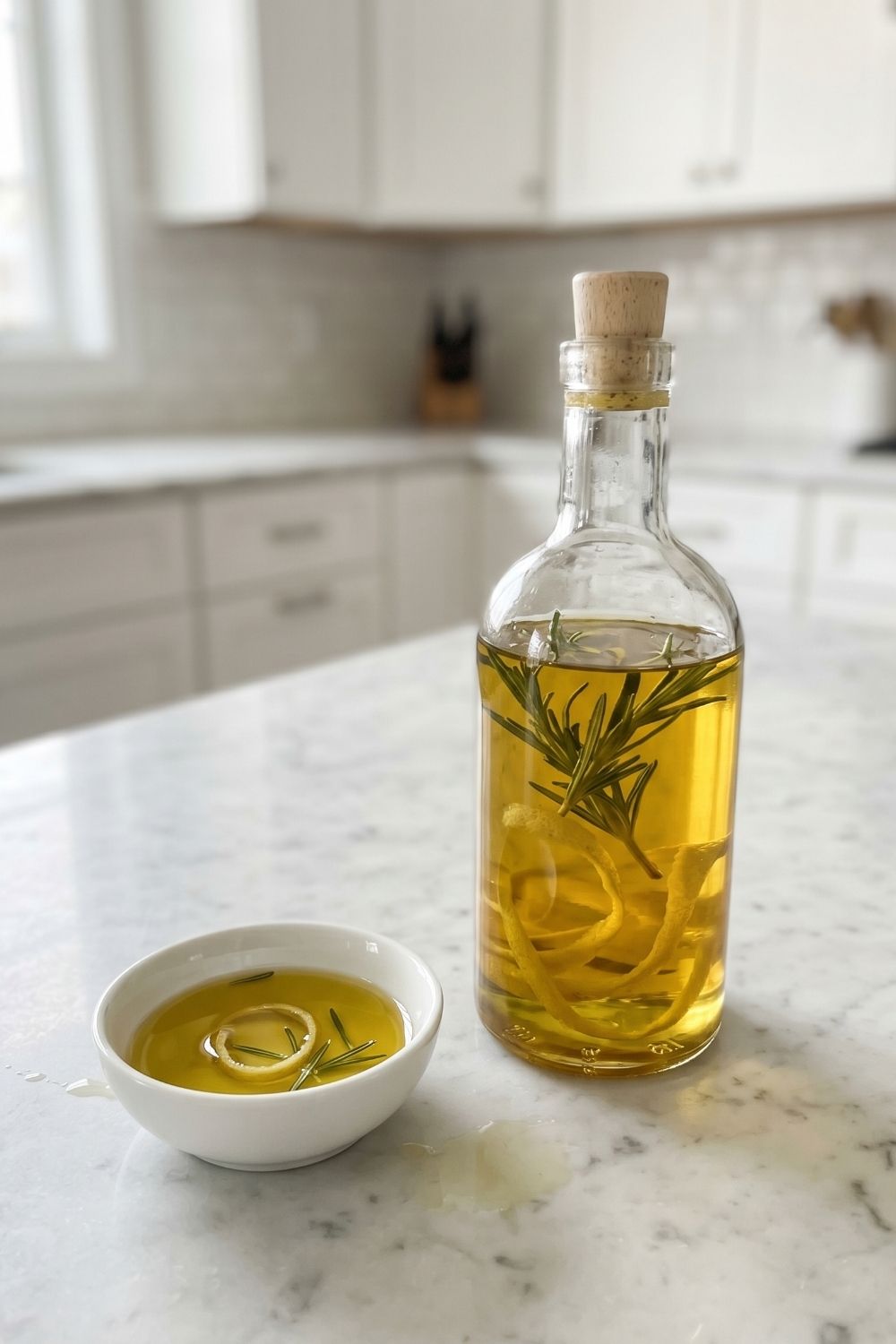
Lemon Rosemary Infused Olive Oil
Ingredients:
- 2 cups olive oil
- peel of 2 lemons, yellow part only
- 3 sprigs fresh rosemary
Instructions:
- Add the olive oil, lemon peel, and rosemary to a saucepan.
- Warm gently over low heat for about 20 minutes. Keep the oil below a simmer.
- Remove from the heat and cool completely.
- Strain into a clean bottle. Refrigerate until ready to use.
Tips:
Avoid the white pith on the lemon peel because it can taste bitter.
Use a vegetable peeler to remove wide strips of lemon peel.
Keep the heat gentle so the rosemary stays fragrant.
How to use it:
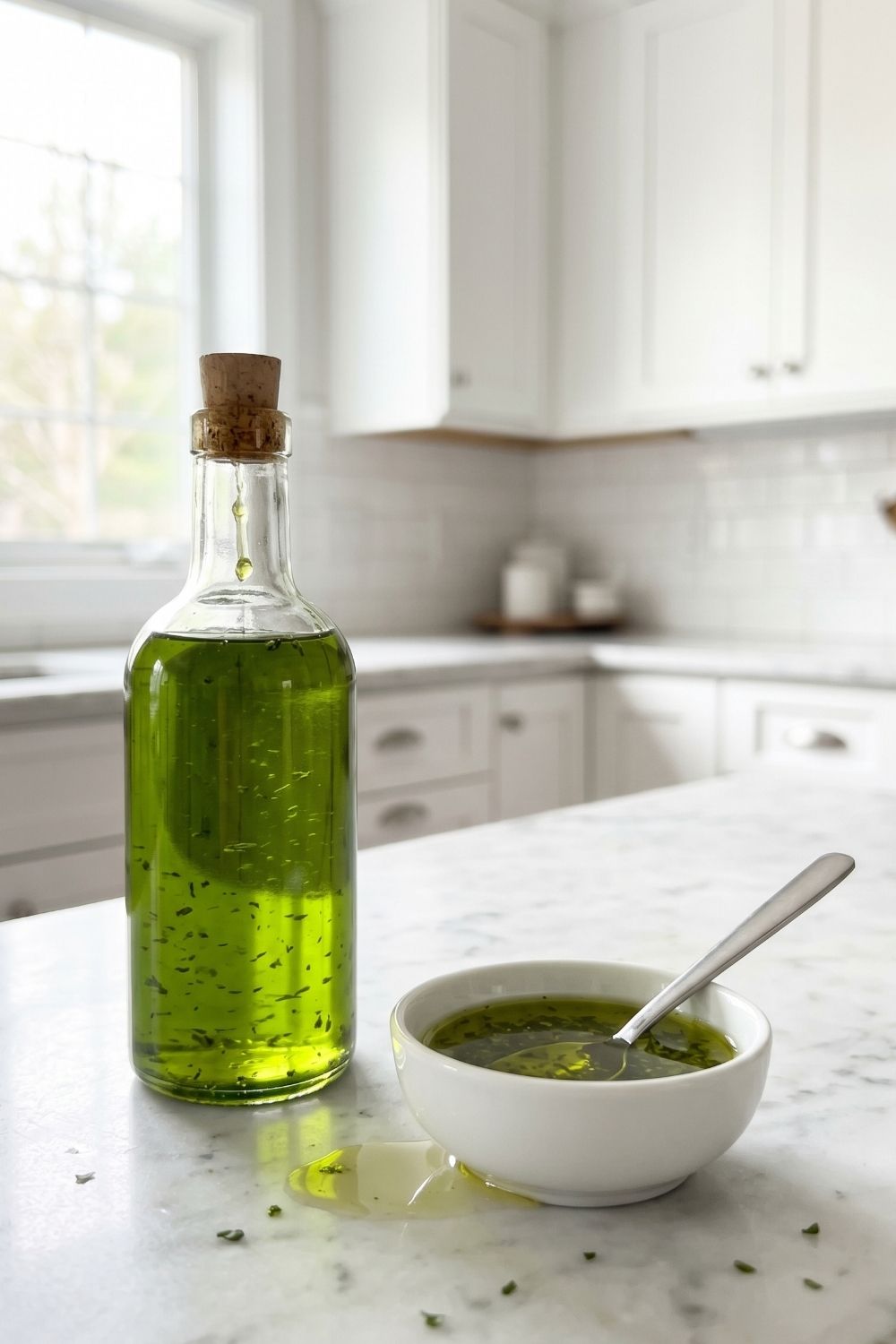
Basil Infused Olive Oil
Ingredients:
- 2 cups olive oil
- 1 cup fresh basil leaves
Instructions:
- Blanch the basil leaves in boiling water for 10 seconds.
- Remove the basil quickly and pat it completely dry.
- Blend the basil and olive oil until smooth.
- Warm the mixture gently for about 5 minutes.
- Strain through a fine mesh sieve. Store in the refrigerator.
Tips:
Dry the basil very well before blending. Extra water can affect texture and storage.
Strain the oil twice if you want a smoother finish.
Use fresh, bright basil leaves for the cleanest flavor.
How to use it:
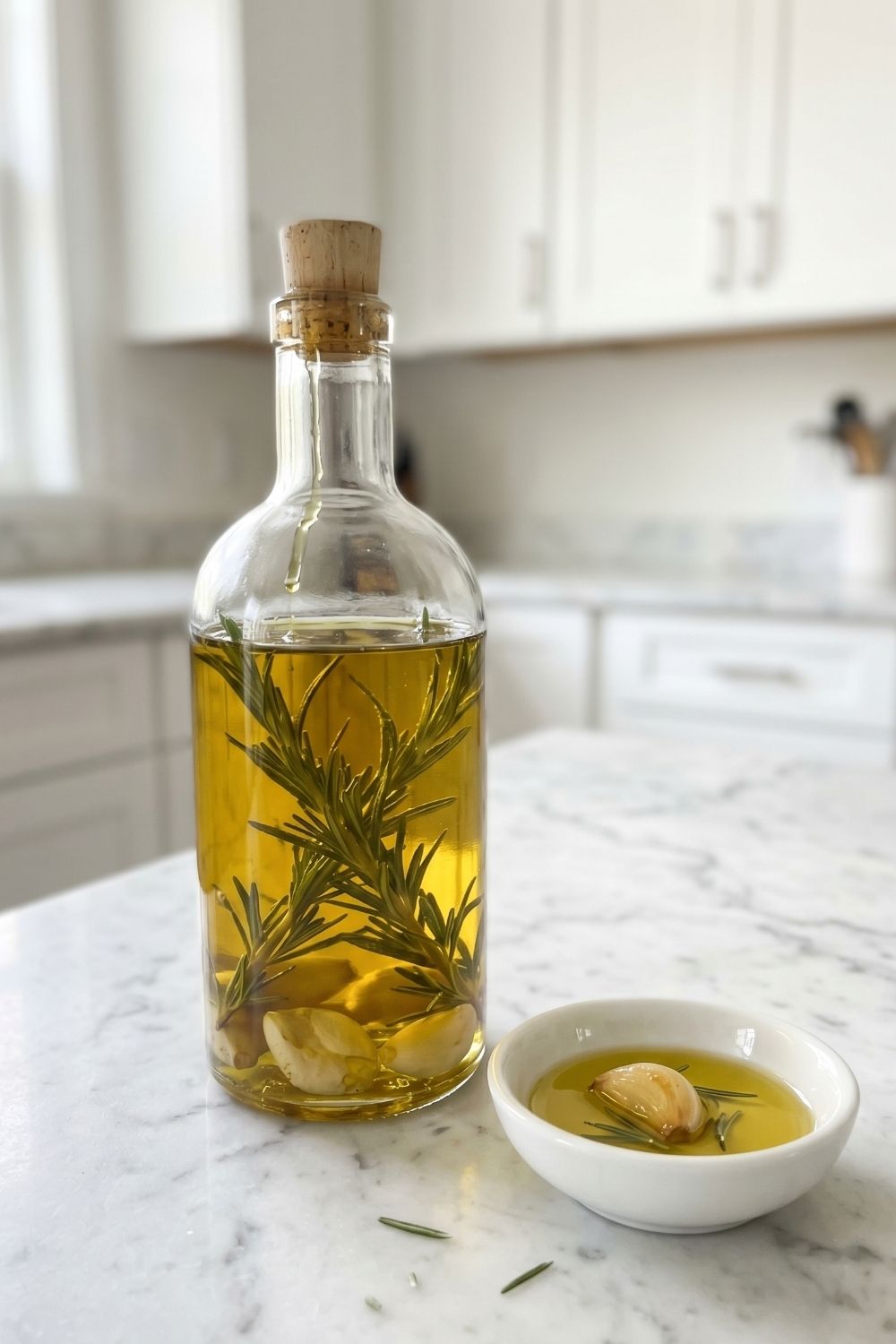
Rosemary Garlic Infused Oil
Ingredients:
- 2 cups olive oil
- 4 garlic cloves
- 4 rosemary sprigs
Instructions:
- Combine the olive oil, garlic cloves, and rosemary sprigs in a saucepan.
- Warm over very low heat for about 20 minutes.
- Do not let the garlic fry or the rosemary darken.
- Remove from the heat and let the oil cool completely.
- Strain into a clean bottle. Refrigerate after bottling.
Tips:
Use whole garlic cloves for a mellow flavor.
Bruise the rosemary lightly before adding it to the oil.
Do not overheat rosemary because it can become harsh.
How to use it:
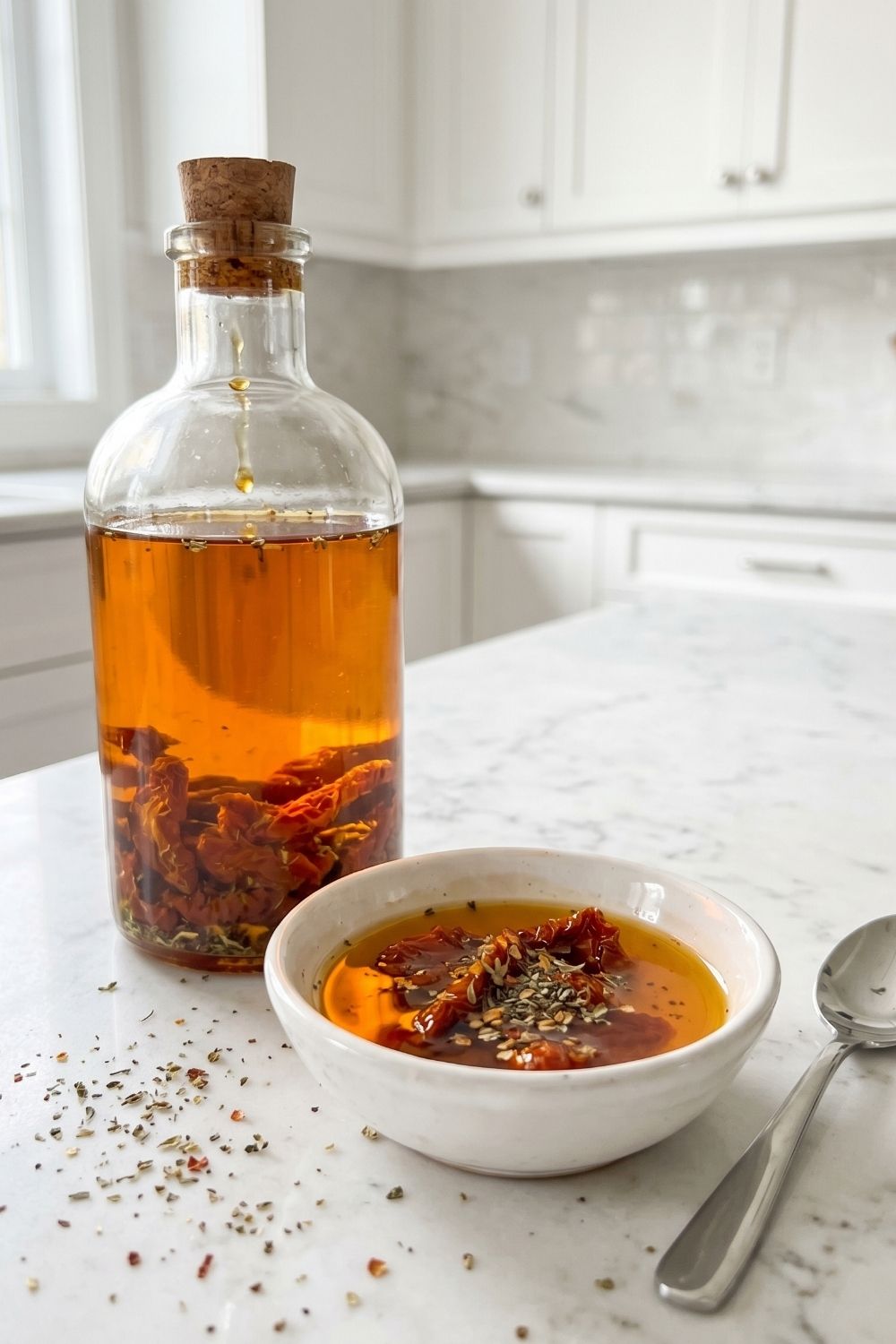
Sun-Dried Tomato Infused Oil
Ingredients:
- 2 cups olive oil
- ½ cup sun-dried tomatoes
- 1 teaspoon Italian seasoning
Instructions:
- Add the olive oil, sun-dried tomatoes, and Italian seasoning to a saucepan.
- Warm over low heat for about 15 minutes.
- Remove from the heat and cool completely.
- Strain if you want a smooth oil, then transfer to a sealed container. Refrigerate after bottling.
Tips:
Drain oil-packed sun-dried tomatoes well before using them.
Leave tiny tomato pieces in the bottle only if you want a rustic texture.
Use dried Italian seasoning for a stronger pantry-style flavor.
How to use it:
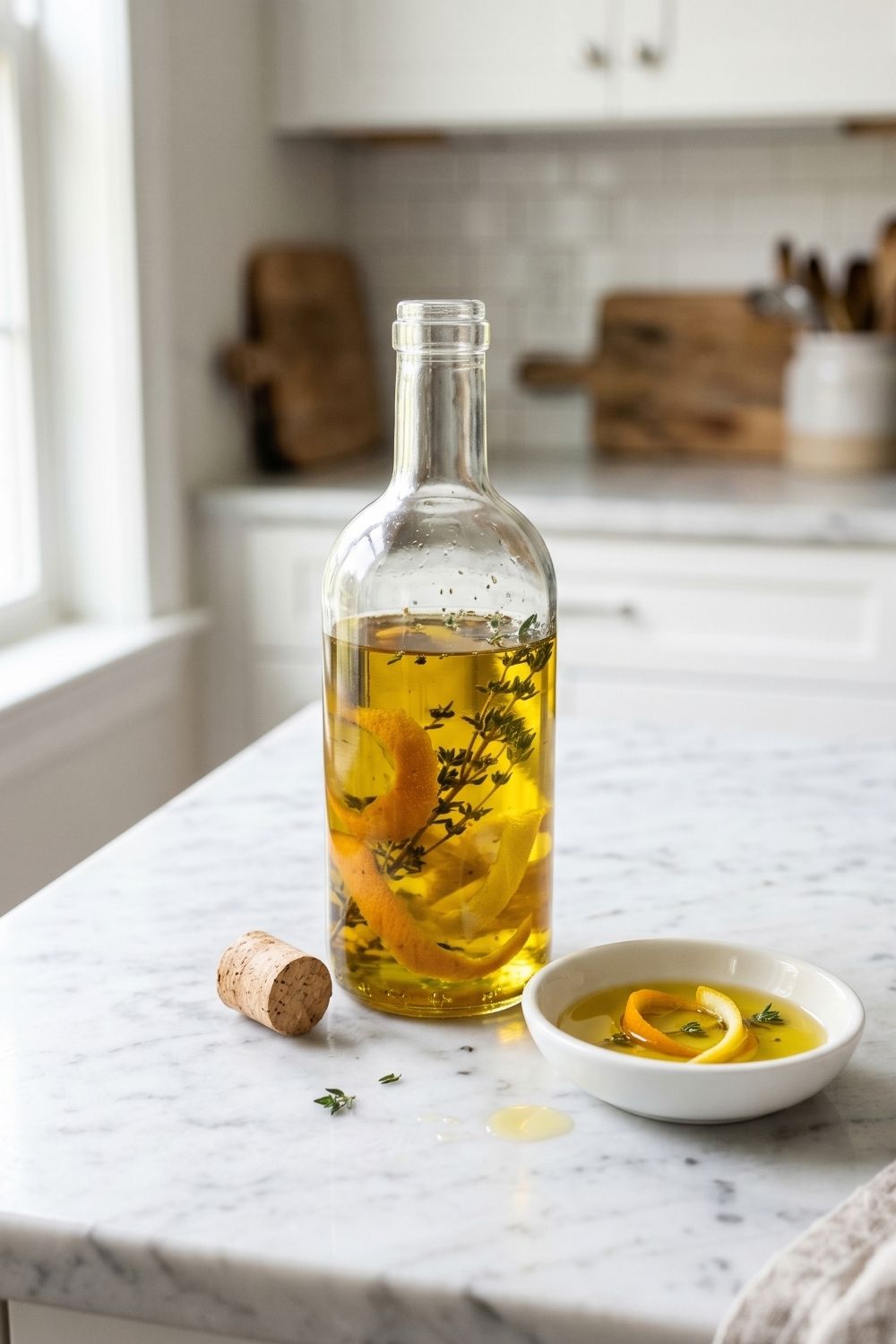
Citrus Herb Infused Oil
Ingredients:
- 2 cups olive oil
- peel of 1 orange
- peel of 1 lemon
- 2 sprigs fresh thyme
Instructions:
- Add the olive oil, orange peel, lemon peel, and thyme to a saucepan.
- Warm gently over low heat for about 20 minutes.
- Remove from the heat and let the oil cool completely.
- Strain into a clean bottle. Refrigerate until needed.
Tips:
Use only the colored part of the citrus peel.
Do not steep the peel too long because citrus can become overpowering.
Swap thyme for rosemary if you want a stronger herbal note.
How to use it:
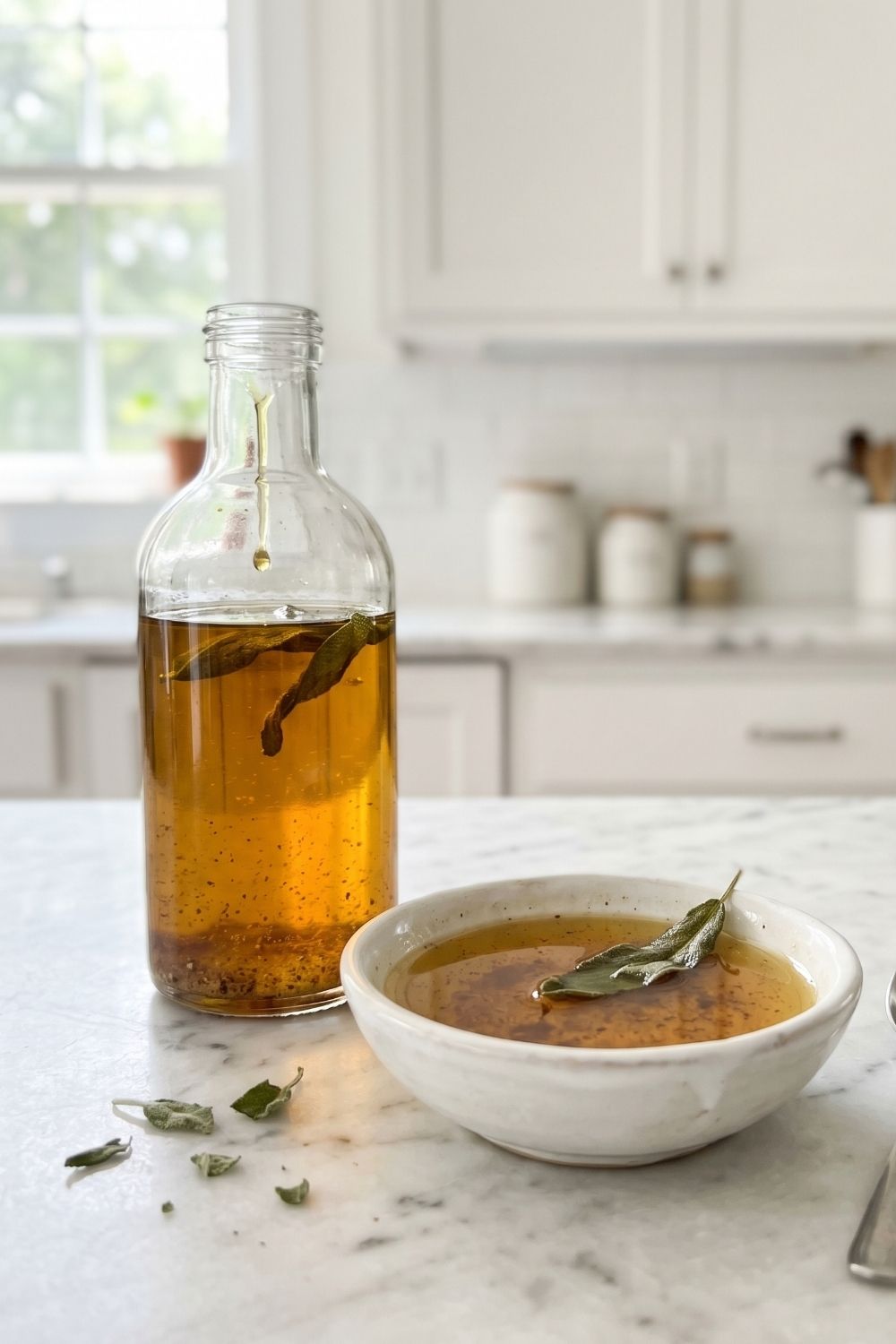
Sage Brown Butter Oil
Ingredients:
- 1 ½ cups olive oil
- 8 fresh sage leaves
- 2 tablespoons unsalted butter
Instructions:
- Melt the butter in a saucepan.
- Cook until it turns lightly brown and smells nutty.
- Add the sage leaves and olive oil.
- Warm gently for about 10 minutes.
- Remove from the heat and let the oil cool.
- Strain and refrigerate.
Tips:
Watch the butter closely because it can burn quickly.
Bruise the sage leaves slightly before adding them.
Use this oil sparingly because the flavor is rich.
How to use it:
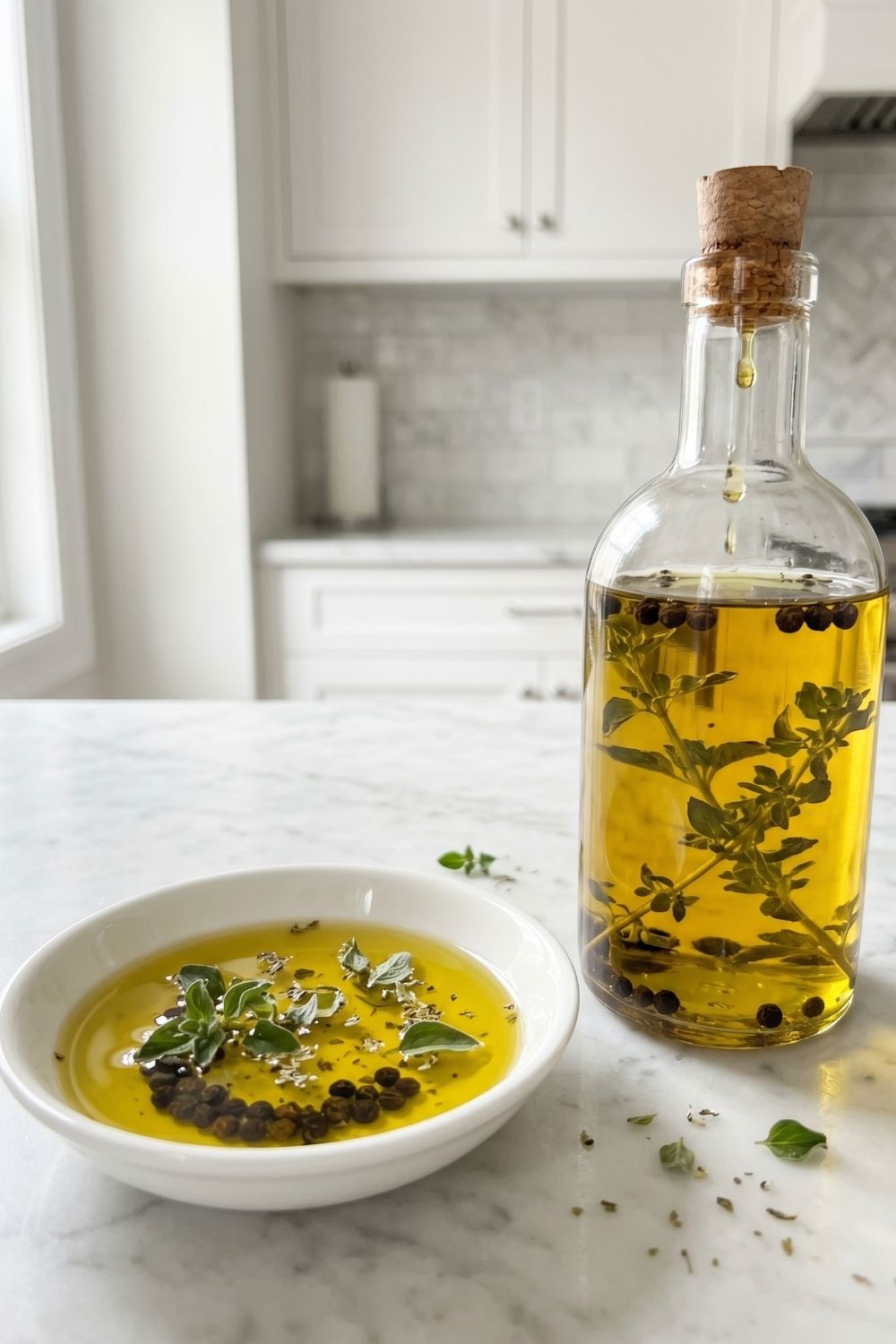
Oregano and Peppercorn Infused Oil
Ingredients:
- 2 cups olive oil
- 2 tablespoons fresh oregano leaves
- 1 teaspoon whole black peppercorns
Instructions:
- Combine the olive oil, oregano, and peppercorns in a saucepan.
- Warm over low heat for about 20 minutes.
- Remove from the heat and cool completely.
- Strain into a clean bottle. Refrigerate after bottling.
Tips:
Whole peppercorns add aroma without making the oil gritty.
Use 1 tablespoon dried oregano if fresh oregano is not available.
Keep the heat low so the oregano does not become bitter.
How to use it:
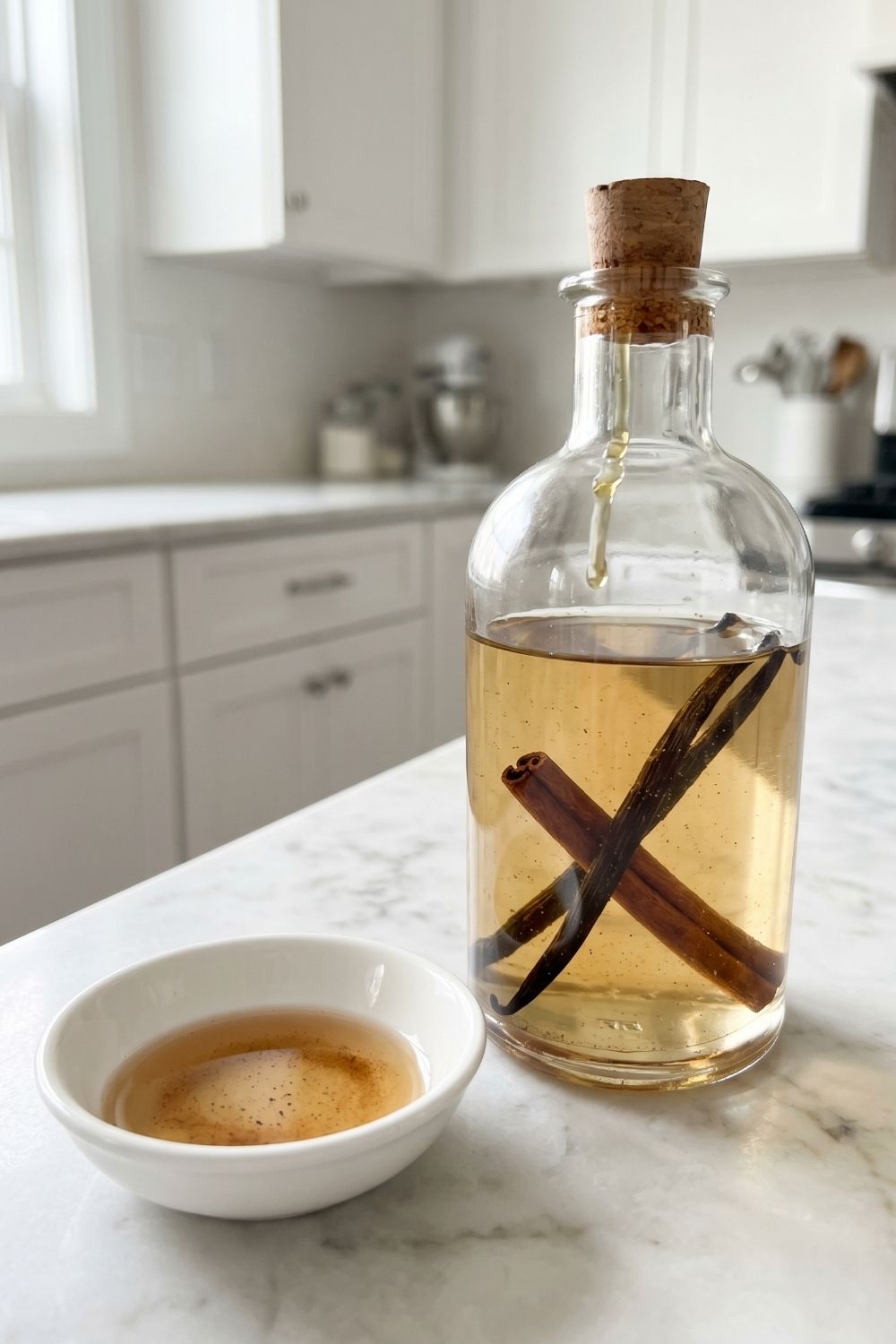
Cinnamon Vanilla Infused Oil
Ingredients:
- 2 cups light olive oil
- 2 cinnamon sticks
- 1 vanilla bean, split
Instructions:
- Add the olive oil, cinnamon sticks, and split vanilla bean to a small saucepan.
- Warm over very low heat for about 15 minutes.
- Remove from the heat and cool completely.
- Strain into a clean bottle. Store in the refrigerator.
Tips:
Use light olive oil so the olive flavor does not compete with the vanilla.
The flavor gets stronger if the cinnamon and vanilla stay in the bottle.
Use a wide-mouth jar if you want easier removal later.
How to use it:
Common Mistakes When Making Infused Oils
- Overheating the oil can ruin the flavor quickly. Garlic turns bitter, herbs become harsh, and citrus peel can taste sharp if the oil gets too hot.
- Using wet ingredients is another common mistake. Fresh herbs, citrus peel, and basil should be dry before they touch the oil.
- Skipping refrigeration is the biggest problem with garlic-infused olive oil. Homemade oils with garlic or fresh herbs should be chilled and used while fresh.
- Leaving solids in the bottle may look pretty, but it can make the flavor stronger than intended. Straining gives a cleaner taste and more predictable storage.
- Making large batches is not necessary. Smaller bottles are easier to use while fresh and give you more room to try different flavors.
Frequently Asked Questions
How long do homemade infused oils last?
Can I infuse oil with garlic?
Can I use dried herbs for infused oils?
Should infused oils be strained?
What is the easiest infused oil for beginners?
Infusing olive oils at home is a simple way to add more flavor to everyday cooking. With olive oil, low heat, clean jars, and a few aromatics, you can make a small bottle that improves meals all week.
Start with one flavor that fits the food you already cook. Garlic herb oil is great for pasta and potatoes, rosemary-infused olive oil works well with roasted vegetables, and basil-infused olive oil is perfect for tomatoes and summer dishes.
Once you learn the basic method, infusing olive oils becomes easy to customize. Keep the batches small, store them safely, and use them often while the flavor is fresh.