
Designing an at-home library isn’t about square footage, it’s about intention. A few linear feet of shelves, a comfortable seat, and good light can turn any corner into a daily ritual. This guide walks you through how to make a library at home step by step: choosing a spot, smart layouts, library shelving home options, library ladders for home, lighting, furniture for home library spaces, and thoughtful home library decorations.
Whether you’re planning a dedicated library room at home or a hybrid home office library, you’ll find clear, realistic advice below.
Start Here - How to Make a Library at Home (Step‑by‑Step)
1. Pick the spot
2. Measure & sketch
- Wall width and ceiling height
- Locations of windows, doors, and vents
- Outlet and switch positions
3. Choose shelving
Decide between modular units (fast, flexible) and built‑ins (clean, permanent). Target 10–12″ shelf depth for most books. Plan 10-12″ vertical spacing for fiction and non‑fiction; reserve 13-15″ for art/oversized books. Add closed storage at the base for games, devices, and “real‑life” stuff.
4. Plan seating
5. Layer the lighting
- Ambient: ceiling fixture or track on a dimmer
- Task: floor lamp or wall sconce, light source ~30–36″ above the seat
- Accent: picture lights or LED strips on shelves (2700–3000K for warmth)
6. Style & safety
6. Budget snapshot
- Starter: modular shelves, one great chair, task lamp, 5×8 rug
- Mid: modular with doors, better chair + ottoman, pharmacy lamp, 8×10 rug
- Custom: built‑ins with integrated lighting and a ladder rail
Designing at-home library (Layouts That Work)
Wall‑to‑wall showcase
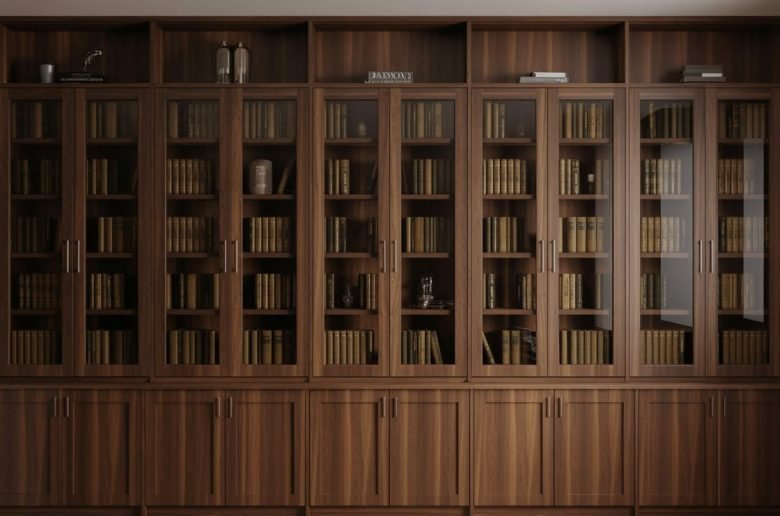
Corner cocoon

Under‑stairs surprise
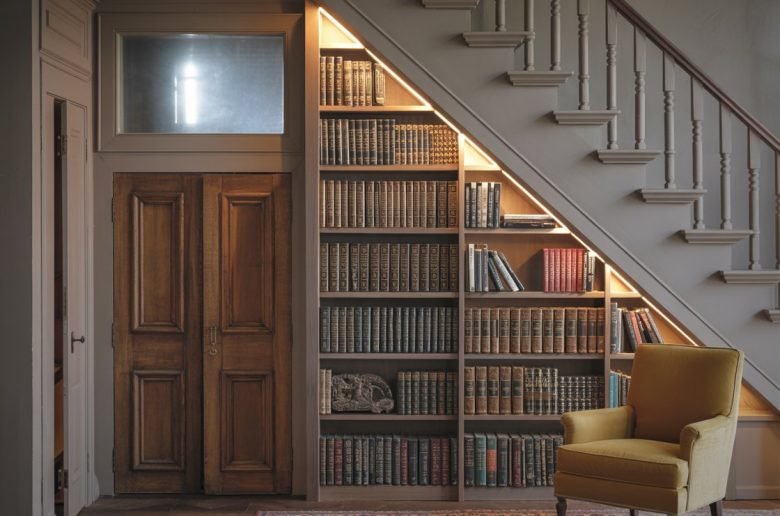
Window wall with seat

Pass‑through / hall library

Home office library

Library Shelving at Home - Materials, Sizes, and Builds
Built‑ins vs modular
- Built‑ins: seamless, customize every inch, higher cost, adds permanence.
- Modular: faster, budget‑friendly, reconfigurable, great for renters.
Materials
- MDF + enamel: smooth finish, paints beautifully, watch for dings.
- Plywood + veneer: strong, warm wood grain, great value when finished well.
- Solid wood: heirloom look, heavier and pricier.
- Metal uprights: slim, modern, very durable.
Depth & spacing rules
- Depth: 10–12″ suits most collections.
- Vertical spacing: 10–12″ standard; 13–15″ for tall art books.
- Adjustable shelves: pre‑drill for 3–4 positions per bay.
- Overhang: keep ~1″ front reveal for a clean shadow line.
Closed storage bases
Lighting integration
LED strips in aluminum channels with diffusers avoid hotspots. Keep color temp 2700–3000K for a cozy, non‑clinical feel
Library Ladders for Home — Safety, Systems, and Style

Do you need one?
Types:
- Rolling rail ladders: smooth, dramatic, always ready to use.
- Hook‑on ladders: hang when needed, store when not.
- Straight vs bent side rails: bent clears projections; straight looks classic.
Safety checklist
- Mount rails to studs or blocking.
- Anti‑slip treads and a gentle ladder angle.
- Park the ladder out of traffic lanes.
- Teach kids: the ladder is for grown‑ups only.
Style cues
Furniture for Home Library - Seating, Tables, and Rugs
Chairs & sofas
- Club chair + ottoman: timeless and supportive.
- Chaise: great for small rooms; one piece, instant lounge.
- Loveseat/sofa: perfect for read‑alouds or shared spaces.
Aim for seat height 16–19″ and back support at shoulder blades.
Tables
- Side tables: tops at or 1–2″ above the seat height.
- Coffee tables: 14–18″ from seat edge; rounded corners reduce bumps.
- Tray‑top tables: corral mugs and remotes, protect the finish.
Desks (for an office‑library)
Rugs
Low to medium pile helps chairs slide. Size so front legs of seating land on the rug; library runners quiet footfall in tight spaces.
Light It Right — Ambient, Task, and Accent
Ambient light
Task light
For reading, place the lamp slightly behind and to the side of your shoulder, with the cone aimed at the page, no bulb in your sightline. Pharmacy floor lamps and adjustable sconces are MVPs.
Accent light
Home Library Decorations - Styling Without Clutter
The 70/30 guide
Groupings that work
- Odd numbers (3 or 5)
- Vary height and texture (gloss vs matte, wood vs ceramic)
- One plant per bay max, trailing greens soften all those right angles
Book jacket strategy
Personal moments
A small photo, a travel memento, a “currently reading” tray, human, not staged.
Home Office Library: Work + Reading in One Space
Zoning
Acoustics
Video‑call setup
Wellness
Alternate sitting and standing if your workflow allows. Keep a footrest under the desk and position screens to avoid neck strain.
Budgets & Shopping Lists (Starter, Mid, Custom)
Starter (budget‑friendly)
- 2–3 modular bookcases (10–12″ deep)
- One comfy reading chair + floor lamp
- 5×8 flatweave rug
- Cable box + two lidded baskets
- Simple framed print or picture light (plug‑in)
Mid (most homes land here)
- Modular shelves with base cabinets for closed storage
- Club chair + ottoman or compact loveseat
- Pharmacy floor lamp + small sconce or picture light
- 8×10 wool‑blend rug
- Hook‑on ladder (if height needs it)
Custom (investment)
- Wall‑to‑wall built‑ins, integrated LED strips, dimmer system
- Rolling rail ladder
- Bespoke desk for home office library workflows
- Wool rug, custom cushions, and coordinated window treatments
Mistakes to Avoid (Quick Wins)
- Shelves too deep: 14″+ swallows paperbacks and wastes space.
- No dimmers: flat, harsh light kills mood and eyestrain grows.
- All open storage: real homes need doors or drawers for the messy bits.
- Over‑styling: if objects outnumber books, it’s no longer a library.
- Unanchored cases: always tip‑restraint tall units.
FAQs
How to make a library at home on a budget?
What is the best furniture for home library spaces?
Do I need library ladders for home shelves under 9 feet
How deep should library shelving be at home?
Can my living room double as a home office library?
Yes, zone it. Desk near controlled light, book wall behind or beside you, and a reading chair in the quiet corner. Hide cords and use dimmable lamps.
What lighting is best for an at home library?
Layered warm light: a dimmable overhead, a task lamp at 30–36″ above the seat, and a shelf or picture light for glow. Stick to 2700-3000K.
How do I choose home library decorations that don’t feel cluttered?
Is built‑in or modular better when designing a home library?
Built‑ins look seamless and maximize odd walls; modular wins for speed, budget, and flexibility. Many homes mix both – modular now, custom later.
Next Steps & Related Guides
Ready for pure inspiration? Browse 25 Home Library Ideas (Real Rooms, Affordable Picks).